.jpg)
Water pollution monitoring
In response, environmental monitoring protocols have focused on established indicators: chlorophyll-a levels, cyanobacterial cell counts, and nutrient concentrations.
But new research from the University of Waterloo suggests that this strategy may overlook a critical, and invisible, component: viral infections.
A recent study led by Dr. Jozef Nissimov provides the first experimental evidence that viruses infecting Microcystis aeruginosa, a common HAB-forming cyanobacterium, trigger a dramatic increase in the release of microcystin-LR, a potent liver toxin.
The implications are profound.
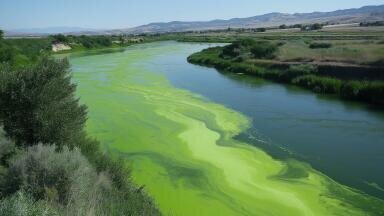
Even after water clarity improves and algal cell counts drop – classic signs of bloom decline – dangerously high toxin concentrations can persist, undetected by conventional visual or biomass-based monitoring techniques.
Historically, viruses that infect cyanobacteria (cyanophages) have been thought to serve as natural population controls, killing off bloom-forming species and contributing to ecosystem self-regulation.
But the University of Waterloo team has flipped this assumption on its head.
Their lab experiments showed that viral lysis of Microcystis cells released microcystin-LR into the surrounding water at concentrations 40 times higher than World Health Organisation (WHO) guidelines for recreational water use, and 600 times the threshold for drinking water.
In other words, the collapse of a bloom due to viral activity can unleash a spike in toxicity, even if surface scums disappear and the water looks clear.
For monitoring professionals, this raises a troubling possibility: current HAB monitoring may be underestimating public and ecological health risks by ignoring viral dynamics.
Most routine monitoring focuses on visible indicators, such as cyanobacterial biomass, pigment concentration, or genetic markers for toxin production.
These metrics, while important, may fail to detect the consequences of widespread viral infections that kill cells and dump toxins into the water column.
This new understanding opens two critical avenues for monitoring practitioners and regulators.
Firstly, we need to rethink proxy indicators.
Cyanobacterial biomass and water discoloration are useful proxies for bloom presence, but they may no longer be sufficient. High-resolution toxin measurements, particularly for extracellular microcystins, should be emphasised, especially during and after bloom collapse.
Secondly, we need to class viral activity as a parameter.
While direct virus quantification remains technically challenging and cost-intensive, indirect indicators of viral lysis (e.g., sudden biomass drops, discoloration, or decoupling of biomass and toxin levels) could be flagged as risk triggers in monitoring protocols. Inclusion of viral lysis in HAB prediction models could also improve their reliability.
Incorporating viral dynamics into monitoring programs is not without obstacles.
Analytical tools for measuring viral activity in situ are limited, and the cost of continuous toxin quantification (e.g., via ELISA or LC-MS) is a barrier for many jurisdictions.
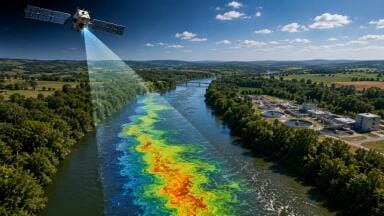
However, the growing availability of satellite-based bloom detection apps (such as the US EPA’s Cyanobacteria Assessment Network and the UK's Bloomin’ Algae app) could provide a framework for integrating more nuanced risk models.
One solution may be to develop algorithms or decision-support tools that flag anomalies, like clear water with persistently high toxin levels, for further investigation, especially in regions with a known history of Microcystis blooms.
Climate change and nutrient pollution are making HABs more frequent, intense, and toxic.
In places like western Lake Erie, annual blooms threaten drinking water intakes, fisheries, and recreational economies.
In such settings, understanding all drivers of toxicity, both biotic and abiotic, becomes essential.
Nissimov’s study is the first to quantify just how much toxin a virus-infected bloom can release and how long it can persist in the environment.
His team’s data show that microcystin-LR concentrations remain dangerously elevated for days after bloom collapse, even in the absence of visible biomass.
For monitoring professionals, this underscores the urgency of updating risk frameworks and adding viral dynamics to the HAB conversation.
It may be time to revise the parameters we use to monitor harmful algal blooms.
Cyanophages are not just ecological background noise, they are active participants in bloom dynamics and toxicity events.
While we may not yet be able to routinely monitor viruses in the field, we can start accounting for their downstream effects.
For monitoring programs tasked with protecting public health, aquatic ecosystems, and water infrastructure, the message is clear: clear water is not always safe water.
And if we’re not looking for viruses, we might be missing the most toxic part of the bloom.
By Jed Thomas
IET 36.5 Sept/Oct 2026


 Product directory




.jpg)























.jpg)