Gas sensors
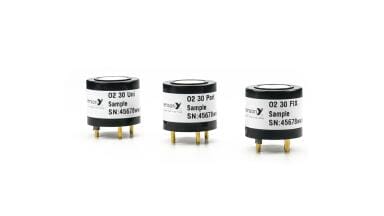
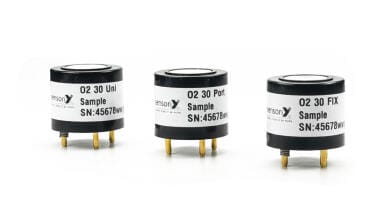
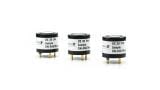
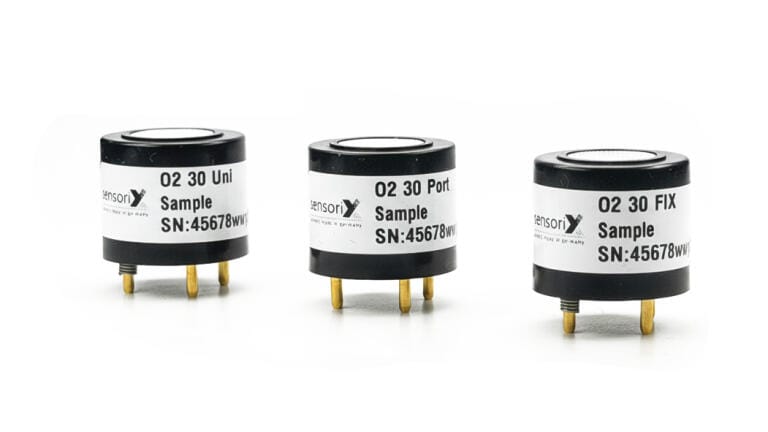
A new family of lead-free electrochemical oxygen sensors has been launched for OEMs developing gas detection instruments. The range comprises three variants — Uni, Port and Fix — each optimised for a different set of requirements, spanning broad device compatibility, extended battery runtime and high-sensitivity fixed monitoring.
According to Sensorix, no single electrochemical sensor design can cover every gas detection task, since device architecture, power budget and measurement stability each pull in different directions. The three-variant approach is intended to let OEMs match a sensor to their application rather than work around a generic design.
The Uni variant is positioned as the universal option in the range, intended for flexible integration across multiple device platforms where broad compatibility is the priority. The Port variant targets portable, battery-operated gas detectors: Sensorix reports around 80% lower power consumption than the Uni variant, at approximately 20 μA in air against around 100 μA, intended to extend runtime between charges for field use. The Fix variant is designed for fixed gas detection systems, where continuous measurement accuracy is prioritised over power efficiency; Sensorix reports power consumption of around 200 μA in air, roughly double the Uni variant, alongside excellent measurement accuracy and maximum sensitivity in the manufacturer's specification. The company states the Fix variant also operates reliably in helium atmospheres, though it notes recalibration is required when the sensor is deployed in helium-based systems.
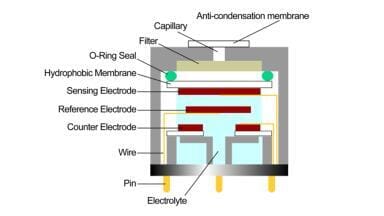
All three variants share a 3-electrode electrochemical design, an operating life of 60 months, a measurement range of 0–30% oxygen, an operating temperature range of -40°C to +60°C, a T90 response time of 10 seconds or less, and a bias voltage of -600mV. All are available in 4S, 7S, Classic (4/8-pin), Smart and Mini form factors, alongside other established OEM sensor formats, and Sensorix says its team can support custom mechanical formats on request.
IET 36.5 Sept/Oct 2026



 Product directory