Soil testing
The research comes from the University of Colorado Boulder and its developers say it addresses one of the more persistent obstacles to field-deployable soil sensing.
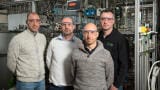
The work, led by PhD student Juan Cisneros Barba under Professor Gregory Whiting, director of the Boulder Experimental Electronics and Manufacturing Laboratory (BEEM Lab), was published in Scientific Reports.

Soil pH is described in the research as the 'master variable' of soil chemistry, influencing nutrient availability and plant growth more broadly than almost any other single measurement.
Conventional glass-bulb pH sensors are fragile in soil conditions and drift over time. This requires frequent manual recalibration that limits their practicality for continuous, unattended field deployment.
The sensor uses a carbon-alizarin composite ink as the active sensing material in its working electrode. Alizarin is a pH-sensitive dye.
Its redox peak position, determined using square-wave voltammetry, is proportional to pH and stays relatively stable over time – addressing the drift that affects conventional glass-bulb designs.
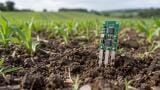
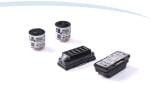
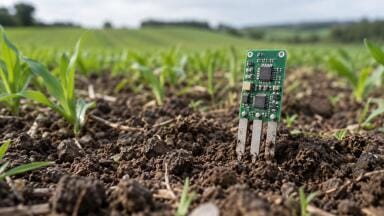
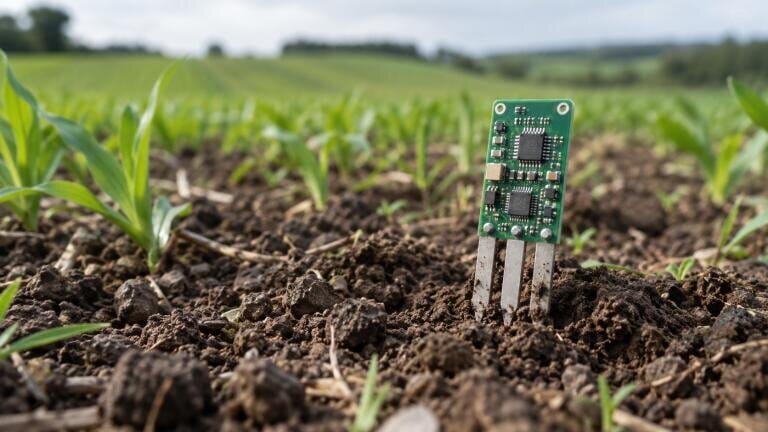
The electrodes are integrated onto a printed circuit board, paired with a custom, low-cost, low-power, weatherised potentiostat for autonomous data logging.
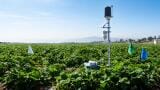
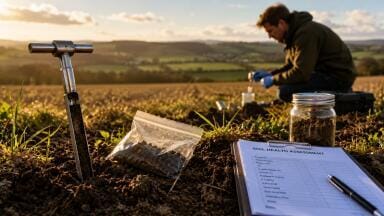
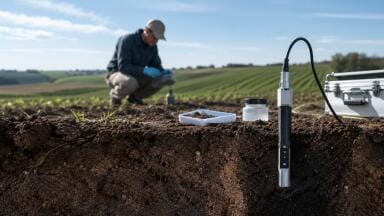
To test durability under realistic conditions, the researchers buried sensors in a range of soil types, spanning higher and lower organic matter content and varying between compacted and uncompacted states.
This was designed to mimic the conditions a field deployment would encounter. The sensors delivered reliable, continuous pH measurements across the different soil types.
A multi-month outdoor monitoring test showed stable performance without the need for constant recalibration.
"In many cases, by the time farmers discover that something is wrong with their soil or plants, the window for effective treatment may have already passed," Whiting said.
"Monitoring these factors continuously can help us better manage agricultural land and secure our food production."
Whiting said the redesigned, PCB-based sensor represented the strongest evidence yet that low-cost, battery-powered printed electronics can move from laboratory demonstration into genuine agricultural field use.
"These things cost close to nothing to make, function with minimal human effort and can be used in various soil types, allowing the technology to actually be useful in farms," he said.
The device builds on several years of prior work from the same research group on alizarin-based printed pH sensing.
This includes an earlier two-electrode configuration described in IEEE Sensors Journal that achieved near-Nernstian sensitivity using simplified, lower-cost readout electronics.
The latest work moves that underlying sensing chemistry onto a manufacturable circuit-board platform and subjects it to sustained outdoor testing, which the researchers present as the more significant practical step.
For environmental and agricultural monitoring networks, the appeal of the approach lies less in any single performance figure than in the combination of low unit cost, minimal maintenance burden and demonstrated field robustness.
These three factors have historically pulled in opposite directions in soil sensor design.

A sensor that holds calibration for months without intervention changes the economics of dense, distributed soil monitoring networks, which have until now generally had to trade sensor density against maintenance cost.
The technology remains a research-stage device rather than a commercial product, and the study does not report performance beyond the multi-month field trial window described.
IET 36.5 Sept/Oct 2026

 Product directory