Soil testing
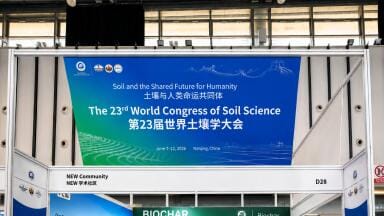
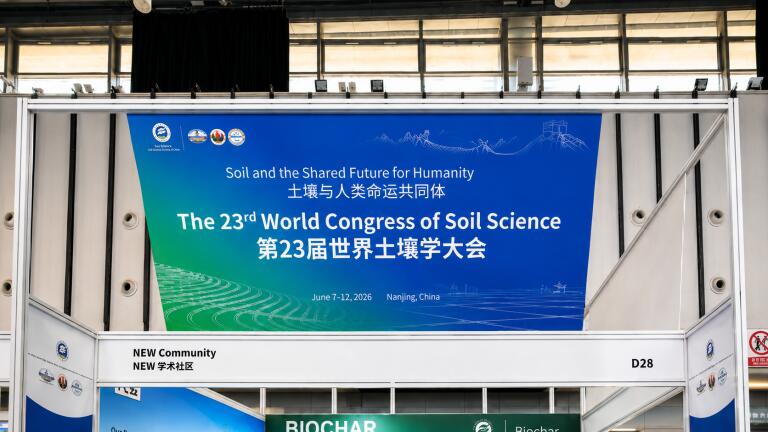
Held in Nanjing from 8–12 June, the 23rd World Congress of Soil Science attracted nearly 3,000 participants from more than 100 countries under the theme 'Soil and the Shared Future of Humankind'.
The congress provides a useful snapshot of where global soil research is heading – and, by extension, where soil monitoring technologies may be heading as well.
For environmental monitoring professionals, the significance of the event extends well beyond academic research.
Many of the issues dominating the congress agenda – climate resilience, carbon sequestration, biodiversity protection, food security and sustainable land management – ultimately depend on the ability to collect, analyse and interpret reliable soil data.

For decades, environmental monitoring frameworks have focused primarily on air and water. Soil has often received less regulatory attention despite underpinning food production, carbon storage, water filtration and ecosystem health.
That situation is beginning to change.
The European Union's Soil Monitoring Law entered into force in late 2025, establishing a framework for assessing soil health across member states. Similar initiatives are emerging elsewhere as governments increasingly recognise that achieving climate, biodiversity and agricultural objectives requires better information about what is happening beneath the surface.
As a result, soil monitoring is gradually moving from a specialist scientific activity towards a core component of environmental governance.
The scale of the World Congress reflects this shift. The event featured more than 2,000 oral presentations, over 800 posters, nine major symposia and more than 100 parallel scientific sessions covering topics ranging from soil microbiology and nutrient cycling to digital agriculture and carbon accounting.
One of the clearest trends emerging across soil science is the growing role of digital technologies.
Traditional soil assessment has relied heavily on field surveys and laboratory analysis. While these methods remain essential, researchers are increasingly integrating them with remote sensing, geographic information systems, machine learning and sensor networks.
The result is a transition from periodic soil surveys towards continuously updated digital representations of soil systems.
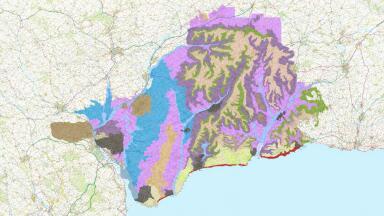
Researchers are developing increasingly sophisticated digital soil maps capable of predicting soil characteristics at much higher spatial resolution than was previously possible. These models combine field observations with satellite data, climate information, topography and land-use records to provide detailed insights across large geographic areas.
For monitoring professionals, this creates opportunities to integrate laboratory measurements with broader environmental datasets, helping organisations understand not only what conditions exist at individual sampling locations but how those conditions vary across landscapes.
Carbon management remains one of the strongest forces shaping soil science research.
As governments and businesses pursue net-zero commitments, interest in soil carbon has grown substantially. Agricultural soils are increasingly viewed as potential carbon sinks, creating demand for monitoring systems capable of measuring changes in soil carbon stocks accurately and cost-effectively.
This has implications for environmental instrumentation providers, analytical laboratories and monitoring service companies.
Reliable soil carbon accounting requires repeatable sampling methodologies, robust analytical procedures and increasingly sophisticated data management systems. The growth of carbon markets and carbon farming schemes is therefore driving investment in monitoring technologies capable of supporting verification requirements.
Many of the discussions taking place in Nanjing are expected to contribute to future methodologies for measuring, reporting and verifying soil carbon performance.
Beyond carbon, soil scientists are paying growing attention to contaminants that have traditionally received greater attention in water monitoring programmes.
PFAS, microplastics, pharmaceutical residues and other emerging contaminants are becoming increasingly important areas of soil research as scientists seek to understand how these substances accumulate, move through ecosystems and potentially affect human health.
This trend is likely to create additional demand for advanced analytical capabilities capable of detecting contaminants at increasingly low concentrations.
For environmental laboratories, the challenge mirrors developments already seen in drinking water monitoring, where regulatory attention has driven rapid growth in analytical sophistication and monitoring requirements.

Perhaps the most significant outcome of the congress may be the development of the Nanjing Action Initiative, which aims to help guide international soil science research and cooperation over the coming decade.
While the final details are still emerging, the initiative is expected to influence research priorities relating to soil health, climate adaptation, food security and sustainable land management.
For monitoring professionals, such roadmaps often provide early indicators of future regulatory and technological trends.
Many of today's environmental monitoring requirements began as scientific priorities discussed at international conferences years before they appeared in legislation. Soil monitoring appears to be following a similar trajectory.
The growing prominence of soil science on the global stage suggests that soil data will play an increasingly important role in environmental decision-making, climate policy and natural resource management.
For the environmental monitoring sector, that means the demand for better soil measurements, better soil models and better soil intelligence is likely to continue growing long after delegates leave Nanjing.
IET Guide 2026

 Product directory