Soil testing
For environmental monitoring professionals, however, they raise a much wider question: if pesticide risks are to be managed more through targeted reassessment and post-market evidence, is Europe’s monitoring system strong enough to support that model?
A new article in Science argues that the European Commission’s proposed Omnibus Simplification package on food and feed safety could weaken the environmental safeguards built into the current pesticide approval system.
The authors’ concern is that reducing regulatory burden could also reduce the regular scientific scrutiny of active substances already on the market.
That matters because pesticide risk is not only a laboratory question.
Once pesticides are used in real landscapes, they interact with soil, water, weather, crops, habitats and other chemicals. Their effects may depend on timing, location, mixtures, repeated applications and exposure pathways that are difficult to capture fully before approval.
For the environmental monitoring sector, the debate points to a familiar problem: regulation increasingly depends on data from the real world, but the systems for collecting, sharing and using that data remain uneven.

Under the current EU system, pesticide active substances are assessed before approval, with manufacturers submitting study data that are evaluated by a Member State and the European Food Safety Authority.
Most active substances are approved for a fixed period, with renewal applications giving regulators a chance to apply updated data requirements, new scientific knowledge and independent studies.
The proposed Omnibus changes would alter that rhythm.
According to the Science article, the proposal would grant indefinite approval to many active substances, while relying on selected renewals, targeted reassessments and ad hoc reviews to address substances of concern.
That would make post-authorisation evidence more important.
In theory, targeted reassessment could be efficient. Regulators could focus attention on substances where monitoring data, scientific studies or field evidence suggest a problem.
In practice, that depends on whether the evidence exists.
The authors argue that available monitoring data is a weak trigger if environmental monitoring remains sparse, pesticide-use data are inaccessible and feedback mechanisms into regulatory decision-making have not been established.
For laboratories, catchment managers, water companies, ecological survey teams and data platform providers, this is the central issue.
A lighter regulatory system may need a heavier monitoring infrastructure.
Pesticides can move through the environment in several ways.
They may run off fields into rivers and streams after rainfall. They may leach into groundwater. They may persist in soils, enter sediments or affect non-target organisms such as pollinators, aquatic invertebrates, amphibians, fungi and soil biota.
These are not always simple single-substance problems.
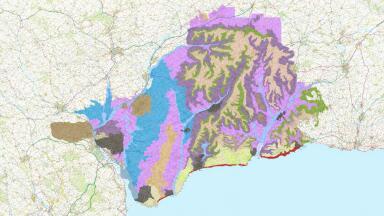
Monitoring programmes often need to account for mixtures, seasonal use patterns, episodic rainfall events, land management practices and catchment characteristics.
A pesticide that appears manageable in a standard assessment may behave differently when combined with other substances or applied repeatedly across a landscape.
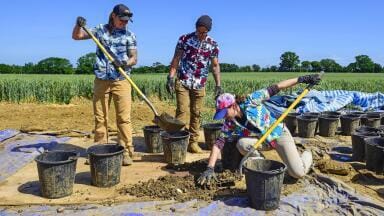
This creates a clear role for environmental laboratories and field monitoring teams.
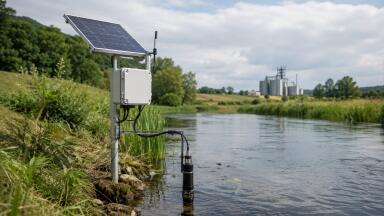
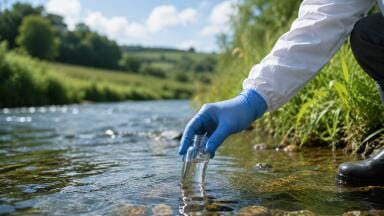
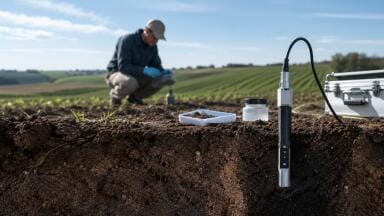
Residue screening in surface water, groundwater, soil and biota could become more important as regulators seek evidence of environmental exposure. Targeted monitoring after high-risk application periods, heavy rainfall or known pollution events may also become more valuable than routine sampling alone.
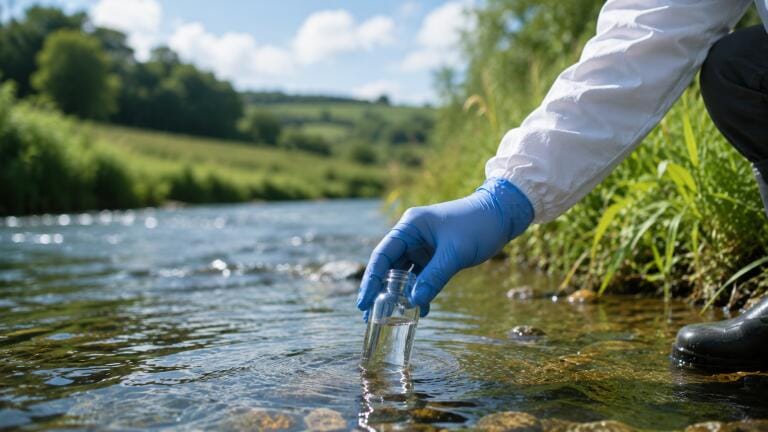
For water monitoring professionals, the issue is particularly direct.
Pesticides are already part of the broader contaminant burden affecting rivers, groundwater and drinking water sources.
If post-authorisation monitoring is expected to inform regulatory decisions, then water quality datasets will need to be robust enough to show where substances are appearing, at what concentrations, in which combinations and under what conditions.
Residue monitoring only tells part of the story.
To understand environmental exposure, regulators and scientists also need to know where, when and how pesticides are being used.
The Science article notes that EU rules already require farmers to keep electronic, machine-readable records of pesticide applications and make them available to competent authorities on request. However, the authors argue that these data are not yet systematically accessible to regulators or the scientific community.
That gap matters.
Without pesticide-use data, it is harder to link residues in rivers, soils or sediments to specific application patterns. It is also harder to validate exposure models, understand environmental fate, assess cumulative pressures or design targeted sampling campaigns.
For monitoring technology suppliers, this points to a growing need for integrated evidence systems.
The future monitoring model is unlikely to depend on laboratory results alone. It may require links between field application records, residue measurements, hydrological data, land-use information, weather data, biodiversity indicators and modelling platforms.
That is where environmental monitoring begins to overlap with data infrastructure.
One of the strongest monitoring themes in the article is the need for feedback loops between post-authorisation monitoring and risk assessment.
In simple terms, monitoring should not sit at the end of the regulatory chain.
If monitoring shows that a pesticide is appearing in water bodies more often than expected, accumulating in certain environments, affecting non-target organisms or contributing to mixture risks, that evidence should be able to trigger further investigation or reassessment.
This is the difference between passive monitoring and adaptive regulation.
Passive monitoring records what is happening. Adaptive monitoring helps decide what should happen next.
For environmental monitoring professionals, this has practical implications. Data need to be collected in ways that are comparable, quality-assured and usable by regulators. Sampling strategies need to be designed around exposure pathways and decision points, not just minimum compliance requirements.
It also means that monitoring results may need to be combined with models.
The article points to landscape-scale modelling as one way to link pesticide exposure, ecological conditions and protection goals. Such systems could help regulators test whether real-world use is consistent with the assumptions made during approval.
That will require more than individual measurements.
It will require structured datasets, spatial context, agreed thresholds, transparent methods and clear responsibilities for acting on the evidence.
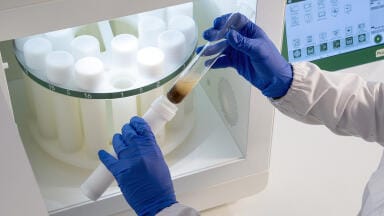
For laboratories, the main opportunity is likely to be in residue screening, method development, mixture analysis and quality-assured evidence that can support regulatory decisions.
As pesticide monitoring becomes more closely tied to risk assessment, analytical data may need to meet higher expectations for comparability, detection limits, uncertainty and traceability.
For field monitoring teams, the issue is sampling design.
Pesticide pressures can be episodic, especially where rainfall, drainage, run-off or seasonal application windows drive exposure. This creates demand for monitoring approaches that can capture short-lived events rather than relying only on periodic sampling.
For sensor and data companies, the opportunity is less straightforward but potentially significant.
Many pesticide residues still require laboratory analysis, but digital platforms could play an important role in combining application records, sample results, catchment data, remote sensing, weather information and ecological indicators.
For regulators and water managers, the challenge is governance.
Monitoring data only become useful for regulatory reassessment if they are accessible, trusted and linked to decision-making processes.
The Omnibus proposal also includes measures intended to support biocontrol products.
These products are often presented as lower-risk alternatives to conventional pesticides, and they may form part of a wider move towards more sustainable pest management.
However, the Science article warns that biocontrol products should not be exempt from scrutiny.
Living biocontrol agents may persist, multiply or spread beyond their intended use. Natural or nature-identical substances may still have ecological effects, depending on their properties and how they are used.
For monitoring professionals, this is an important point.
A shift away from conventional pesticides does not remove the need for environmental evidence. It changes the substances, organisms and exposure pathways that may need to be understood.
If biocontrol products are used more widely, monitoring frameworks may need to evolve to track their environmental behaviour as well as their benefits.

The debate around the Omnibus proposal is politically sensitive because it sits between competing pressures: faster approvals, lower administrative burden, agricultural productivity, biodiversity protection and public health.
But for the environmental monitoring sector, the practical question is narrower.
Can Europe generate enough high-quality real-world evidence to detect pesticide risks after approval?
If the answer is no, then simplifying approval systems may increase the chance that harmful effects are missed or recognised too late.
If the answer is yes, then monitoring could become a more central part of pesticide governance. It could help validate risk models, identify substances requiring reassessment, detect mixture effects, support catchment-scale risk management and provide a stronger evidence base for safer pest control.
That would require investment.
It would mean better residue monitoring, more accessible pesticide-use data, stronger links between laboratories and regulators, and clearer mechanisms for turning monitoring results into regulatory action.
For environmental monitoring professionals, the message is clear.
The future of pesticide regulation may depend less on whether data are collected, and more on whether they are collected in a way that can change decisions.
IET 36.5 Sept/Oct 2026



 Product directory