Water/wastewater
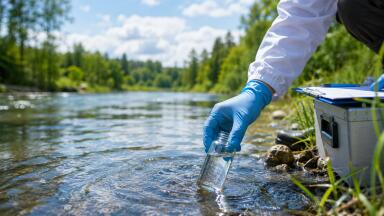
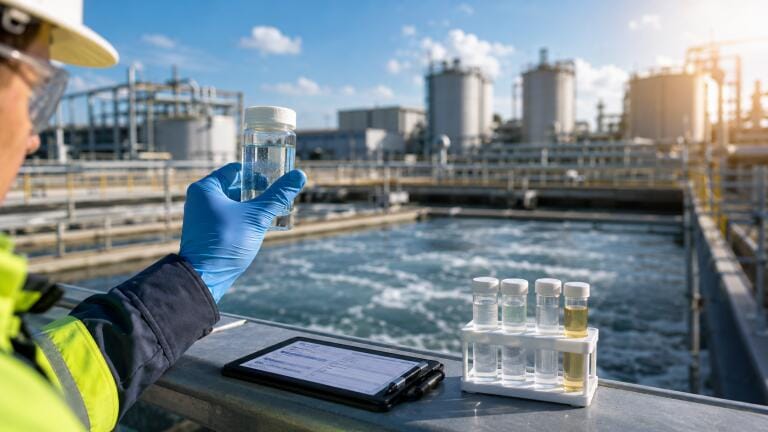
In many facilities, the basic workflow has changed surprisingly little: take a sample, label it, send it to a laboratory, wait for results, and then decide whether action is needed.
That delay matters. Culture-based methods can take 24–72 hours to return results, and even faster molecular approaches often still require trained personnel, controlled laboratory conditions and specialist equipment.
By the time the data reaches the operator, the microbial conditions in the system may already have changed.

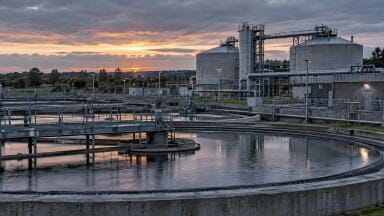
For cooling towers, process water circuits, industrial wastewater streams and other complex water systems, that creates a familiar problem. Microbial growth is a live operational risk.
It can contribute to biofouling, reduce heat transfer efficiency, accelerate microbiologically influenced corrosion, interfere with treatment processes and, in some cases, create health and compliance concerns.
Yet the information needed to respond often arrives after the best intervention window has already passed.
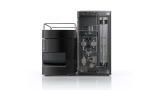
A spinout from Georgia Tech is now trying to move that work much closer to the point of need. Skopii, commercialised from research developed at Georgia Tech, has created a compact imaging device that combines optical microscopy with on-device artificial intelligence.
Rather than sending a sample away for analysis, operators place the sample directly into the unit and receive visual information about microbial populations within minutes.
The AI model then supports real-time classification and quantification, helping users understand what is present and how much of it there is.
The significance is that microbial monitoring may be starting to follow the same direction of travel already seen in other parts of environmental and process monitoring: faster measurements, closer to the source, with more interpretation built into the device itself.
For industrial water users, this could be important because microbial risk is often managed through a mixture of routine sampling, chemical treatment, operator experience and delayed confirmation.
A laboratory result may confirm that a problem existed, but it does not always give the operator a timely opportunity to prevent it escalating. If microbial information can be produced on site, while the system is still running and while decisions about treatment, cleaning or process adjustment can still be made, the role of monitoring changes.
It becomes less of a retrospective check and more of an operational tool.
That distinction is especially relevant in systems where conditions can shift quickly. Temperature, nutrient availability, stagnation, treatment chemistry and flow patterns can all affect microbial growth.
A sample taken on Monday and reported on Wednesday may still be useful for trend analysis, but it may not fully reflect the risk profile at the point when an operator needs to act.
On-site microbial data could help close that gap by giving water treatment teams, plant engineers and laboratory staff a more immediate view of what is happening inside the system.
This does not remove the need for conventional microbiology. Laboratory methods will remain essential for validation, regulatory evidence, confirmatory analysis and high-confidence identification.
In many regulated settings, a field device will not simply replace approved methods. But it may reduce the number of decisions that have to be made in the dark.
That is where the practical value may sit. Field-ready microbial monitoring could help operators decide when to escalate, when to resample, when to adjust treatment and when a system needs closer investigation.
It could also help laboratories by improving sample prioritisation. Instead of receiving samples with very limited context, lab teams could be given field-generated information that helps them understand which samples are routine, which are unusual and which require urgent attention.
For monitoring professionals, the wider question is how much confidence can be placed in AI-assisted interpretation. Microbial analysis is not always straightforward. Industrial water samples can be complex, dirty and variable.
They may contain debris, mixed organisms, treatment residues and background material that make classification more difficult. Any field-ready system will need to prove that it can operate reliably outside controlled research conditions, and that its outputs are meaningful for the decisions users actually need to make.
That means the technology will have to be judged not only on speed but also on repeatability, robustness, ease of use and integration into existing workflows.
Operators will want to know how samples are prepared, how the device handles complex matrices, how often it needs calibration or maintenance, how its AI model has been trained, and how results compare with established laboratory methods.
Laboratories and quality managers will want to understand traceability, uncertainty, validation pathways and how the data can be used without overstating what it proves.
Those questions are not barriers to adoption. They are the normal questions that decide whether a promising monitoring technology becomes a trusted part of routine practice.
The environmental monitoring sector has seen similar transitions before. Portable instruments rarely replace central laboratories overnight. Instead, they often create a new layer of intelligence between visual inspection and formal analysis.
They help users screen, triage, trend and respond. Over time, as performance improves and confidence grows, they become part of the accepted monitoring toolkit.
Skopii’s approach appears to sit within that broader movement. Across water, air, emissions and process monitoring, instruments are becoming smaller, smarter and more field-ready.
Miniaturised optics, edge computing and machine learning are increasingly being combined to deliver analytical insight outside the laboratory. In some cases, this means faster compliance screening. In others, it means operational monitoring, early warning or process optimisation.
For microbial monitoring, that shift could be particularly valuable because time is often the missing variable. A chemical parameter may be measured continuously or near-continuously in many industrial systems but microbial information is still frequently episodic.
Operators may know the temperature, flow rate, pH, conductivity or residual disinfectant in near real time, while microbial data remains locked into a slower testing cycle. Bringing microbiology closer to real-time decision-making could therefore make water management more balanced.

Drinking water safety, environmental compliance sampling, aquaculture, recreational water monitoring and remote fieldwork all depend on timely microbial information. In each case, the challenge is slightly different, but the underlying need is similar: reliable data, generated quickly enough to support action.
For drinking water operators, rapid microbial insight could support earlier investigation of contamination risks. For environmental monitoring teams, it could help identify hotspots or changing conditions before a full laboratory dataset is available.
For aquaculture, where water quality directly affects stock health, faster microbial information could support more responsive management. For industrial users, it could help prevent a small microbial imbalance becoming a costly maintenance, safety or compliance issue.
The most realistic expectation is not that AI-assisted imaging will make microbiology simple. It will not. Microbial systems are complex, and no single instrument can remove the need for professional judgement. But it could make microbial monitoring more visible, more immediate and more useful in day-to-day decision-making.
That is why the arrival of field-ready microbial monitoring matters. It is not just about replacing a delayed test with a faster one. It is about changing where microbial information sits in the water management process. Instead of being something that arrives after the fact, it could become something operators can use while there is still time to act.
For industrial water systems, that would be a meaningful shift. And for monitoring professionals, it points to a future in which microbiological data becomes less remote from the process, less dependent on delayed confirmation, and more closely connected to the operational decisions that keep water systems safe, efficient and under control.
IET Guide 2026

 Product directory