Water quality monitoring
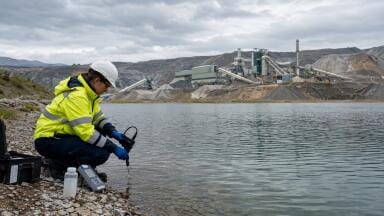
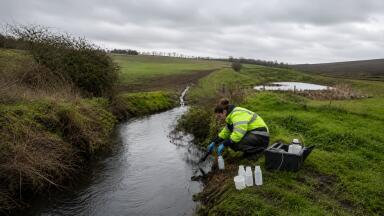
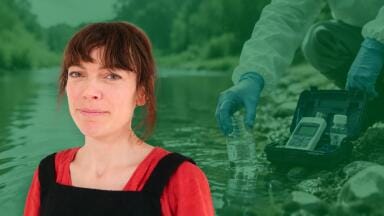
That model still matters. In many cases, a properly collected sample, analysed by an accredited laboratory and supported by a clear chain of custody, remains the strongest form of evidence available to regulators, operators and courts.
But it is no longer enough on its own.
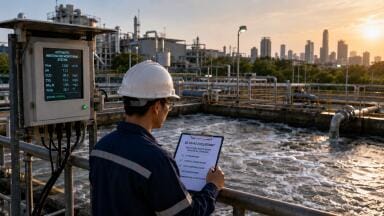
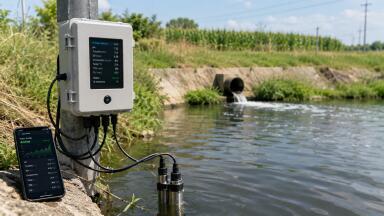
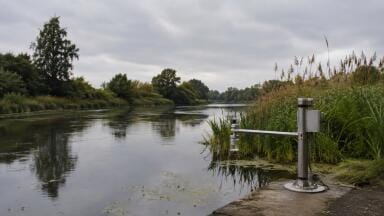
Across the water sector, monitoring is becoming more continuous, more connected and more open to scrutiny. Fixed sensors, autosamplers, telemetry, catchment modelling, citizen science, satellite data and public dashboards are increasingly being used alongside conventional laboratory analysis.
For monitoring professionals, this changes the nature of the job.
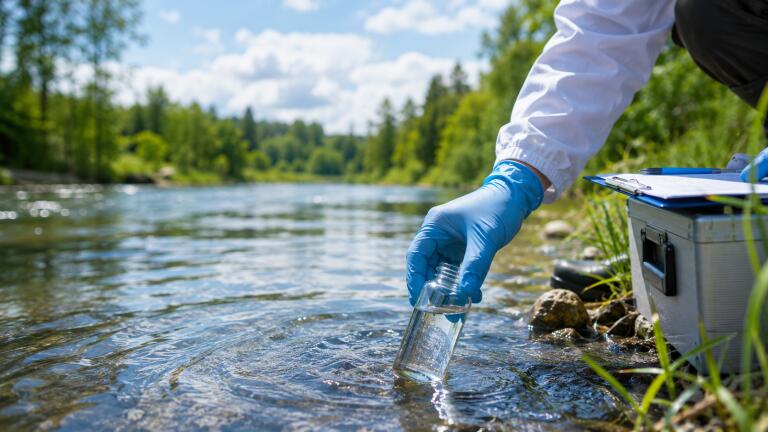
A grab sample is a snapshot.
It can provide high-quality evidence of what was present at a specific location at a specific moment. But many of the incidents that affect rivers, lakes, estuaries and bathing waters do not behave neatly enough to be captured by occasional sampling.
A storm overflow spill may last for hours. A slurry run-off event may follow a single heavy rainfall episode. A treatment works failure may create a short-lived ammonia or dissolved oxygen problem before conditions partially recover.
A monthly or quarterly sample can easily miss those events.
That does not mean the sample is wrong. It means the monitoring strategy may not be asking enough of the water body.
This is where the gap has opened between traditional compliance evidence and the information now expected by regulators, communities, catchment partnerships and public health bodies.
People increasingly want to know what is happening between formal sampling visits. They want to see when pollution occurs, how long it lasts, where it travels, whether it is repeated, and whether interventions are making a measurable difference.
That requires a different kind of evidence base.
Water bodies are dynamic systems.
Rainfall, temperature, abstraction, land use, flow rate, industrial activity and treatment works performance can all change water quality over short timescales. Some of the most important indicators, including turbidity, conductivity, dissolved oxygen, ammonia, nitrate and temperature, can move quickly.
Continuous monitoring can reveal patterns that isolated samples cannot.
It can show diurnal changes in dissolved oxygen, first-flush effects after rainfall, sudden conductivity spikes, recurring pollution pulses, seasonal deterioration and gradual recovery after catchment interventions.
For operational teams, this can be highly valuable. Instead of seeing only a pass or fail result after the event, they can begin to understand how pressures build, how systems respond and where risk is concentrated.
However, continuous monitoring is not a simple upgrade from sampling.
It brings its own weaknesses. Sensors drift. Probes foul. Batteries run down. Telemetry drops out. Data gaps appear. A dataset may look impressive on a dashboard while still being unreliable if the maintenance and validation system behind it is weak.
This is why more data does not automatically mean better evidence.
In some situations, a small number of well-maintained instruments, backed by laboratory checks and clear QA/QC procedures, will provide more useful evidence than a large network of poorly supported devices.
The most successful water monitoring programmes begin with a clear question.
A system designed to prove discharge compliance will not necessarily be the same as one designed to locate a pollution source, protect a drinking water abstraction point, track ecological recovery or issue public health warnings.
Each purpose changes the monitoring design.
A compliance-led programme may prioritise accredited laboratory analysis, permit limits, representative sampling points and strict chain-of-custody procedures.
A catchment investigation may require upstream and downstream stations, mobile monitoring, event-triggered autosampling, rainfall and flow data, and spatial mapping.
A public warning system may prioritise near-real-time telemetry, clear alert thresholds, rapid data processing and careful communication with local authorities, site managers and water users.
A restoration project may need longer-term evidence, linking water chemistry to habitat condition, biological indicators and changes in land management.
This is why water monitoring is becoming more systems-based.
The value increasingly comes from combining methods: laboratory testing for analytical certainty, continuous sensors for temporal resolution, autosamplers for event capture, remote sensing for spatial context and catchment knowledge for interpretation.
No single method can answer every question.
The phrase 'monitoring network' increasingly means more than a set of instruments.
It means a structured evidence system in which each measurement has a purpose, each dataset can be interpreted, and each result can be trusted by the people who need to use it.
That includes regulators deciding whether enforcement is justified. It includes water companies identifying operational failures. It includes consultants diagnosing catchment pressures. It includes laboratories confirming contaminants at defensible levels. It includes local communities asking whether the river is safe, improving or deteriorating.
For monitoring professionals, this creates a major opportunity.
The sector is no longer just being asked to produce data. It is being asked to produce confidence.
That confidence depends on practical details that are sometimes overlooked: sensor siting, calibration frequency, anti-fouling design, cleaning schedules, field audits, metadata, data validation, laboratory cross-checks, uncertainty reporting and clear ownership of the monitoring programme.
A sensor reading without context is only a number.
To become evidence, it needs to be linked to location, time, hydrological conditions, maintenance history, analytical method, detection limits and the question the monitoring programme was designed to answer.
One of the clearest shifts is the growing importance of event-based monitoring.
Many pollution risks are episodic. They appear during storms, dry-weather failures, agricultural run-off periods, industrial process upsets or network overflows.
Traditional sampling can struggle with these events because the window for capture is short.
Autosamplers can help by collecting water when a trigger is reached, such as a rainfall threshold, a turbidity spike, a sudden conductivity change or a telemetry alert from another sensor.
This allows laboratory analysis to be linked directly to the event, rather than relying only on routine visits.
For monitoring teams, this can be powerful. It can turn a suspected incident into a documented sequence: rainfall, change in flow, sensor response, sample capture, laboratory confirmation and downstream impact.
That sequence is often much more useful than a single isolated result.
It can help identify sources, understand pathways and support decisions about enforcement, investment or land management.
The water sector is under pressure to become more transparent.
Storm overflow data, bathing water quality, nutrient pollution, chemical contamination and river health are now public issues. Monitoring data is no longer read only by technical teams; it is also read by journalists, campaigners, councillors, swimmers, anglers, investors and local communities.
This creates a difficult balance.
Data needs to be accessible enough for non-specialists to understand, but robust enough for professionals to trust. Dashboards and open data portals can improve transparency, but they can also create confusion if uncertainty, gaps and limitations are not clearly explained.
For instrument suppliers, laboratories, consultants and utilities, credibility will become a major differentiator.
The question will not simply be who can collect the most data. It will be who can demonstrate that the data is reliable, comparable, validated and useful for real decisions.
That means the next phase of water monitoring will be shaped as much by protocols as by hardware.
Sensor validation, QA/QC for hybrid networks, maintenance standards, event sampling procedures, metadata structures and data governance will all become increasingly important.
For monitoring professionals, the shift from compliance sampling to evidence networks is not a rejection of established practice.
It is an expansion of it.
Laboratory analysis remains essential. Routine compliance sampling remains essential. Skilled field technicians remain essential. But they are now part of a broader system that must capture a more complicated picture of water quality.
The professionals best placed to lead this transition will be those who can connect instrumentation, field practice, laboratory science, regulation and catchment understanding.
They will need to know which data can support enforcement, which data is better used for screening, which data can trigger further investigation and which data should not be over-interpreted.
That judgement is becoming one of the most important skills in the sector.
Water monitoring is moving from isolated measurements towards integrated evidence networks. The goal is not simply to collect more information, but to build systems that can show what is happening, when it is happening, why it is happening and what should be done next.

IET Guide 2026

 Product directory