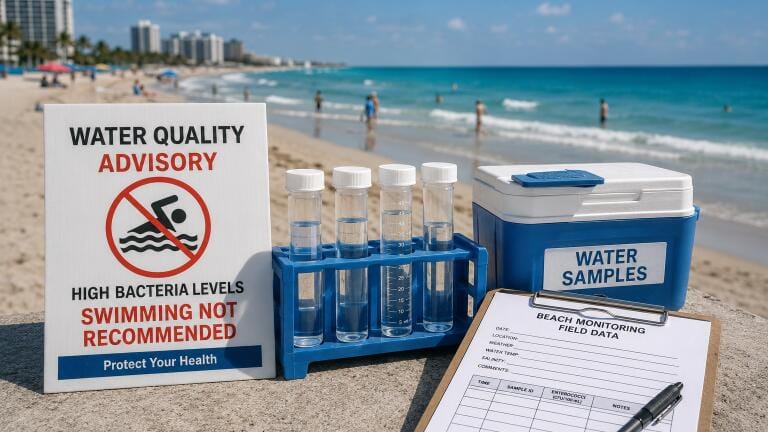
Water quality monitoring
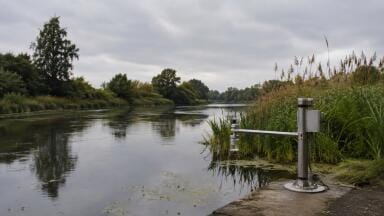
The US Environmental Protection Agency (EPA) announced on Thursday, 21 May 2026 that it will provide US$9.75m in grant funding to coastal and Great Lakes states, Tribes and territories.
The money funds beach water quality monitoring and public notification when bacterial levels make swimming unsafe.
In federal budget terms, US$9.75m is modest. Florida and California receive the largest shares, at US$478,000 and US$477,000 respectively, followed by Texas (US$373,000), Louisiana (US$347,000), Hawaii and Puerto Rico (US$319,000 each) and New York (US$315,000).
Five Tribes each receive US$50,000. Since the programme began in 2001, EPA says it has provided more than US$245m for beach monitoring and notification.

The figure has barely moved in three years: US$9.75m in 2024, US$9.737m in 2025 and US$9.75m in 2026.
That stability looks less settled once set against EPA's own FY2026 budget request, which proposed eliminating the Beaches Protection Grant Program entirely. The grants were awarded regardless.
Separately, the House of Representatives passed the American Water Stewardship Act (H.R. 6422) in March 2026, which would reauthorise the BEACH Act through 2031.
The bill has not yet cleared the Senate. For monitoring professionals, the practical funding level and the legislative status are two different questions, and neither is fully resolved.
To qualify, a jurisdiction needs coastal or Great Lakes recreational waters used by the public, EPA-approved numeric water quality standards for pathogens or pathogen indicators, and it must meet 11 performance criteria covering monitoring, assessment and notification.
Allocations are shaped by beach season length, shoreline mileage and coastal county populations.
Beach safety is assessed indirectly. Agencies test for indicator organisms that signal possible faecal contamination, rather than screening for every pathogen directly.
EPA's established criteria cover enterococci and E. coli, set out in its 2012 Recreational Water Quality Criteria, and cyanotoxins, addressed in 2019 guidance.
Coliphages remain an area of ongoing EPA research rather than an adopted criterion.
The public health case is well established. The Centers for Disease Control and Prevention (CDC) lists diarrhoea, skin rashes, swimmer's ear, flu-like illness, pneumonia and eye or respiratory irritation among common recreational water illnesses.
Children, pregnant women and people with weakened immune systems face greater risk. Heavy rainfall, animal waste, sewage and stormwater can all introduce contamination into bathing areas without warning.
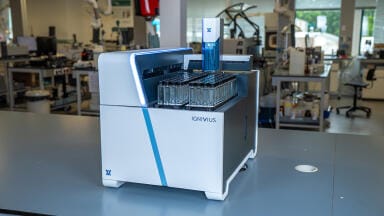
For laboratories, the operational constraint has long been turnaround time.
Traditional culture-based methods require around 24 hours of incubation, so a sample taken today may not inform swimmers until tomorrow.
EPA's qPCR-based Enterococcus methods, 1611 and 1609.1, return results in under four hours, allowing same-day notification of elevated risk.
This points to where the sector is heading: not simply more sampling but faster, better contextualised sampling.
EPA's sanitary survey approach illustrates the direction.
Surveys help beach managers trace pollution sources, prioritise testing locations and build predictive water quality models, drawing on water quality, weather, wildlife observations and land-use data.
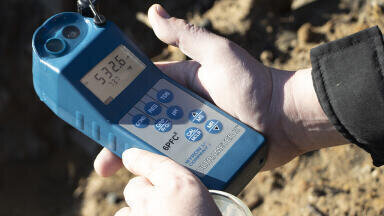
EPA's Sanitary Survey App, built on ArcGIS Survey123, lets managers collect this data in the field, export it and feed it into predictive modelling.
BEACON, EPA's Beach Advisory and Closing Online Notification system, holds state-reported monitoring and advisory data.
Recipients are required to submit only once a year, though some report more often.
This makes BEACON useful for trend analysis, not for live public health decisions, which depend instead on the responsiveness of local sampling schedules, laboratory turnaround and alert systems.

For instrumentation suppliers, laboratories and environmental data providers, the opportunity extends beyond a single grant cycle.
Recreational water monitoring sits at the intersection of microbiology, stormwater management, digital field reporting and predictive analytics.
As beach managers try to move from delayed warnings towards same-day, risk-based advisories, demand is likely to grow for faster analytical methods, robust field-data tools and models combining bacterial results with rainfall and site-condition data.
The 2026 award should be read as two things at once: a maintenance signal for existing monitoring infrastructure, and a marker of where EPA's technical priorities, and Congress's legislative attention, are currently pointing.
IET 36.5 Sept/Oct 2026



 Product directory
















.jpg)