Water quality monitoring
Since 2000, it has defined how Europe assesses the quality of rivers, lakes, transitional waters, coastal waters and groundwater – requiring Member States to achieve and maintain good ecological and chemical status across millions of water bodies and creating the monitoring obligations that generate a significant fraction of the water sector's work.
When the Commission announces a targeted review, as it did with its March 2026 call for evidence, the sector needs to pay close attention.

The framing of this review is unlike any previous WFD revision discussion.
It is explicitly linked to the EU's critical raw materials agenda – the drive to secure European supply chains for minerals and metals needed in battery manufacturing, electric motors, defence systems, aerospace, AI infrastructure and data centres.
The Commission wants to identify whether WFD provisions are creating regulatory bottlenecks that slow down permitting for extraction, processing and recycling projects.
It asked businesses in critical raw material value chains to provide concrete evidence where WFD requirements hinder EU strategic autonomy.
This framing creates a genuine tension that the monitoring sector should understand clearly.
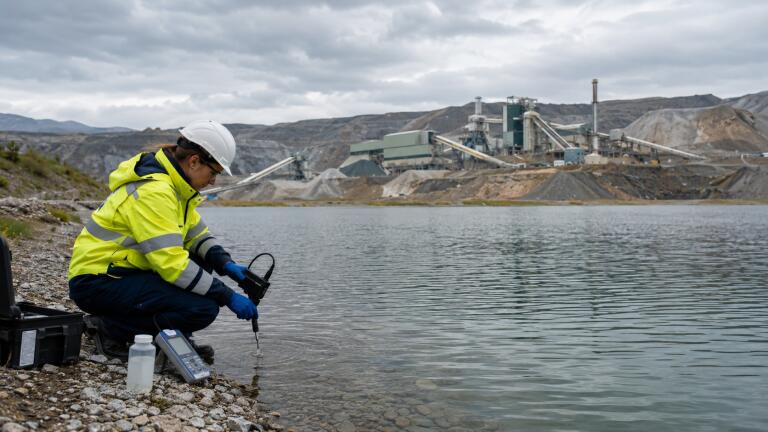
Lithium extraction, cobalt processing, nickel refining and rare earth separation are all water-intensive and water-contaminating activities.
Acid mine drainage, process water discharge, heavy metal leaching, changes to local hydrology, sediment disturbance and groundwater drawdown are real consequences of mining and processing at scale.
The WFD's requirement to protect water body status – and to deteriorate it only under specific conditions of overriding public interest with full mitigation – has historically constrained some projects.
Whether that constraint represents an unjustified barrier to strategic industrial development or a necessary safeguard is fundamentally a political question. But it has direct technical implications.
If the revision makes it easier to permit projects that affect water bodies, the importance of rigorous baseline monitoring increases rather than decreases.
You cannot demonstrate that a project is maintaining WFD-compliant conditions, or that mitigation measures are working, without pre-project baseline data, continuous operational monitoring and post-intervention evidence chains.
Faster permitting predicated on weaker evidence would undermine the very claim that high standards can be maintained alongside industrial development.
Faster permitting backed by stronger, continuous monitoring data is a coherent proposition – and one that the monitoring sector should be making loudly in the consultation process.
The ecological status dimension of the WFD is the part most at risk from a simplification agenda, and it deserves attention.
Chemical status – priority substances against Environmental Quality Standards – is relatively straightforward to monitor with conventional analytical methods.
Ecological status is harder: it requires assessment of biological quality elements including macroinvertebrates, fish, macrophytes and phytoplankton, alongside hydromorphological and physico-chemical supporting elements.
These assessments take time, require specialist field skills, and cannot be replaced by a grab sample and a chemical analysis.
If a revised WFD reduces emphasis on ecological status assessment in the context of critical raw material projects, the biodiversity impacts of those projects become harder to detect, attribute and enforce against.
For contaminated groundwater specifically, the WFD's Groundwater Directive – which requires prevention of deterioration and remediation of contaminated groundwater – is directly relevant to mining and processing sites.
Groundwater moves slowly but persistently. Contamination plumes can take years to develop and decades to remediate.
The monitoring burden for a mining operation that affects a groundwater body is therefore long-term and cannot be met by pre-construction monitoring alone.
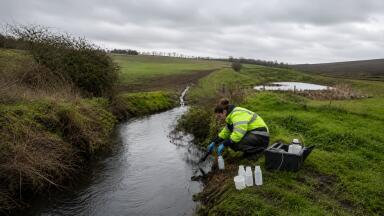
Quarterly or annual groundwater sampling across a network of compliance boreholes, combined with continuous level monitoring and periodic geochemical profiling, is the practical reality of what adequate WFD compliance looks like for these sites.
For the monitoring sector, the review creates a clear market framing. If Europe is going to mine and process more critical raw materials domestically, it needs environmental monitoring infrastructure that can demonstrate the environmental consequences are being managed.
That means baseline surveys, operational compliance monitoring, catchment-level impact assessment, ecological monitoring programmes and long-term post-closure surveillance.
The sector that positions itself as the enabler of responsible critical raw materials development – rather than waiting to see what the revised directive requires – is more likely to shape what good practice looks like.

The strongest position for monitoring professionals in this debate is not to oppose flexibility and not to accept weakening of standards. It is to argue that better data enables faster and more confident decision-making.
If the evidence base is strong, permitting can be faster, enforcement can be more targeted, and mitigation can be verified. That is a message that developers, regulators and policymakers should all be able to accept.
IET 36.5 Sept/Oct 2026


 Product directory




.jpg)












.jpg)