Health & safety
Managing health and safety means understanding risks across a wide range of working environments.
For Sally Turner, Head of Compliance at Denstone College, that includes everything from grounds and maintenance teams handling tools and machinery to teachers in departments like music or design & technology.
Denstone College is a co-educational school of around 750 pupils aged 4 to 18, including approximately 160 boarders.
Like many schools, it has several areas where staff and students may be exposed to elevated noise levels.
The challenge was not simply identifying where noise might be present, but building a clearer, more reliable picture of actual day-to-day exposure.
The college has always ensured risk from noise has been assessed.
External consultants were brought in periodically, particularly when equipment was installed or changed.
While that offered a useful baseline, it could only go so far. As equipment ages, working patterns change, and activities evolve, predicted levels do not always reflect the real-world exposure staff experience during a normal working day.
For Sally, that highlighted an important gap: the school needed stronger evidence to support better decision-making to protect the health and wellbeing of staff and students.
Some areas of the school, particularly the music department, had not previously been monitored in depth.
Although the school had used sound level meters before, Sally wanted an approach that better reflected the realities of a busy, mobile workplace.
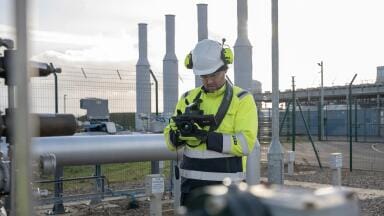
This was especially important for maintenance and grounds staff, whose work takes them across multiple locations and tasks throughout the day. In those circumstances, handheld spot checks can only provide a partial picture and do not accurately reflect personal exposure.
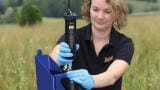
The OmniWear Noise™ dosimeter offered a more practical solution. Small, lightweight, and designed to be worn throughout the working day, it enabled the school to monitor personal exposure more naturally and accurately.
As Sally put it, once worn, “you didn’t notice it was there”, a simple but important advantage when consistent wear is essential for meaningful results.
The shift from handheld monitoring to personal dosimetry gave Denstone College much greater visibility into staff noise exposure. Rather than relying on spot readings, the school could see more clearly what individuals were actually experiencing across the course of the workday.
Averaging the peaks and troughs of asymmetric exposure allowed Sally to identify the risk level to staff and ensure levels did not exceed the prescribed Exposure Action Values Within the Control of Noise at Work Regulations 20025.
The colleagues involved in the trial took a real interest in the data and reports generated.
That engagement proved valuable in its own right. By turning noise from an unseen, easily underestimated hazard into something measurable and shareable, the monitoring helped raise awareness among staff and support a more informed approach to risk.
Compared with previous methods, the OmniWear Noise™ solution delivered more detailed information and a clearer picture of exposure during the monitoring period.
Sally also highlighted the speed and efficiency of data capture, along with the benefit of being able to review device functions and results through the accompanying app.
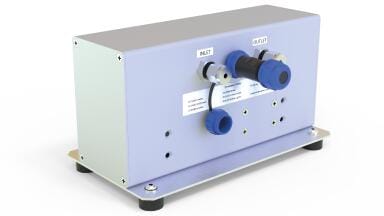
Confidence in the data was another key factor. Using the calibrator to verify performance, together with app-based checks to confirm the device was recording correctly, gave reassurance that the results were reliable and robust enough to support action.
As a result, Denstone updated procedures and safe operating practices, and introduced new training to reinforce correct behaviours, particularly around control measures such as the use of hearing protection.
Monitoring became part of a wider strategy, built on collecting readings and using evidence to strengthen training, improve compliance, and make expectations clearer for staff.
That next step reflects a broader commitment across the school: using practical measurement to better understand exposure, raise awareness, and manage noise risk wherever it occurs.
For Denstone College, personal dosimetry has provided more than just data.
It has delivered a clearer understanding of risk, stronger evidence for decision-making, and a more proactive approach to protecting people across the campus.
IET Guide 2026

 Product directory