Soil testing
A Frontiers in Science paper argues that AI could help soil scientists handle complex datasets, improve predictions for land use, carbon and climate adaptation, and accelerate early-stage scientific work.
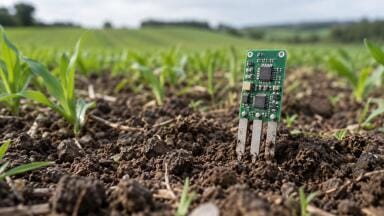
The researchers point to digital soil twins, sensor data, soil microbiome monitoring and computer-based testing of climate adaptation strategies as possible areas of development.

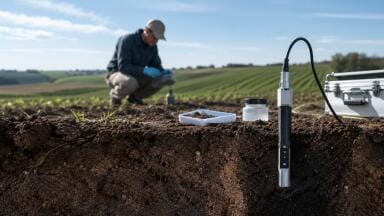
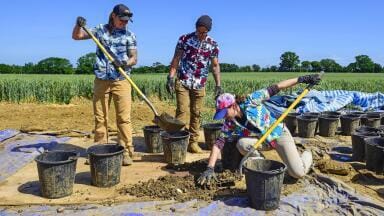
Soil varies by depth, structure, moisture, chemistry, biology, management history and climate exposure.
Unlike air or water, where monitoring networks can often be built around relatively clear sampling points, soil systems are spatially complex and slow-changing.
The research team used a multi-agent AI system to review literature and generate hypotheses about soil carbon storage and its limits.
The system produced hypotheses around climate influence, saturation thresholds, biological and chemical controls, interdisciplinary feedback and management strategies, which were then assessed through expert opinion and simulated peer review.
For monitoring professionals, the key point is that AI does not remove the need for field data. It increases the value of high-quality field data.
Digital soil twins and AI-supported models are only as useful as the measurements feeding them.
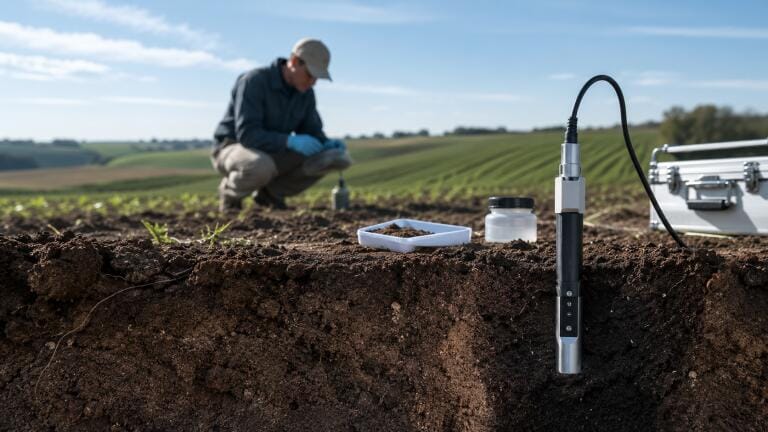
That means soil sensors, spectroscopy, laboratory analysis, microbiome methods, remote sensing, carbon measurements, nutrient testing, compaction assessment, moisture monitoring and erosion data could all become more valuable if they are integrated into AI-ready systems.
The paper also warns about data quality, model transparency, trust, bias, computational cost and the need for human oversight.
That is an important caveat for the monitoring sector. AI will not make poor soil data reliable. It will make the weaknesses in poor data harder to ignore.

The practical opportunity is in building monitoring systems that can support decision-grade soil intelligence.
For land managers, that could mean earlier detection of nutrient loss, water stress, compaction and erosion.
For carbon markets, it could mean more credible soil carbon estimates. For regulators, it could support better evidence on land degradation, restoration and climate resilience.
The future of soil monitoring requires the integration of sensors, laboratories and AI.
IET 36.5 Sept/Oct 2026


 Product directory


.jpg)









.jpg)
.jpg)