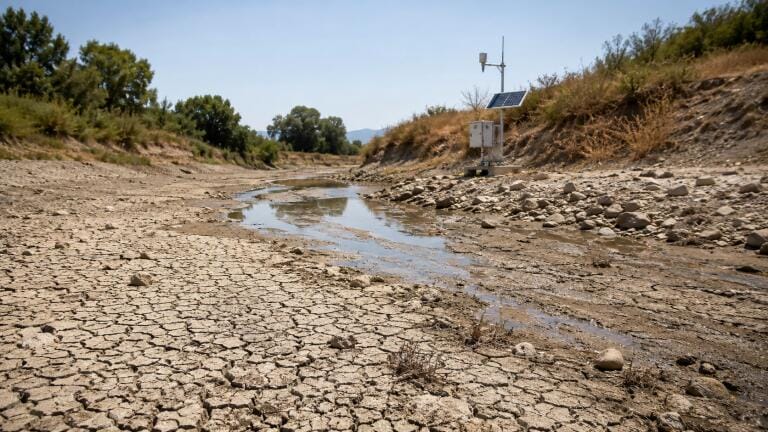
Water monitoring
On 29 July, the Environment Agency (EA) declared drought status across seven areas of England: East Anglia; Hertfordshire and London; the Thames Valley; Hampshire and the Isle of Wight; Devon and Cornwall; the West Midlands; and Wessex, covering Dorset, Somerset, Wiltshire and south Gloucestershire.
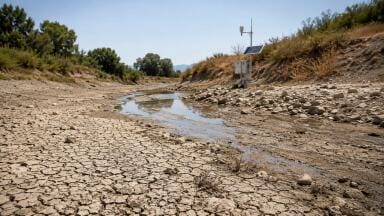
The declaration followed what is on track to be one of the driest Julys on record, with prolonged low rainfall, high temperatures and rising water demand combining to place sustained pressure on rivers, groundwater and the wider environment.
The scale of the response gives some sense of how far conditions have deteriorated.
The EA has so far imposed 1,353 restrictions on abstraction licences this year and has recorded 67 confirmed abstraction or low-flow incidents, concentrated in the West Midlands, Lincolnshire and Northamptonshire, Hertfordshire and north London, and the Thames catchment.
Alongside these, 18 confirmed algae incidents and nine dead fish incidents have been attributed to drought and dry weather conditions since the start of the year.

This builds on a run of individual algal bloom warnings reported earlier in the year at sites including Lincolnshire, the River Hamble and Lough Neagh; what has changed by the end of July is the shift from isolated local warnings to a formal, multi-region drought declaration, with abstraction control as the centrepiece of the response.
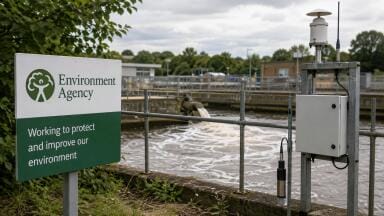
In response, the EA says it is increasing monitoring and enforcement activity across the affected catchments: tighter control of abstraction from rivers and groundwater, additional compliance checks, and operational measures intended to support both public water supply and the environment.
For a network of gauging stations, telemetry and abstraction meters built to handle more typical seasonal variation, this summer represents a genuine stress test of how quickly monitoring data can be turned into enforcement decisions on the ground.
The pressure on the monitoring network has not gone unnoticed at a policy level.
The House of Lords Environment and Climate Change Committee has published a report, Surviving drought: reclaiming the rain, calling for urgent action across several fronts: improved drought planning and monitoring, greater investment in water storage infrastructure at all scales, reform of the abstraction licensing system to allow more flexibility as conditions shift, and a whole-of-society approach to reducing demand.
The committee's emphasis on monitoring specifically reflects a recurring theme in evidence to the inquiry: that current systems are often better at confirming a drought is already under way than at giving early warning of one developing.
That distinction matters for equipment and instrumentation providers working across river and groundwater monitoring, since the practical value of a monitoring network is judged less on its coverage than on how far ahead of a crisis it can flag pressure building.

With abstraction licence restrictions already running into the thousands, and further additions likely if the dry conditions persist into autumn, the case for higher-resolution, more real-time abstraction and flow data looks likely to build regardless of how this particular summer resolves.
For now, the immediate picture is one of an agency managing an escalating situation with the tools already in place, while a parliamentary committee argues those tools need to be more capable before the next dry summer arrives.
Whether reform of the abstraction licensing system translates into investment in the monitoring infrastructure that underpins it is likely to be one of the more consequential policy questions for the sector over the coming year.
IET 36.5 Sept/Oct 2026




 Product directory