River water monitoring
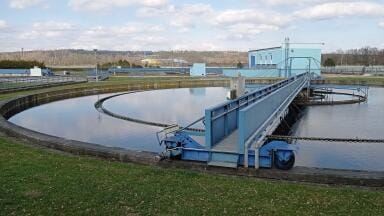
Many of these sites sit close to treated wastewater and stormwater discharges, where short-lived contamination events can expose swimmers to pathogens.
Researchers in Sweden have now demonstrated a method that significantly shortens response times, cutting detection from days to hours.
Tested in Helsingborg by a collaboration between Lund University, Sweden Water Research and Kristianstad University, the approach signals a potential shift away from single-indicator testing toward more dynamic, microbiome-based water quality assessment.
Bathing water monitoring in Europe and elsewhere still relies heavily on culturing Escherichia coli as an indicator organism.
While well established and regulatory accepted, culture-based methods typically take several days to deliver results.
During that window, contaminated water may remain accessible, or conversely, sites may be closed unnecessarily based on outdated conditions.
Indicator bacteria such as E. coli are used as proxies for broader microbial risk, but their delayed detection limits their usefulness in fast-changing urban waters, where contamination from rainfall, sewer overflows or operational discharges can appear and dissipate within hours.
The Swedish research team tested a different approach: analysing the entire bacterial community in a water sample rather than targeting a single organism.
The method combines flow cytometry (a laser-based technique for rapidly scanning cells and particles in liquids) with machine learning models trained to associate changes in bacterial community structure with E. coli presence and concentration.
Flow cytometry generates a high-dimensional fingerprint of the microbiological content of a sample within minutes.
Machine learning algorithms then interpret this fingerprint and estimate E. coli levels with around 80 per cent reliability, based on correlations observed during calibration.
The result is a system capable of analysing a sample in roughly 20 minutes, orders of magnitude faster than culture-based methods.
From a monitoring perspective, the advantages are primarily operational.
The method requires fewer reagents and less manual handling than PCR-based techniques and can be fully automated.
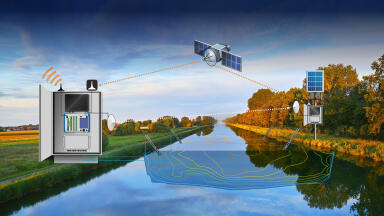
Once set up, a flow cytometer can process samples at intervals as short as every 30 minutes, enabling near-real-time tracking of water quality trends.
The researchers also highlight sustainability benefits, as the approach uses fewer consumables and chemicals than many molecular methods.
Importantly for utilities and regulators, the software underpinning the analysis is open source, lowering barriers to adoption and adaptation.
Access to a flow cytometer remains a limiting factor, placing the method firmly in the domain of utilities and laboratories rather than citizen monitoring.
However, flow cytometry is already well established in many water and microbiology labs, making integration more feasible than deploying entirely new platforms.
One of the more significant implications of the approach is its ability to detect change even when E. coli is absent.
Because it tracks whole bacterial communities, the system can flag anomalies that traditional indicator tests would miss.
In principle, different contamination sources leave distinct microbiome signatures.
Treated wastewater, stormwater runoff and bird droppings, for example, host different bacterial assemblages.
Over time, this opens the possibility not just of detecting contamination quickly but of inferring its likely origin, a capability that current bathing water frameworks largely lack.
For water quality professionals, this shifts microbiological monitoring from a binary pass/fail exercise toward a diagnostic tool that could inform operational responses upstream.
The researchers envisage a future in which microbiome-based measurements feed directly into decision-support systems.
Routine, automated monitoring could trigger bathing water warnings in near real time, while slower, more expensive methods such as PCR are reserved for confirmation, characterisation or regulatory reporting.
Such tiered monitoring architectures mirror developments in other parts of environmental sensing, where rapid screening tools are paired with targeted, high-specificity analyses.
While the method is not yet a regulatory replacement for culture-based E. coli testing, it highlights a growing mismatch between current standards and real-world exposure dynamics.
Urban bathing waters are increasingly variable, and climate-driven changes in rainfall and temperature are likely to amplify short-duration contamination events.
For regulators and monitoring professionals, microbiome-level approaches raise questions about how bathing water safety is defined, measured and communicated.
Faster detection may ultimately demand faster decision-making and regulatory frameworks capable of acting on probabilistic, real-time data rather than delayed confirmations.
The Helsingborg trials do not render existing methods obsolete, but they do point to a future in which microbiological water quality monitoring is faster, more automated and more information-rich.
For the environmental monitoring community, the work underscores a broader trend: moving away from single-parameter indicators toward systems that interpret complex biological signals using advanced instrumentation and data analytics.
In the context of increasingly urban and climate-stressed waters, that shift may prove essential rather than optional.
IET 36.5 Sept/Oct 2026


 Product directory



.jpg)



















.jpg)