Industrial emissions
For industrial operators, however, it has a much more practical consequence: emissions, energy and production data will carry even greater financial weight.
The Commission has launched consultation on revised EU ETS benchmark values used to calculate free allocation of emission allowances for industrial installations between 2026 and 2030.
The update is expected to be adopted through an implementing act after a four-week consultation and Member State review.
The Commission says free allocation will continue to cover around 75% of industrial emissions on average, while the continued treatment of indirect emissions from electricity use across 14 product benchmarks is expected to have a financial impact of around €4 billion over the period.

The significance lies in how these allowances are calculated. Free allocation is not simply handed out according to historic emissions.
It is based on benchmark values designed to reflect the performance of the most efficient installations. The EU ETS framework uses 54 benchmark values to determine free allocation, and those values are updated during Phase 4 to reflect technological progress and avoid windfall profits.
That makes the quality of industrial data increasingly important. A site’s allowance position depends on verified information about emissions, production levels, fuel use, heat flows, process boundaries and energy consumption.
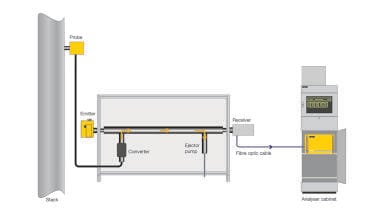
In practical terms, this brings continuous emissions monitoring systems, gas analysers, flow measurement, laboratory testing, energy metering and process-data systems closer to carbon-cost management.
The update also comes against the background of a tightening EU ETS. Following the 2023 revision of the ETS Directive, the cap is intended to bring covered emissions down by 62% by 2030 compared with 2005 levels.
The annual reduction factor has also increased, with further cap reductions scheduled before 2030.
As the cap tightens, the difference between receiving free allowances and needing to buy allowances on the market becomes more commercially significant. For operators, weak data does not only create compliance risk.
It can make it harder to understand carbon exposure, defend allocation claims, prioritise abatement investment or explain performance to verifiers, regulators and internal finance teams.
The electrification element is particularly relevant. By maintaining coverage of indirect emissions from electricity use for 14 product benchmarks, the Commission is trying to avoid penalising industrial sites that replace fossil-fuelled processes with electric alternatives.
For instrumentation users, this widens the measurement challenge. Stack emissions remain important, but so do electricity consumption, electric heat, process allocation, heat recovery and the boundary between direct and indirect emissions.
This is where monitoring moves beyond annual reporting. Operators need systems that can connect emissions data with activity levels, production data and energy-use records.
In sectors such as chemicals, refining, cement, metals, glass, ceramics and pulp and paper, the relevant evidence may be spread across process control systems, laboratory information systems, fuel records, continuous monitoring equipment and corporate carbon-accounting platforms.
The existing EU ETS compliance cycle already requires operators to work with approved monitoring plans, annual emissions reports, accredited verification and allowance surrender.
Operators must submit verified emissions reports by 31 March of the following year and surrender allowances by 30 September. The Commission describes robust, transparent, consistent and accurate MRV as essential to the functioning of the scheme.
The benchmark update reinforces that requirement. It increases the value of traceable, auditable data across the whole site, not just at the final reporting stage.
If a production change, fuel switch, electrification project or heat-recovery scheme alters the allocation picture, operators need monitoring systems capable of recording that change clearly enough to support both regulatory reporting and internal decision-making.
For suppliers, the message is also clear. CEMS manufacturers, gas analysis companies, calibration providers, flow-meter specialists, environmental laboratories and data-management vendors can frame their role around allocation risk as well as compliance.
 The commercial case is not only that accurate monitoring helps operators meet regulatory duties. It also helps them understand how carbon costs interact with efficiency, production planning and decarbonisation investment.
The proposed benchmark update is therefore more than an administrative adjustment to the EU carbon market. It is part of a wider shift in which emissions data becomes a core industrial performance metric.
As free allocation becomes more targeted, more conditional and more closely linked to efficiency, monitoring professionals will be central to helping operators prove where they stand.
IET Guide 2026

 Product directory






















.jpg)