Ambient air quality
Until recently, concentrations of PM₂.₅, nitrogen dioxide and other pollutants in cities like Tashkent were simply compared to World Health Organisation (WHO) guidelines, which have no legal force in Uzbekistan.
Measurements came from a handful of monitoring stations and a patchwork of embassy‑run sensors, while national legislation was silent.
This began to change in 2024: the Ministry of Ecology, Environmental Protection and Climate Change (MoEECC) and the Ministry of Health announced a plan to build a national air‑quality monitoring platform and mobile application.
The platform will use the Comprehensive Air Pollution Index (API) and feed data into a public dashboard, providing people with hourly updates.
The government’s move coincides with growing public alarm.
A World Bank assessment notes that PM₂.₅ concentrations in Tashkent exceed WHO guidelines more than six‑fold and impose health costs equivalent to about 0.7 % of national GDP.
Windblown dust accounts for roughly 36 % of the city’s summer PM₂.₅ load.
In response, the report recommends updating air‑quality standards and legislation, developing a national management strategy and investing in emission‑reduction measures across heating, transport and industrial sectors.
One of the most significant shifts is the creation of national air‑quality standards.
On May 21 2024, Uzbekistan’s Ministry of Health adopted a PM₂.₅ standard for residential air quality aligned with WHO recommendations.
However, scientists inside the MoEECC say the country will not mirror WHO’s strict 5 µg/m³ annual PM₂.₅ guideline.
An expert from the Hydrometeorological Scientific Research Institute notes that Uzbekistan’s own standards are set at 35 µg/m³ annually and 60 µg/m³ daily, which is seven times higher than the WHO annual guideline.
The rationale, according to the climatologist, is that no country fully meets WHO norms; many, including EU nations, set more permissive thresholds.
The authorities argue that Uzbekistan’s geography, with frequent dust storms and desertification, makes the WHO values unrealistic.
This raises a provocative question for environmental professionals: are high national limits a practical step in a challenging environment or a political compromise that entrenches sub‑par air quality?
Uzbekistan’s standards will likely become the legal basis for enforcement; instrumentation suppliers must therefore calibrate sensors to these thresholds while remaining mindful that international investors and donors may benchmark projects to WHO levels.
Building a nationwide monitoring platform requires more than reference-grade stations.
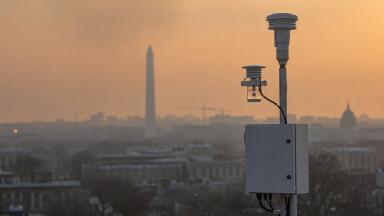
Currently, Uzbekistan relies on about 15 automatic stations in Tashkent (according to government data), leaving large regions unmonitored.
The MoEECC’s 2024 platform announcement implies a multi‑tiered network, combining high‑accuracy reference instruments with cheaper sensors and crowd‑sourced data.
The plan is to expand beyond Tashkent into regional centres and install public information boards to display real‑time pollution levels as part of a dust‑storm mitigation programme.
Instrument suppliers should note the diversity of needs: reference analysers for regulatory compliance, mid‑range monitors for urban air‑quality indices, and low‑cost sensors for dense coverage in neighbourhoods.
Calibration capacity, training, and local servicing will be critical because Uzbekistan is still building technical expertise.
A business model that couples hardware sales with long‑term maintenance and data‑quality audits could succeed.
The most surprising development came in March 2025 when President Shavkat Mirziyoyev signed a law imposing fines on construction companies that exceed dust‑emission limits on sites larger than 500 m².
An initial offence results in a penalty equivalent to 10 basic calculation units (about 3.75 million UZS), while repeat violations incur five times that amount.
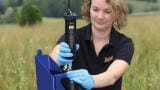
Enforcement will be carried out by the State Environmental Control Inspectorate using handheld samplers called aspirators. Inspectors will also check for the presence of water sprayers to suppress dust.
This dust law creates a new market for portable, rugged particulate monitors.
Instruments must operate under harsh site conditions, be easy to use by inspectors with limited training and produce defensible data in court.
Suppliers may need to adapt products originally designed for industrial hygiene or occupational safety to meet the Uzbek legal context.
The law signals that Uzbekistan is willing to back regulations with financial penalties and publicly visible enforcement, rare in Central Asia.
For instrumentation companies and compliance consultants, Uzbekistan’s transformation offers a test case in navigating an emerging regulatory regime.
The combination of national standards, public dashboards and construction-site dust rules generates demand for stationary reference monitors, mid‑range sensors, low‑cost community sensors, aspirators and rugged portable dust samplers.
Local agencies will also need calibration labs and quality control protocols.
The technical workforce in Uzbekistan is limited.
Vendors should design training modules, certification programmes and remote support systems to ensure data integrity.
Partnerships with universities or hydrometeorological institutes could help.
The national platform will eventually generate enormous datasets.
Suppliers that provide software for data fusion, predictive modelling and integration with emission inventories can differentiate themselves.
Over time, the platform could enable predictive exposure modelling and drive industrial permitting reforms, opening opportunities for analytics and consultancy services.
Instrument performance specifications will need to align with Uzbekistan’s national standards rather than WHO guidelines.
Companies must manage this divergence carefully, especially if they also supply multinational clients who require adherence to stricter limits.
The rush to instrument urban centres can obscure rural exposures.
Dust storms frequently originate in the drought‑stricken Aral Sea region and the Kyzylkum and Karakum deserts; yet it is unclear whether the new monitoring network will extend to these regions.
There is also a risk that low‑income districts and informal settlements will remain unmonitored, perpetuating monitoring inequity.
If the national platform prioritises city centres and construction sites, large populations may still breathe polluted air without evidence or recourse.
Another blind spot is indoor air pollution.
The World Bank notes that residential heating and cooking contribute significantly to PM₂.₅ in winter. Yet current plans focus on ambient (outdoor) air.
Monitoring professionals might ask: When will regulators tackle indoor air quality, and what instrumentation will be needed?
Moreover, the new national standards set a high tolerance for pollutants, raising ethical questions about environmental justice.
Uzbekistan’s blend of regulatory teeth and public transparency hints at a government willing to leapfrog from almost no monitoring to a technologically sophisticated regime.
The dust‑law enforcement via aspirators shows that policy makers are not afraid to specify instruments in legislation.
At the same time, the gap between WHO guidelines and national limits, coupled with the challenges of desert dust and ageing infrastructure, points to a complex path ahead.
For environmental monitoring professionals, this is a rare chance to observe and shape the emergence of a new air‑quality governance system in Central Asia.
Success will depend not only on selling instruments but also on building local capacity, ensuring data quality, and advocating for standards that protect public health.
As Uzbekistan’s data infrastructure matures, expect debates over predictive modelling, industrial permitting, and regional cooperation.
Instrument vendors who anticipate these shifts and engage with policymakers will find opportunities in a market where demand, regulation and political will are aligning—and accelerating.
IET Guide 2026

 Product directory