Ambient air quality
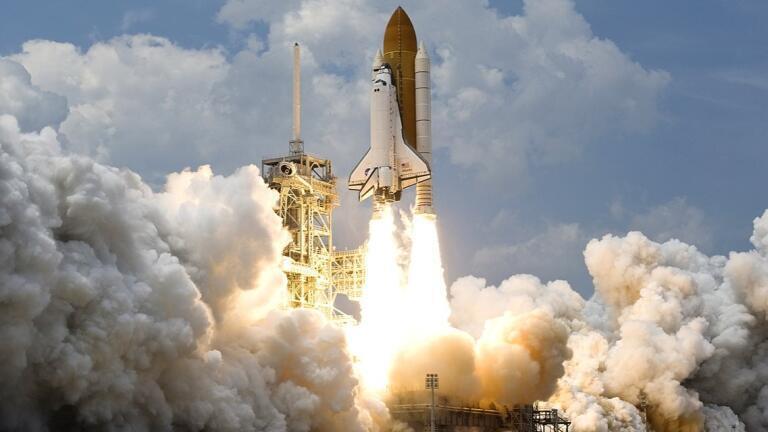
Satellites now crowd the skies, mega-constellations link billions of devices on Earth, and rockets are leaving launchpads at a pace never seen before.
But behind the spectacle, a quieter crisis is emerging: scientists warn that rocket launches and satellite re-entries are generating unprecedented levels of air pollution in the upper atmosphere.
And no one is regulating it.
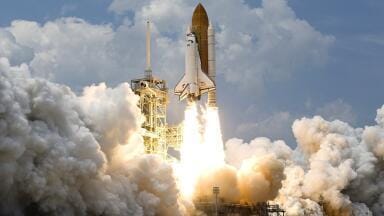
In 2024, a record 259 rockets were launched into space, burning through more than 153,000 tonnes of propellant.
That’s a staggering rise compared with only 100–200 launches annually across most of the late 20th century.
The vast majority of this growth comes from mega-constellation communication networks such as Starlink, OneWeb and Thousand Sails.
According to researchers at University College London (UCL), these satellite constellations alone now account for more fuel consumption than all other missions combined.
“More pollutants are being released into the atmosphere from rockets and satellites than ever before,” said Professor Eloise Marais, who leads UCL’s Atmospheric Chemistry and Air Quality Group.
“We’re in uncharted territory, as humans have never added this much pollution to the upper layers of the atmosphere.”
The total carbon dioxide and soot released by rockets is still small compared with aviation or heavy industry.
But the damage per tonne is far greater.
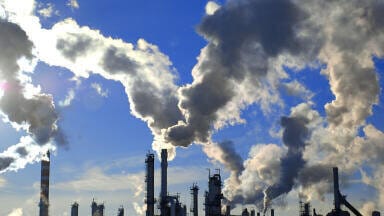
When soot is emitted at high altitudes, it can persist for years, trapping heat with a climate impact up to 500 times more powerful than the same amount of soot at ground level.
Other pollutants are equally troubling.
Solid-fuel rockets release aluminium oxides and chlorine compounds, both of which erode the ozone layer.
Satellite re-entry events add to the burden: in 2024 alone, UCL scientists tracked 2,539 spacecraft and rocket parts burning up in the atmosphere, releasing around 13,500 tonnes of reactive metal oxides and nitrogen oxides into the stratosphere.
These chemicals can linger for decades, undermining hard-won gains made under the Montreal Protocol to protect the ozone layer.
Monitoring this pollution is anything but straightforward.
Space agencies and rocket manufacturers often keep propellant data confidential.
To build the world’s first global inventory of launch and re-entry pollution, Marais’s team had to piece together data from live-streamed rocket launches, open databases maintained by amateur space trackers, and modelling of atmospheric chemistry.
Their findings show a threefold increase in emissions of climate-altering soot and carbon dioxide from space activity since 2019 – when mega-constellation launches began in earnest.
And with Amazon’s Kuiper project poised to deploy satellites via solid-fuel European Space Agency rockets, the mix of pollutants is expected to worsen.
It is not just the launches that matter.
The return journey of spacecraft is now a major driver of atmospheric change.
As satellites and rocket bodies plunge back to Earth, they vaporise into microscopic particles of aluminium, iron and other metals, alongside nitrogen oxides formed in the extreme heat of re-entry.
“We were most surprised by the increase in material falling back to Earth,” said Dr Connor Barker, a UCL research fellow.
“Emissions from megaconstellations are growing faster than we expected, given the first launches were only in 2019.”
For the public, these objects may appear as harmless streaks of light – indistinguishable from meteor showers.
But in reality, thousands of tonnes of material are being incinerated overhead each year.
International law offers little protection.
“The rules of space governance are closer to the high seas than the modern climate regime,” said Professor Stuart Martin, chair of trustees at the UK National Space Centre.
The country that launches an object owns it, and only its domestic laws apply.
That leaves little incentive for operators to factor in atmospheric consequences, let alone coordinate mitigation.
Even the notion of cleaning up orbital debris is mired in jurisdictional wrangling.
The scientists behind the UCL studies are now calling for a dedicated global regime to manage space-related air pollution.
Without intervention, they warn, the rapid growth of the space economy could undo decades of progress in climate and ozone protection.
For environmental monitoring professionals, the message is clear: the frontier of air pollution is no longer limited to power factories or cars.
It extends to the very edge of space.
As the space sector matures, instruments and models will be needed not just to measure rocket plumes and re-entry debris, but to understand their long-term interactions with stratospheric chemistry and climate dynamics.
Space exploration has always promised to expand humanity’s horizons.
The next challenge is ensuring that it doesn’t narrow Earth’s capacity to sustain life.
IET 36.5 Sept/Oct 2026


 Product directory



.jpg)












.jpg)