Air quality monitoring
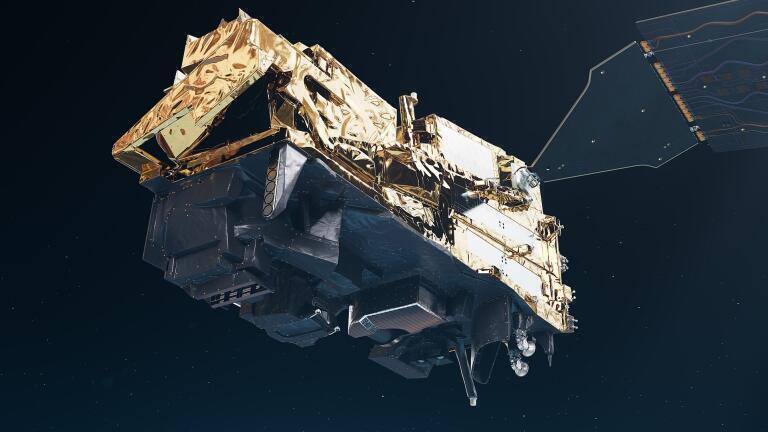
Europe’s space-based environmental monitoring has entered a decisive new phase with the successful launch of MetOp Second Generation-A1 (MetOp-SG-A1).
This is the first of six advanced polar-orbiting meteorological satellites that will shape the continent’s climate and air quality intelligence for decades to come.
Launched at 02:37 CEST on 13 August from Europe’s Spaceport in Kourou, French Guiana aboard an Ariane 6 rocket, MetOp-SG-A1 separated cleanly and deployed its solar arrays just over two hours later.
The satellite’s systems checked out healthy, marking the start of a mission designed not only to track the planet’s atmosphere with unprecedented precision, but also to feed urgently needed data into operational climate and pollution monitoring.
At the heart of MetOp-SG-A1 is the Copernicus Sentinel-5 spectrometer, a state-of-the-art instrument developed by Airbus Defence and Space in Germany.
Capable of detecting trace gases and aerosols across the globe every day, Sentinel-5 will track nitrogen and sulphur dioxide, ozone, methane, formaldehyde and other VOCs as well as aerosols.
The resulting datasets will flow directly into the Copernicus Atmosphere Monitoring Service (CAMS) and Climate Change Service (C3S), underpinning air quality modelling and assessments of greenhouse gas trends against EU and global climate targets.
For environmental monitoring professionals, this means more frequent and more spatially detailed inputs into everything from national emissions inventories to local air quality forecasts, potentially changing the resolution at which interventions can be designed and evaluated.
The MetOp-SG programme will see three successive A-series satellites (focused on atmospheric sounding, trace gas monitoring, and imaging) paired with three B-series satellites carrying scatterometers and microwave imagers for complementary surface and ocean observations.
This A/B pairing ensures continuity and enhancement of Europe’s polar-orbiting meteorological capabilities well into the 2040s, working in tandem with the Meteosat Third Generation (MTG) geostationary satellites.
The dual-orbit approach (global coverage from polar orbit plus fixed-region rapid updates from geostationary orbit) will sharpen forecasting models and strengthen early warning systems for extreme weather and climate-linked disasters.
MetOp-SG has a joint mission architecture.
The European Space Agency leads satellite design and development.
Then, EUMETSAT manages operations (including launches) and data delivery.
The European Commission’s Copernicus Programme provides the framework for Sentinel-5.
Through the Joint Polar System with NOAA, the mission also reinforces transatlantic meteorological cooperation.
Phil Evans, EUMETSAT’s Director General, described the launch as delivering “sharper tools to save lives, protect property, and build resilience against the climate crisis.”
For NOAA, the enhanced European datasets will complement U.S. observations, creating a global atmospheric monitoring backbone.
For those working in air quality and climate observation, Sentinel-5’s spectral capabilities could transform operational workflows.
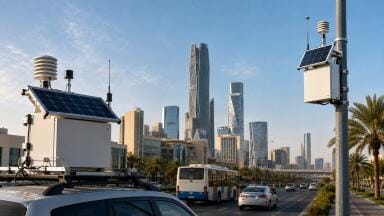
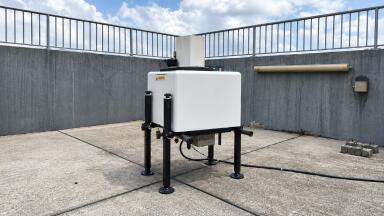
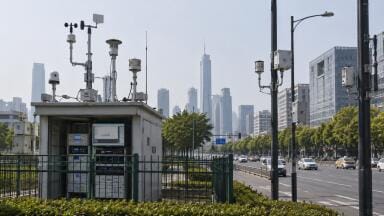
Air quality networks will gain satellite-derived pollutant maps that can validate and extend ground-based readings, especially in under-monitored regions.
Climate researchers can refine attribution studies by tracking both short-lived climate pollutants (SLCPs) and long-lived greenhouse gases with consistent methodology over decades.
Policy and compliance teams will have a clearer view of whether emissions reduction pledges are reflected in atmospheric composition changes.
These advantages are amplified by the mission’s near-global 24-hour revisit time, meaning fresh data every day, everywhere.
In a first for ESA-developed meteorological satellites, MetOp-SG includes active deorbiting capability.
At end-of-life, an additional thruster will guide each satellite into a controlled atmospheric re-entry, burning up safely and reducing the growing risk of space debris – an increasingly important aspect of sustainable space operations.
With its integrated view of weather, climate, and air quality, MetOp-SG-A1 represents one of the most ambitious environmental observation efforts yet attempted from space.
For the next generation of air monitoring professionals, from atmospheric scientists to municipal air quality officers, its data streams could enable the kind of targeted, high-confidence interventions that policy frameworks have long aspired to but rarely achieved.
As the first in a 20-year series, A1 is just the beginning. Each successor will carry incremental improvements, and together they will form a continuous observational record that future analysts may see as one of Europe’s most valuable climate legacies.
IET 36.5 Sept/Oct 2026

 Product directory




.jpg)












.jpg)