Portable & field testing
Beyond water harvesting and carbon capture, these materials are being investigated as the basis for gas sensors, trace contaminant detectors and pre‑concentrators that allow measurement of pollutant species below conventional detection limits.
Current research shows remarkable laboratory performance, but bringing MOF‑based devices into real‑world environmental monitoring faces challenges around stability and cost.
MOFs remain largely a scientific curiosity; only a handful of products have reached the market. A 2025 market report notes that despite >100 000 structures being synthesised, commercial penetration is limited.
The global MOF market is growing ~30 % annually and is projected to reach several hundred million dollars by 2035. Drivers include stricter environmental regulations and concerns over water scarcity.
Early industrial applications. Carbon‑capture MOFs (e.g., CALF‑20) already remove ~1 tonne of CO₂ per day from cement‑plant flue gas, while MOF‑303 can harvest up to 0.7 L of water per kg even in arid Death Valley conditions.
Hazardous‑gas cylinders using MOF storage (ION‑X) are commercially available. These successes show that MOFs can move beyond the lab when the application involves adsorption and regeneration rather than direct sensing.
Scaling production from grams to tonnes while maintaining consistent properties is difficult; high production costs, shaping/activation steps and regulatory testing delay deployment.
Production capacity is concentrated in a few companies; BASF can make several hundred tonnes per year. These factors underpin the viability questions around MOF‑based sensors, which require large‑area, defect‑free films and robust packaging.
The sections below summarise recent advances in MOF‑based gas sensors, trace contaminant sensing and MOF‑enabled pre‑concentration, highlighting performance metrics, applications and remaining obstacles.
MOFs offer exceptionally high surface area and tunable pore chemistry, allowing selective adsorption of target gases and amplification of sensor signals.
However, practical gas sensors must convert adsorption into an electrical or optical response and operate stably in air. Recent research demonstrates promising laboratory devices.
A 2024 study fabricated flexible FET sensors using Ni₃(HHTP)₂ MOF films.
The devices, integrated on polyimide, Kapton tape and facemasks, detected nitrogen dioxide (NO₂) at room temperature with a limit of detection of 56 ppb and remained functional under bending.
This universality suggests potential for wearable air quality monitors.
Vanadium‑based MIL‑47(V) MOF has large surface area and hydrophobic channels.
When integrated onto a resistive gas sensor, it detected NO₂ with a 15 ppb detection limit and maintained stability and humidity resistance over eight weeks.
A “lung‑inspired” sensor grown on laser‑induced graphene uses a hierarchical MOF architecture to achieve a 0.168 ppb detection limit for NO₂ and a 15 s response time.
The porous structure mimics alveoli, yielding high surface area and fast gas exchange. Because the MOF is patterned via a laser process, the device is flexible and can be bent 10 000 times without loss of performance.
MOF‑derived carbon composites (e.g., Ni/Co‑MOF converted to metal oxide/carbon) address the intrinsic low conductivity of many MOFs.
Composites with carbon nanotubes, MXenes or conductive polymers improve electron transport and humidity tolerance.
Flexible resistive sensors fabricated from MOF‑derived ZnO/porous carbon sponges achieve real‑time detection of N,N‑dimethylformamide at room temperature (as reported in 2024) but remain prototypes.
The examples above show sub‑ppb detection and operation at or near room temperature, outperforming many conventional metal oxide sensors that require hundreds of degrees Celsius.
Changing the organic linker or metal node tunes the adsorption strength for specific gases (e.g., NO₂ vs. SO₂). MOFs can act as molecular sieves, enhancing selectivity when coated onto conventional sensors.
Many MOFs degrade when exposed to moisture, heat or reactive gases; hydrolytic, thermal and chemical degradation limit their long‑term use.
Strategies such as using hydrophobic frameworks, strong metal–ligand bonds, composite formation or protective coatings improve stability but add complexity.
Growing uniform, defect‑free MOF films over large areas is challenging. Laser‑induced graphene addresses patterning for small sensors, but scaling to mass production is unresolved. Cost and reproducibility remain barriers.
MOF‑based gas sensors have reached proof‑of‑concept stage with impressive detection limits and potential for flexible, wearable applications.
However, real‑world deployment requires overcoming moisture sensitivity and long‑term drift. Currently, MOFs are more successful in filter or pre-concentrator roles than as stand‑alone sensing materials.
The porous and chemically customizable nature of MOFs makes them promising for detecting trace contaminants such as heavy metals, pesticides, antibiotics and PFAS in water.
MOF sensors employ various transduction mechanisms—fluorescence quenching, electrochemistry or colorimetry—and often use composites to improve stability and conductivity.
A 2024 electrochemical sensor derived from a MOF produced bismuth–copper alloy nanoparticles on a carbon film. This hybrid detected Zn²⁺, Cd²⁺ and Pb²⁺ with detection limits as low as 0.081 ppb and a broad linear range.
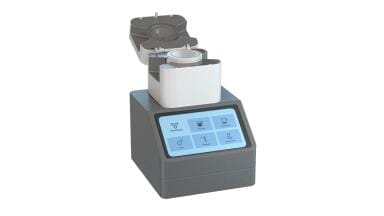
The sensor was integrated into a portable handheld device for on‑site monitoring, demonstrating field applicability.
Defect‑engineered MOFs such as dMOR‑2 functionalized with picolylamine detect Cu²⁺, Pb²⁺ and Hg²⁺ at <2 ppb. Fiber‑optic sensors coated with ZIF‑67 detect Cr(VI) at 1 ppb, while europium‑doped UiO MOFs detect Cd²⁺ at 114 ppb.
These systems demonstrate high selectivity due to tailored pore environments, but performance often declines in complex water matrices.
New MOFs such as IITKGP‑71 act as luminescent sensors for nitrofuran antibiotics and the pesticide dichloroanilide (DCN), remaining stable in water over months.
Hybrid immunosensors combining Bi₂CuO₄, UiO‑67 and Al‑MOF detect Cd²⁺, Cu²⁺, Pb²⁺ and Hg²⁺ at picomolar levels.
Researchers from IIT Bombay and Monash University developed a copper‑porphyrin MOF sensor that matches the performance of DNA‑based gold‑standard detectors and reliably identifies Pb²⁺, Cd²⁺ and Hg²⁺ in tap and lake water.
The sensor works by metal‑ion substitution or accumulation within the MOF lattice and maintains accuracy despite interferents.
However, the MOF degrades after prolonged exposure, making it single‑use; scaling up the coating process remains a challenge.
In real water samples, competing ions and organic matter can quench fluorescence or foul sensor surfaces, reducing sensitivity. Pretreatment or integration with microfluidics is often required.
MOFs can degrade under acidic/basic conditions or after binding heavy metals. Single‑use sensors may be acceptable for low‑cost field tests, but reusability is desirable to reduce waste.
Coating MOFs uniformly on electrodes or fibres is difficult and costly. Research into scalable film fabrication (e.g., electrochemical deposition, spray‑coating) is ongoing.
MOF‑based trace‑contaminant sensors are rapidly improving, with detection limits reaching or surpassing regulatory requirements for heavy metals and certain pesticides.
Single‑use electrochemical devices show the most promise for field deployment.
However, ensuring stability, selectivity in complex matrices and affordable manufacturing will determine whether these sensors become mainstream.
Many pollutant gases and volatile organic compounds (VOCs) exist at concentrations below the detection limits of conventional sensors.
Pre‑concentrators trap analytes over time and then release a concentrated pulse for detection. MOFs’ high adsorption capacity makes them attractive for such roles.
A 2015 microsystem combined MOFs deposited on micro‑hotplates with metal oxide semiconductor (MOS) gas sensors.
The MOFs pre‑concentrated benzene and other VOCs, releasing a concentrated pulse upon heating; this enabled detection at parts‑per‑billion levels and outperformed commercial Tenax® TA adsorbent.
MOFs with >1000 m²/g surface area captured gases efficiently and were tailored for specific molecules.
A 2 cm × 2 cm micro‑electromechanical chip coated with MOF‑5 acted as both pre‑concentrator and separation column, enabling compact GC systems.
The chip achieved high pre‑concentration factors (1 033–1 237) and separation resolutions (3.8–13.3) for low‑concentration VOCs. Such integration reduces the size of GC systems, making them suitable for portable air‑quality monitoring.
Pre‑concentrators multiply the amount of analyte delivered to a sensor, effectively reducing the detection limit by orders of magnitude. MOF‑based pre‑concentrators can be tuned to capture specific VOCs or gases, improving selectivity and avoiding matrix interferences.
Capturing a known volume of gas over time and releasing it allows estimation of fluxes (e.g., methane emission rates).
MOF‑based adsorbents could be incorporated into flux chambers or drones to pre‑concentrate greenhouse gases from diffuse sources; however, such applications remain largely conceptual.
Pre‑concentrators rely on heating the MOF to release analytes. Some MOFs degrade upon repeated heating cycles or exposure to reactive gases, limiting reusability.
Coupling MOF pre‑concentrators with miniaturised detectors (e.g., MOS sensors, micro‑GC) requires careful thermal management and sealing. Achieving rapid desorption without diluting the analyte pulse is critical.
Only a few MOFs (e.g., HKUST‑1/Basolite C300, MOF‑5) have been tested in pre‑concentrators. Tailoring MOFs to target specific pollutants and improving adsorption kinetics will expand their utility.
MOF‑based pre‑concentrators are promising for lowering detection limits and enabling portable GC systems, but they remain in early prototype stages.
Demonstrations of high pre‑concentration factors and integration into micro‑devices show potential; however, long‑term durability, regeneration and system integration need further work before widespread deployment.

Metal‑organic frameworks offer unparalleled design flexibility, high surface area and tunable chemistry, making them attractive materials for environmental monitoring.
MOF‑based gas sensors exhibit sub‑ppb detection and can be integrated into flexible, wearable devices, yet they face issues with stability, humidity sensitivity and large‑scale manufacturing.
MOF‑based trace‑contaminant sensors achieve ppb‑to‑ppt detection of heavy metals and pesticides; their viability is highest in single‑use electrochemical formats, although complex matrices and high fabrication costs remain obstacles.
MOF‑enabled pre‑concentrators demonstrate high enrichment factors that could push detection limits down to previously unmeasurable levels, but the technology is still in developmental stages.
Overall, MOFs are poised to complement rather than replace conventional sensor materials in the near term.
Their greatest impact may lie in hybrid roles—serving as selective filters, pre‑concentration media or components of composite sensing platforms—where their porosity and tunability enhance performance without bearing the full burden of transduction.
Continued progress in MOF synthesis, film fabrication and device integration, alongside cost reductions and durability improvements, will determine how soon MOF‑based sensors and pre‑concentrators become mainstream tools in environmental monitoring.
IET 36.5 Sept/Oct 2026


 Product directory