Gas detection
Increasingly, their viability depends on the purity of the product they deliver.
As captured carbon moves from pilot projects into food, beverage, greenhouse and e-fuels markets, operators are finding themselves in unfamiliar territory.
They are now competing with long-established industrial gas suppliers whose quality standards are exacting.
A recent study under the EU-funded SCOPE programme offers one of the clearest windows yet into this challenge.
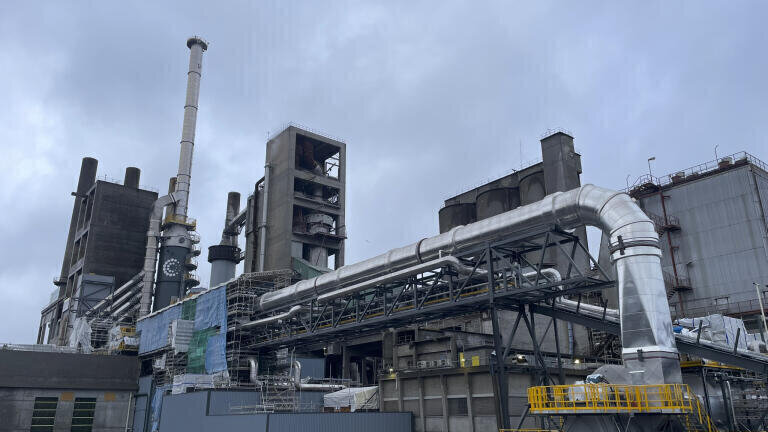
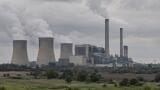
At Twence’s Waste-to-Energy facility in the Netherlands, a pilot plant has been capturing up to 500 kg/h of CO₂ since 2014.
The SCOPE D2.7 report documents a long-term trial of the plant’s output, scrutinising whether CO₂ derived from waste incineration can meet the same benchmarks as beverage-grade product.
The findings are reassuring, but they also highlight just how central analytical equipment has become to the credibility of carbon capture.
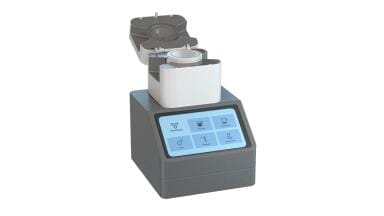
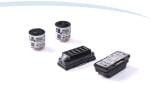
At the heart of the Twence study is a single instrument: the Carboscan 300 (Unisensor).
This analyser, more typically found in the beverage CO₂ supply chain, was adapted to sit directly in the capture plant’s liquid CO₂ lines.
Two sample points were monitored continuously: one between the production unit and the storage tank, and one at the tank outlet before dispatch.
By running in fully automated mode with regular calibration against certified standards, the Carboscan 300 tracked a full suite of contaminants defined by the European Industrial Gases Association (EIGA) doc 70/17.
These include moisture, oxygen, carbon monoxide, sulphur species, nitrogen oxides, volatile hydrocarbons, aromatics, aldehydes and ammonia.
In short: everything that might compromise product acceptance in greenhouse or beverage markets.
This level of monitoring is no small ask.
Many contaminants appear at parts-per-million or parts-per-billion levels, and their concentrations fluctuate depending on column cycling, stripping conditions, or even how tanks buffer the gas.
One of the report’s most striking findings was how quickly process adjustments showed up in the Carboscan readings.
When adsorption columns for water and trace organics were switched based on dew point alone, irregular spikes of methane and other hydrocarbons were detected. Shifting to a stricter, time-based cycling eliminated the peaks.
Moisture levels dropped from under 5 ppm to consistently below 1 ppm once cycling was adjusted; comfortably beneath the 20 ppm EIGA limit.
Oxygen concentrations, which occasionally pushed towards 30 ppm, were brought down simply by increasing the fraction of CO₂ reboiled in the stripping unit.
For all the sophistication of the monitoring, some gaps remain. Amines, central to the capture chemistry itself, were not measured.
Continuous online amine detection is still a technical challenge, and the report acknowledges that without such data, a full risk assessment for downstream users is incomplete.
This is a wider problem for the sector.
As carbon capture moves into industries where CO₂ is ingested (food, beverage, greenhouses), the burden of proof will only rise. Instruments that can catch low-level contaminants — amines, microaerosols, novel degradation products — are still in development.
Until they mature, projects like Twence must rely on proxies, reference standards, and trust in their operating envelopes.
Perhaps the most encouraging result of the Twence trial is that no “unexpected” contaminants were detected at meaningful concentrations.
Even though the feedstock was waste incineration flue gas, a notoriously variable source, the captured CO₂ was consistently more than 99.9% pure, with most contaminants sitting at 1/100th or less of the allowable thresholds.
For greenhouse operators, that matters. By substituting captured CO₂ for fossil-derived CO₂, they not only cut natural gas use but also lock carbon into a short-term cycle of growth and respiration.
For capture operators, it points to a future where product quality can be benchmarked and certified with confidence.
The lesson for environmental monitoring is clear: purity monitoring is now integral to the credibility of carbon capture.
For instrumentation suppliers, this opens new markets. Gas analysers proven in the food and beverage sector are now being adapted for capture plants.
Calibration regimes, once the preserve of industrial gas distributors, are becoming part of standard capture plant operation.
And there is space for innovation in amine detection and ultra-trace contaminant monitoring.
The report also hints at a cultural shift. Regulators and markets will expect transparency in quality data.
If the first phase of carbon capture was about scaling absorption columns, the next will be about scaling trust. Trust that captured CO₂ is not only low-carbon but safe and market-ready.
Analytical equipment like the Carboscan 300 has already shown it can shoulder that responsibility but only as part of a system where monitoring and operations feed into each other.
As utilisation markets grow, from greenhouse gases to synthetic fuels, the demand for robust, adaptive purity monitoring will only intensify.
For environmental monitoring professionals, this is a call to expand beyond compliance and ask a sharper question: what makes captured CO₂ good enough to use? The answer increasingly lies in the analyser’s readout.
IET 36.5 Sept/Oct 2026


 Product directory



.jpg)








.jpg)





.jpg)