CEMS
From thermal power plants belching sulphur dioxide to the acrid fumes of brick kilns, the country’s emissions often eclipse the limits set in law.
In response, the Ministry of Environment, Forest and Climate Change began mandating continuous emissions monitoring systems (CEMS) and effluent monitoring for 17 categories of highly polluting industries more than a decade ago.
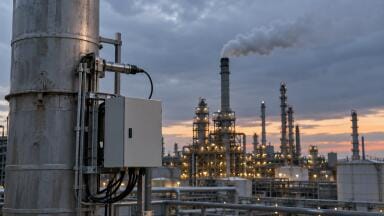
Those monitors now number more than 30,000 across some 6,000 industrial facilities. The idea is to move from occasional spot checks to real‑time, regulator‑controlled surveillance.
Yet the detail of how those systems are approved and quality‑assured is arguably as important as the sheer number of monitors installed.
At first glance, India’s strategy seems sensible: rather than wait for its own certification scheme, the Central Pollution Control Board (CPCB) accepts two well-established approaches – the European Union’s type‑approved monitors and the United States Environmental Protection Agency’s (EPA) performance‑based specification tests.
CEMS must be shown to be fit for purpose using either European Quality Assurance Levels (QAL) or US performance specifications.
In practice that has created what one industry commentator calls a hybrid system, where regulators recommend certified CEMS but also allow non‑certified devices if they pass performance tests during installation.
To encourage domestic manufacturing, Indian operators are free to choose either route.
The two standards, however, are built on very different philosophies.
In the EU, continuous monitors must be put through a rigorous type‑approval process.
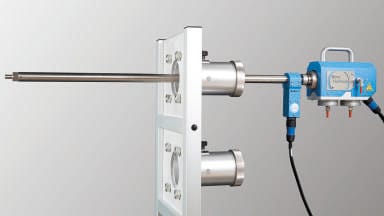
Under schemes such as the UK’s MCERTS or Germany’s TÜV/UBA approval, a complete analyser – including sample probe, conditioning unit and data acquisition – is tested against harmonised standards like EN 15267 and EN 14181.
Each certificate specifies the pollutants measured, the certified range of concentrations and the limitations of use.
Once approved, that device can be treated as plug‑and‑play: operators are expected to perform only limited on‑site calibration before entering service and to follow prescribed calibration and surveillance intervals (QAL2, QAL3 and annual surveillance tests).
The system is expensive and takes time – certification may last between six months and two and a half years – but the reward is a high degree of confidence in the data and comparability between sites.
The EPA approach could not be more different.
Instead of approving instruments in the lab, the US federal rules set out performance specifications in 40 CFR Parts 60 and 75.
Any device – whether home‑built or imported – can be installed as long as it passes a suite of tests at the stack or duct itself.
These include a seven‑day calibration drift check, three‑day correlation tests against reference methods, quarterly linearity checks and annual Relative Accuracy Test Audits (RATA).
The onus is on the plant operator to prove to regulators that their equipment meets the specification and continues to do so over time.
This site‑specific philosophy offers flexibility and fosters innovation but it demands a great deal of operator competence and regulatory oversight.
Accepting both systems simultaneously introduces practical tensions.
A European device certified for a particular range and process might be treated as plug‑and‑play, yet India’s guidance manual also requires monitors to demonstrate performance during installation.
If a TÜV‑approved analyser fails a seven‑day drift test, should it be rejected despite its certificate?
Conversely, a non‑certified, perhaps cheaper, monitor might pass its initial calibration and correlation tests but later be found unstable.
The EU’s QAL regime emphasises long‑term stability (zero and span checks, quarterly tests and annual surveillance), while the EPA’s system focuses on initial drift and correlation, with the operator legally responsible for keeping the system in control.
These regimes are not interchangeable.
A QAL‑certified monitor may not satisfy US tolerance thresholds, while a monitor designed for US specifications may lack an EU‑style certification range or the detailed documentation regulators expect.
There are also more subtle incompatibilities. European emission limits are expressed at 0 °C with an oxygen reference of 11% and use standardised averaging periods, whereas US limits use a 7% oxygen reference and different averaging intervals.
European certificates are issued in normal cubic metres (Nm³), while US practice refers to dry standard cubic feet.
Without consistent conversion, combining data streams from both systems risks misinterpretation.
Moreover, the conditions in which an EU‑certified monitor is tested may not reflect the hot, dusty or corrosive environments found in many Indian stacks.
If a device certified for relatively low particulate loads is used on a coal‑fired boiler with poorly operating electrostatic precipitators, does its certificate still inspire confidence?
The absence of a domestic certification and laboratory accreditation system compounds the problem.
Analysts from the Centre for Science and Environment note that India has no certification scheme for CEMS.
Laboratories capable of performing field calibrations and relative accuracy audits are few, and there is no formal recognition system.
The result is predictable: regulators do not trust the data.
Only about half of coal‑fired power plants regularly supply emissions data, despite almost universal installation of monitors.
There is almost no reliable data on mercury emissions, and poor‑quality sulphur dioxide and nitrogen oxides measurements were common.
Without trust, real‑time monitoring cannot be used for enforcement and the promise of transparency evaporates.
All of this matters because India’s monitoring regime sits at the intersection of several emerging agendas.
One is the planned carbon credit trading scheme, which will require high‑quality measurements of emissions to ensure integrity.
Another is the increasing integration of ambient air monitoring, satellite data and continuous stack monitoring into comprehensive management systems.
In each case, the credibility of the data is paramount.
At a minimum, India needs its own certification framework tailored to local conditions, perhaps administered by the Bureau of Indian Standards.
Such a scheme could borrow the EU’s insistence on independent laboratory testing but incorporate the site‑specific flexibility of the EPA system.
Regulators should clearly specify when EU‑certified monitors are acceptable as plug‑and‑play and when EPA‑style performance tests are required; there should be no grey zone where either standard is deemed good enough.
Independent laboratories capable of performing field calibrations, correlation tests and annual audits must be empanelled, and operators need training.
Harmonising units and reference conditions (for example by mandating reporting in mg/Nm³ at 11 % oxygen for all monitors) would reduce confusion.
Transparency also matters: even imperfect data builds trust when it is shared openly and subject to scrutiny.
There is also an opportunity for Indian instrument makers.
The lack of certification has opened the door to imports, but a domestic approval regime could set standards that fit India’s climate, fuel mix and industrial processes.
A robust local market would drive innovation and lower costs.
The National Physical Laboratory has been authorised to develop an indigenous certification system, but progress has been slow. Accelerating that work should be a priority.
IET 36.5 Sept/Oct 2026


 Product directory




.jpg)


















.jpg)





.jpg)