Fixed gas detector
By continuously monitoring Total Electron Content (TEC) — the density of free electrons in Earth’s upper atmosphere — the system provides a new platform for studying earthquake precursors and their potential role in early warning.
The ionosphere, a charged layer beginning around 60 km above Earth’s surface, is known to respond to natural forces ranging from solar flares and geomagnetic storms to volcanic eruptions and rocket launches.
In recent decades, researchers have also observed that stress building deep in Earth’s crust before a quake can generate distinctive ionospheric anomalies.
“TEC has emerged as a potential tool for monitoring ionospheric anomalies preceding seismic events, enhancing early warning systems,” said Gopal Sharma of the North Eastern Space Applications Centre (NESAC), who led the monitoring system’s development.
TEC is measured using Global Navigation Satellite System (GNSS) signals — including GPS and India’s IRNSS — which are delayed as they pass through the ionosphere. Anomalies in this delay can reveal shifts in ionisation linked to tectonic stress.
Until now, researchers studying earthquake precursors had to piece together TEC data from multiple international providers, often manually.
The new platform automates the process, integrating and analysing data streams in near real time.
The system pulls hourly TEC data from the Russian Academy of Sciences’ IZMIRAN service, based on global GNSS stations.
Then, it stores the data in a central MySQL database that updates automatically every day at 9am IST.
Afterwards, the platform applies statistical models to detect anomalies greater than two TEC units compared to a 15-day running median and cross-references anomalies with geomagnetic indices (Dst and Kp) to filter out solar or magnetic disturbances.
This triggers an automatic email alert when anomalies are detected.
“Monitoring of TEC in real-time may prove an excellent input for the effective precursory study of earthquakes,” Sharma explained.
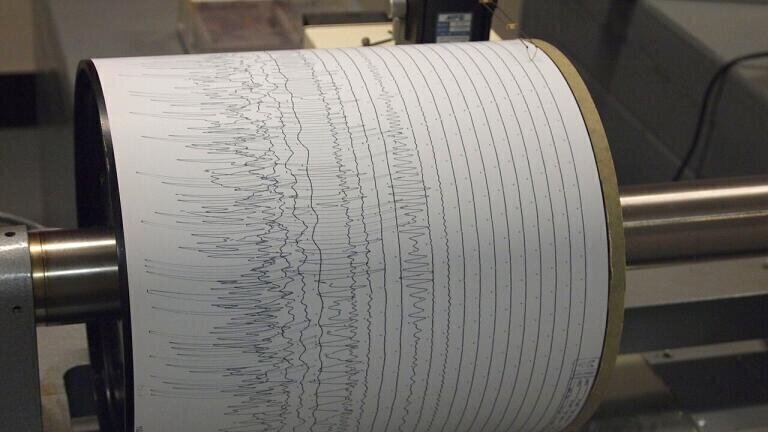
To prove the system’s value, the researchers studied 28 earthquakes that struck Tibet between July and August 2020, ranging from magnitude 4.0 to 5.0.
They found multiple anomalies in the weeks preceding the events. A negative anomaly on 28 July was followed by sixteen earthquakes in early August, including several close to magnitude 5. Another anomaly on 16 August was linked to two quakes of magnitude 4.8.
By comparing these fluctuations with geomagnetic activity indices, the team confirmed that the signals were not caused by solar storms, strengthening the case that they were earthquake-related.
Recent disasters underline the stakes.
The 2023 Morocco earthquake killed 2,600 people; the March 2024 Myanmar quake killed more than 5,000; and in August 2024, a late-night earthquake in Afghanistan flattened hundreds of mountain villages, killing 2,200. Casualties are often high because people are caught unawares.
In all these cases, if people had been aware of an impending earthquake, the casualties may have been less, but we do not as yet have the science to predict earthquakes.
“Seismologists cannot predict when and where a large earthquake will occur,” added Jnana Ranjan Kayal, former deputy director general of the Geological Society of India. “They can, however, map the zones vulnerable to seismic upheavals.”
Sharma and colleagues stress that their system is not an earthquake prediction tool, but a scientific platform for detecting and analysing possible precursors.
Their earlier work has linked TEC anomalies to several major quakes, including the 2015 Nepal disaster.
“TEC variations (mostly high TEC) had been observed during a period of eight days prior to four earthquakes,” Sharma reported of that event.
More recently, his team identified “a significant positive anomaly … on the precise day of the [2023 Morocco] earthquake.”
Other scientists are exploring complementary methods.
“VLF emissions have the advantage of potentially providing information on earthquake magnitude, epicentre and time of occurrence, even allowing for the distinction between foreshocks and mainshocks,” noted Tamal Basak of the Ionospheric & Earthquake Research Centre.
“TEC, on the other hand, can be used to detect anomalies in the ionosphere that may precede earthquakes, although research is ongoing to determine the most accurate methods.”
Sceptics remain. “Predicting earthquakes, even if it is possible, is of no practical use,” said Kayal.
“If an earthquake is predicted to occur within 10 to 15 days in Calcutta, can we vacate the city for that period? Instead, we should learn to live with nature, creating an earthquake-resilient society like that of Japan.”
For now, the Indian team’s monitoring system represents a technical leap forward: automated, scalable and freely adaptable to earthquake-prone regions worldwide. Future upgrades could add further geophysical parameters and expand coverage across the Himalayas and beyond.
As Sharma concluded: “This system may enable researchers to observe the ionosphere conditions before an earthquake and may open up new avenues to understanding earthquake phenomena.
“It serves as an excellent tool for pre-earthquake anomaly detection and monitoring and can help in the study of other space weather conditions.”
IET Guide 2026

 Product directory