Gas detection
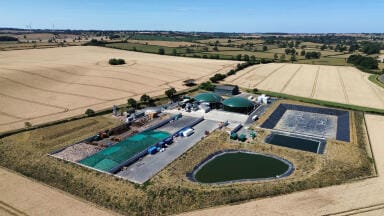
The SCOPE trials at Twence demonstrated that even a waste-to-energy feedstock can yield liquid CO₂ within beverage-grade specifications.
But the study also underscored the limits of current practice, especially the difficulty of continuously detecting amines and other ultra-trace contaminants.
That gap has pushed two analytical technologies into the spotlight: Fourier-Transform Infrared Spectroscopy (FTIR) and Optical Feedback Cavity-Enhanced Absorption Spectroscopy (OFCEAS) with low-pressure sampling.
Both promise to advance the state of the art, but in very different ways.
FTIR is the more established of the two. It works by measuring how gases absorb infrared light across a broad spectrum, giving operators the ability to identify multiple contaminants simultaneously.
In CO₂ monitoring, FTIR’s attraction lies in its versatility. A single instrument can cover a wide range of impurities, from sulphur compounds and nitrogen oxides to volatile organics, and it comes with the weight of regulatory familiarity.
FTIR is already written into several European standards for stack monitoring, which makes it easier for regulators to accept in purity assurance contexts.
But while FTIR’s breadth is a strength, its sensitivity at very low concentrations can be a weakness.
In a matrix dominated by CO₂, spectral overlap can mask impurities present at only parts-per-million or below, which is precisely where future utilisation markets are likely to set their thresholds.
OFCEAS, by contrast, is designed for precision rather than breadth. It uses a laser beam trapped in a low-pressure optical cavity, bouncing thousands of times to create an effective path length of several kilometres.
This extreme sensitivity brings detection limits down into the parts-per-billion range. For contaminants such as oxygen, carbon monoxide, methane or trace sulfur species, OFCEAS offers cleaner signals and more reliable quantification than FTIR.
The trade-off is that OFCEAS is narrower in scope. It is not a catch-all monitor, but a specialist tool for a select group of impurities, and the instrumentation remains relatively costly and less widely deployed.
So which will become the recommendation? At this stage, the answer seems to be: "both.”
FTIR offers the broad-spectrum assurance regulators and operators are already accustomed to, while OFCEAS provides the precision needed to guarantee that the handful of most problematic contaminants are truly absent.
Rather than one replacing the other, the technologies look set to be complementary: FTIR as the generalist, OFCEAS as the specialist, and together providing the data confidence that premium CO₂ markets will demand.
For monitoring professionals, the strategic question is no longer which technology is better, but which contaminants matter most to the value chain being targeted.
If capturing CO₂ is viable, broad-spectrum coverage may be sufficient. If it is destined for fuels, chemicals or food and drink, the precision of cavity-enhanced spectroscopy will be harder to avoid.
Ultimately, the FTIR versus OFCEAS debate points to a bigger truth about carbon capture: purity is not just a technical parameter but a question of trust.
Whether regulators and buyers are reassured by breadth, by depth, or by both will decide which monitoring systems become indispensable.
For now, the safest conclusion is that operators will need instruments that can do more than one job — not simply proving that CO₂ is captured, but proving beyond doubt that it is clean enough to use.
IET Guide 2026

 Product directory