Ambient air quality
Its design holds lessons for anyone monitoring a planned release of a toxic metal.
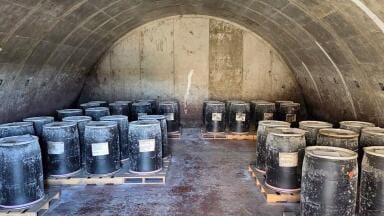
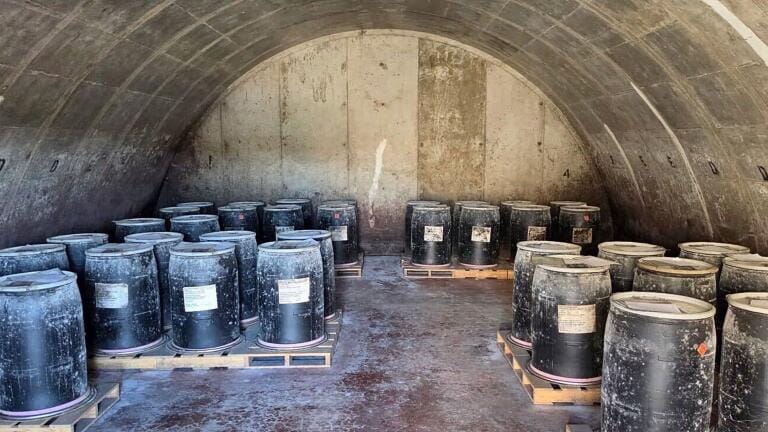
On 25 November 2026, US Army explosive ordnance disposal teams detonated 68 drums of degraded lead azide in place at the Iowa Army Ammunition Plant in Middletown, Iowa.
The drums held more than 9,700 lb net explosive weight. The material had recrystallised in storage, making it more sensitive to friction and shock, and the drums could no longer be safely opened or moved.
US Environmental Protection Agency (EPA) Region 7 authorised the detonation under an emergency permit issued on 13 November under the Resource Conservation and Recovery Act (RCRA).
For environmental monitoring teams, the event was unusual in one respect: the time, place and contaminant of the release were all known in advance.
That gave the response something most incident monitoring lacks – a measured ‘before’ against which to judge the ‘after’.

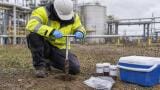
By the morning of the detonation, the EPA said it had collected 1,216 samples: 650 soil, 297 dust, 210 water and 59 air.
In an update the following day, the agency put the pre-detonation total at 1,591 air, water, soil and dust samples.
The reason for this effort is attribution. The plant is a federal Superfund site with a long history of contamination, and lead is already widespread in older housing, roadside soils and urban dust.
Without a pre-event result at the same location, a post-event lead reading cannot be confidently assigned to the detonation.
The EPA said more than 130 structures sampled before the blast were sampled again on the day of the detonation.
That paired design – the same surface, sampled twice – is the most direct way to separate new deposition from existing contamination.
Sampling locations were driven by modelling rather than distance alone.
Before the detonation, the Army published dispersion and surface deposition maps showing a potential plume travelling southwest of the plant into north-east Missouri. The deposition maps used two contours: 5 µg/ft² and 100 µg/ft².
Those figures match the dust-lead action levels for floors and window troughs set in EPA’s 2024 final rule on dust-lead hazard standards.
The maps therefore translated directly into thresholds that residential lead assessors already use. Pre-detonation maps showed lead dust settling at 5 µg/ft² or more across around 148 square miles.
According to reporting on the permit conditions, the official plume maps had to assume that all of the lead would become airborne. The Army’s own ‘mitigated’ scenario assumed a smaller fraction.
A conservative assumption of this kind widens the area in which sampling is required, at the cost of more samples.
Reported permit conditions include soil sampling and wipe sampling of high-touch surfaces within 24 hours inside the 100 µg/ft² contour.
They also include a revised estimate of the affected area within six hours, based on actual weather, and findings with a short-term clean-up plan within five days of validated results.
A final report is reportedly due within 30 days. The permit also requires monitoring of air, soil, surface water, sediment and groundwater on and off the plant.
After the detonation, the EPA said it sampled homes, public parks with playgrounds and every drinking water intake within the pre-detonation plume model. Schools, daycare centres and churches were to follow.
Samples were also taken from nearby farms with the US Department of Agriculture, and from water in the Mississippi River watershed, both before and after the event.
The headline result so far comes from real-time air monitoring.
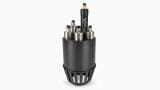
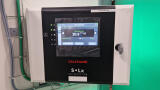
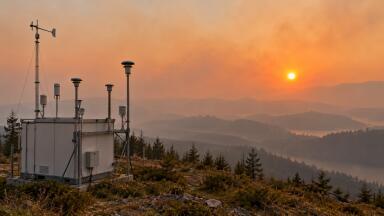
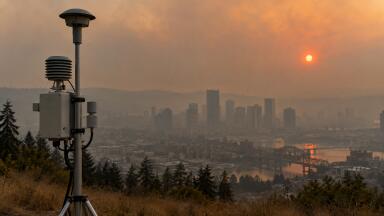
The EPA said its Xact monitors – continuous multi-metal analysers that collect particulate on filter tape and analyse it by XRF – reported zero detection of airborne lead from the moment of detonation.
Four monitoring stations were operating in the area, according to EPA statements reported by CBS News, with data points reported every five minutes during the event.
For a technical reader, ‘zero detect’ needs qualifying. It means lead was below the instrument’s detection limit at those fixed points over each measurement interval.
For this class of instrument, the detection limit depends on sampling time. The manufacturer quotes limits below 1 ng/m³ for one-hour sampling, and shorter cycles raise the limit.
The detection limit applied to the five-minute data has not been stated in the EPA’s public updates.
The available benchmarks are also of different kinds.
The US National Ambient Air Quality Standard for lead is 0.15 µg/m³ as a rolling three-month average, which cannot be meaningfully compared with a five-minute reading.
The EPA’s public data viewer instead cites the US Department of Energy’s Protective Action Criteria-1 value of 32 µg/m³ – a short-term screening level for mild, temporary health effects.
There is also a question of coverage. A detonation produces a transient puff rather than a continuous plume, and four fixed monitors sample a small part of a large modelled footprint.
For lead, the exposure route of most concern is deposition onto surfaces that children touch, not inhalation during the event.
Experts quoted by NBC News said it was too early to draw conclusions about lead from the air data alone.
The EPA’s programme reflects this. Air cassettes for laboratory lead analysis are being replaced and continued alongside the real-time units, and particulate matter is also being monitored.
Summa canisters for volatile organic compounds ran for 24 hours from 4.00am on the day of the detonation. Soil and dust sampling was due to finish on 26 November.
The response also shows the analytical capacity a sampling surge of this scale demands. The EPA said 300 personnel and contractors were pre-positioned.
More than 1,000 post-detonation samples were collected within around 24 hours. They are being sent to the agency’s Region 7 laboratory in Kansas City, Kansas, to mobile laboratories on site and to contract laboratories.
The agency listed 170 pieces of equipment, including a mobile command centre, three mobile laboratories and an air toxics laboratory. It expects the first post-detonation laboratory results from 27 November.
The monitoring took place against a legal challenge. The Iowa Environmental Council and the Sierra Club petitioned the US Court of Appeals for the Eighth Circuit over the permit.
They argued that the EPA had not required the Army to consider safer treatment alternatives and that the permit conditions did not adequately protect public health.
The court paused the permit on 19 November, then lifted that pause on 23 November, finding the risk of an uncontrolled explosion greater.

Several elements of the design carry over to any planned release of a toxic contaminant, from demolition and decommissioning to open burning and detonation of energetic wastes.
Baseline samples are most useful when they are taken at the receptors that will be sampled afterwards, not only at the site boundary.
Sampling density can reasonably be tied to modelled deposition, provided the model uses a conservative release assumption.
Real-time air data is a screening tool, not an exposure assessment, and should be reported with its detection limit and averaging time.
Laboratory results on soil, dust and water are what will show whether the modelled deposition occurred. Those results are due from 27 November, and they will determine whether the permit’s clean-up provisions are triggered.
AET 30.4 Nov 2026



 Product directory