Environmental laboratory
Mercury control is of fundamental importance in industrial operations, supporting quality control, process efficiency, and environmental management. Since mercury can enter through raw materials and fuels and circulate through different production stages, effective monitoring must extend beyond final emissions.
During our recent webinar, Milestone Application Specialist Valentina Carrara explored how Direct Mercury Analysis simplifies industrial mercury monitoring, with practical examples from the coal and cement industries.
In cement manufacturing, mercury can enter through limestone, clay, and conventional or alternative fuels. During production, it may circulate within the kiln system and be found in collected dust, final products, or atmospheric emissions.
Similarly, mercury naturally present in coal can be redistributed during preparation and combustion.
Monitoring different stages of production provides valuable insights into mercury distribution, supporting raw-material screening, fuel quality control, and environmental management.
Traditional techniques such as ICP-MS and cold vapour methods often require sample digestion, chemical reagents, and time-consuming preparation.
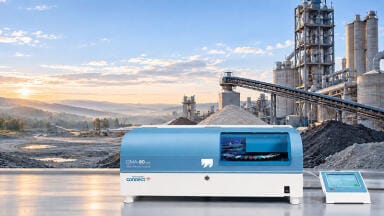
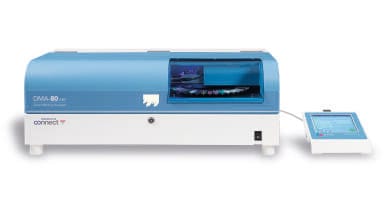
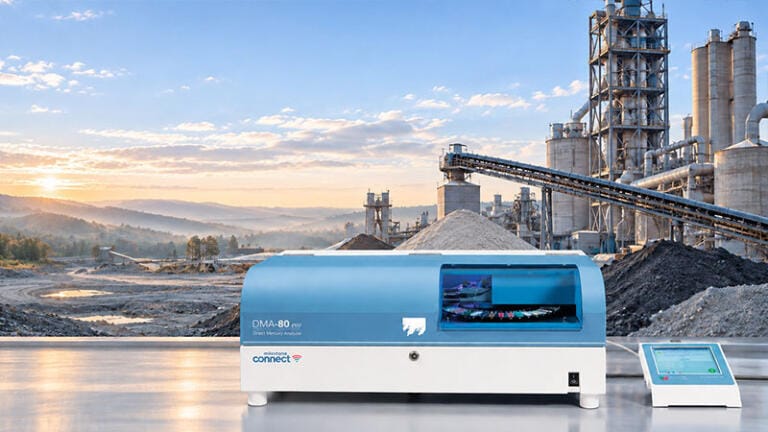
Milestone's DMA-80 evo determines total mercury directly in solid and liquid samples through thermal decomposition, gold amalgamation, and atomic absorption spectrometry.
Samples are weighed directly into a sample boat and introduced into the instrument, with results available in less than six minutes under the methods demonstrated during the webinar.
Eliminating acid digestion reduces handling, reagent consumption, and preparation time. Features such as Double-Beam optics and Auto-Blank functionality further support reliable measurements across different industrial matrices and mercury concentrations.
Coal presents analytical challenges due to its composition and potential heterogeneity. Reliable mercury determination is important from mining and preparation to power generation.
The webinar demonstrated direct mercury analysis using approximately 50 mg of coal, without digestion.
Analytical results:
Sample | Mercury concentration |
Coal Lot 1 – Four measurements | 10.22–11.28 µg/kg |
NIST 2682c – Measured | 108.9 µg/kg |
NIST 2682c – Certified | 105.1 ± 9.3 µg/kg |
The replicate measurements showed good consistency, while the certified reference material result fell within its certified range, supporting the method's suitability for routine coal characterisation and quality control.
The increasing use of alternative fuels introduces additional challenges for cement producers. Materials such as refuse-derived fuels (RDF), solid recovered fuels (SRF), and biomass can vary significantly in composition and mercury content.
The webinar presented measurements from two RDF lots analysed with the DMA-80 evo. Results revealed differences in mercury concentration, highlighting the importance of evaluating individual fuel batches.
Using approximately 50 mg of representative sample, the analysis was completed in less than six minutes without acid digestion.
This approach supports efficient fuel acceptance testing, quality control, and process monitoring.
Better mercury control starts with better analytical visibility.
By enabling rapid mercury determination across different industrial matrices, Direct Mercury Analysis helps laboratories expand routine monitoring, streamline workflows, and provide timely data for operational and environmental decisions.
Explore Direct Mercury Analysis for your laboratory
AET 30.4 Nov 2026

 Product directory