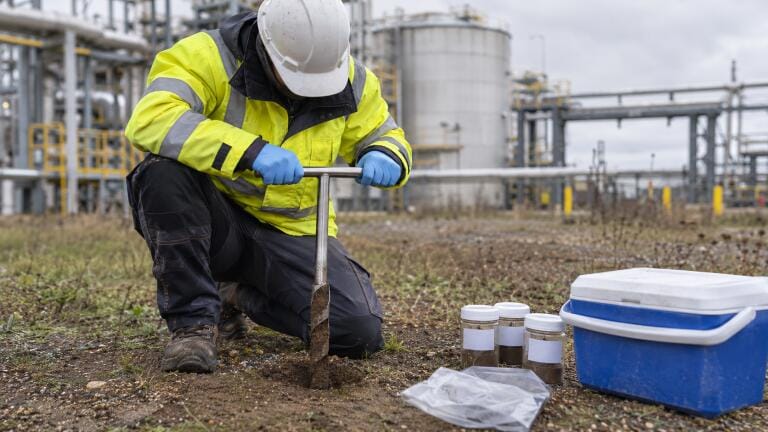
Soil testing
A chemical manufacturer’s £103,850 fine rested on an unannounced inspection, soil results from two laboratories and satellite imagery used to rule out earlier contamination.
Each part of that evidence chain holds lessons for operators and laboratories.
Prefere Resins UK Ltd was sentenced at Newton Aycliffe Magistrates’ Court on Friday, 13 November 2026.
It had admitted one charge of illegally discharging waste liquid to land and two charges of failing to put management systems in place to prevent pollution.
The company entered its guilty pleas at an earlier hearing on 16 June.
In addition to the fine, it was ordered to pay costs and a victim surcharge totalling £18,784.61.
The company’s site at Newton Aycliffe, County Durham, operates under Environmental Permit EPR/XP3635ET. It is regulated as an upper-tier Control of Major Accident Hazards (COMAH) establishment.
In England, COMAH is enforced by a competent authority in which the Environment Agency works jointly with the Health and Safety Executive (HSE).
The offence came to light during an unannounced Environment Agency visit in July 2024, when part of the plant was shut down for maintenance.
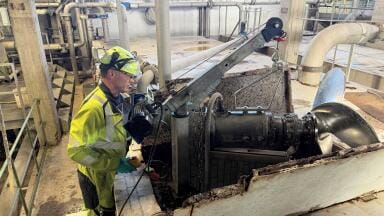
The company was draining and flushing a phenol recovery column unit in preparation for that work. Officers found a hose from the unit discharging phenol, which the Agency describes as toxic, on to unmade ground.
Around 70m² of ground was affected. The site lies within a groundwater protection zone, but the Agency identified no impact on groundwater.
The company carried out remediation and has since revised its operating procedures.
The inspection also found wider gaps in site management. There was no documented procedure for washing the pump at the base of the phenol recovery unit.
Incompatible materials were also stored together, with waste electrical equipment kept beside drums of acetone, a highly flammable liquid. These findings underpinned the two management-system charges.
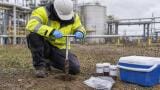
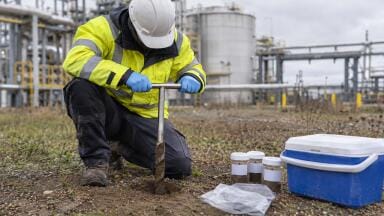
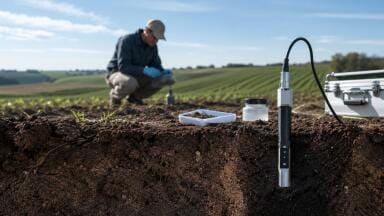
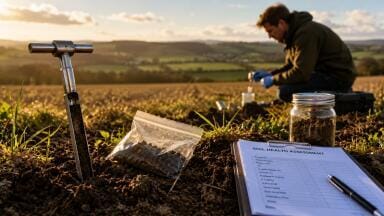
The soil evidence is the most instructive part of the case for analysts. According to the Agency, phenol concentrations of up to 3,640mg/kg were recorded by one laboratory and up to 10,000mg/kg by another.
The release does not say whether the two laboratories analysed the same samples, split samples or separate sampling rounds. Nor does it say which methods they used.
Without that information, the figures should not be read as a disagreement between laboratories. They are reported maxima.
The difference between them may reflect where and when each sample was taken as much as how it was analysed.
That uncertainty is itself the lesson. Phenol released on to unmade ground is unlikely to spread evenly, so a small number of samples can return very different results across the same 70m² footprint.
When soil data are used to establish the scale of an offence, the final number is only part of the evidence.
The sampling plan, chain of custody, extraction method and laboratory accreditation all matter too.
For operators, the practical point is that their own post-incident sampling may be compared with the regulator’s. Records that show how samples were taken, stored and analysed are as important as the results themselves.
Showing that contamination exists is only half of an enforcement case. The Agency also needed to show that the phenol came from this incident rather than from earlier activity on an industrial site.
It did this using historical data and satellite images, which showed the land had not previously been contaminated.
This is a useful example of remote sensing as a baseline tool. Many industrial sites have no pre-incident soil data for a given patch of ground.
Archive imagery can fill part of that gap by showing land use, surfacing and visible staining across the years. It cannot measure concentrations, however, so it supports rather than replaces sampling.
Two of the three charges concerned management systems rather than the discharge itself.
For a permitted COMAH site, undocumented routine tasks such as pump washing during a maintenance shutdown can become offences in their own right when they lead to a release.
Gary Wallace, Area Environment Manager at the Environment Agency, said: “Companies using dangerous chemicals have a responsibility to manage them safely.”
Maintenance periods are a familiar point of risk. Equipment is opened, drained and flushed, and temporary arrangements such as hoses replace fixed pipework.
In this case, the inspection fell during such a period. The evidence that followed went well beyond what officers saw on the day, taking in soil analysis, site records and satellite imagery.
AET 30.4 Nov 2026

 Product directory