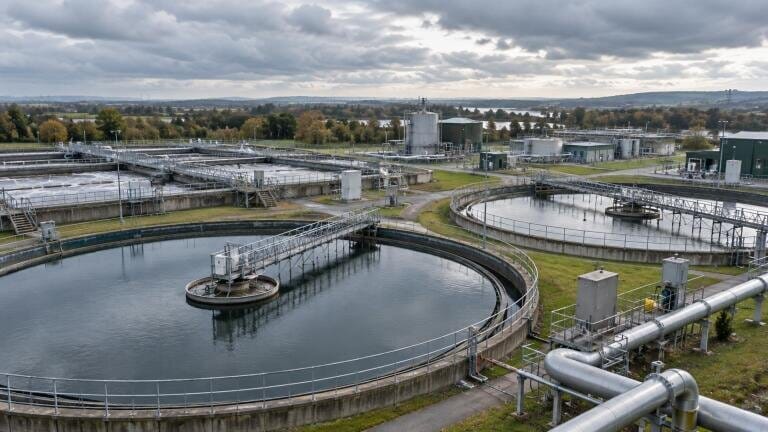
Water pollution monitoring
Critics warn the move creates uncertainty over whether PFAS limits survive in future permits.
The rescission is dated 11 August 2026 and signed by Jessica Kramer, Assistant Administrator for the Office of Water, in a three‑page memorandum.
It withdrew five guidance documents in total, including the December 2022 memorandum “Addressing PFAS Discharges in NPDES Permits and Through the Pretreatment Program and Monitoring Programs”.
The other four covered climate change considerations and environmental justice factors relating to carbon dioxide and water pollution. The remaining two covered pollution‑control limits for emerging contaminants and general permitting.
The action became widely reported in mid‑September 2026, after Inside EPA first covered it, prompting a wave of criticism roughly five weeks after the memo itself was signed.

The withdrawn 2022 guidance had instructed state regulators to require facilities such as chemical manufacturers and other industrial dischargers to sample wastewater for specific PFAS compounds.
It also directed states toward best management practices and technology‑based effluent limits when writing individual permits.
EPA’s memo states that rescission is appropriate because the guidance “has caused confusion for states and permittees and resulted in inconsistent application across the country”.
The memo cites cases in which Safe Drinking Water Act maximum contaminant levels for PFAS were incorporated directly into Clean Water Act permits.
EPA has been explicit that the guidance was never legally binding. It says rescinding it does not alter the underlying Clean Water Act, the NPDES programme, or states’ own permitting authority.
Most states hold NPDES permitting authority directly.
EPA remains the permitting authority in Massachusetts, New Mexico, New Hampshire, the District of Columbia, US territories and military bases.
That means the withdrawal has a more immediate practical effect on permits the agency itself issues.
Melanie Benesh, vice‑president of government affairs at the Environmental Working Group, said the rescission removes “a really important signal” to state regulators about how to approach PFAS in facility permits.
She warned it could have a chilling effect on how states use the advice that was in the withdrawn guidance. Following it could now run contrary to whatever replacement guidance EPA eventually issues.
Jean Zhuang of the Southern Environmental Law Center said inconsistent application across states is not, on its own, a valid reason to withdraw guidance.
She noted that some variation between states is inherent to a permitting system built on state discretion.
EPA has said it will consider whether replacement guidance is appropriate.
It has said any future guidance on the issue should go through public notice and comment, a process the 2022 memorandum itself did not follow.
Critics have pointed to an apparent tension in the agency’s position.
EPA has separately continued to defend PFAS monitoring requirements in individual permits, including in a recent settlement involving a Massachusetts wastewater treatment plant.
It has done so even as it withdraws guidance that helped states arrive at similar requirements elsewhere.

The rescission is the latest in a series of 2026 PFAS rollbacks at EPA.
It follows the agency’s proposal to rescind drinking water limits for four PFAS compounds, and its replacement of the biosolids risk assessment with shorter guidance earlier this year.
For laboratories, treatment plant operators and instrument suppliers, the practical question is less about the guidance itself, which was never enforceable.
It is more about whether state permit writers now grow more cautious about including PFAS monitoring and limits in permits they do have discretion over.
IET 36.5 Sept/Oct 2026


 Product directory