Gas analyser
There is an oddity at the heart of trace gas analysis: the cleaner the air being measured, the more important it becomes to know exactly what is in the air being used to check the analyser.
That matters because modern gas analysers can detect pollutants at extraordinarily low concentrations. At sub-ppb levels, contamination that would once have been insignificant can become part of the measurement itself. The air used for zero checks, calibration and gas dilution therefore needs to be more than simply “clean”.
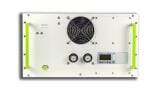
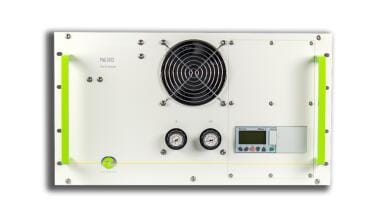
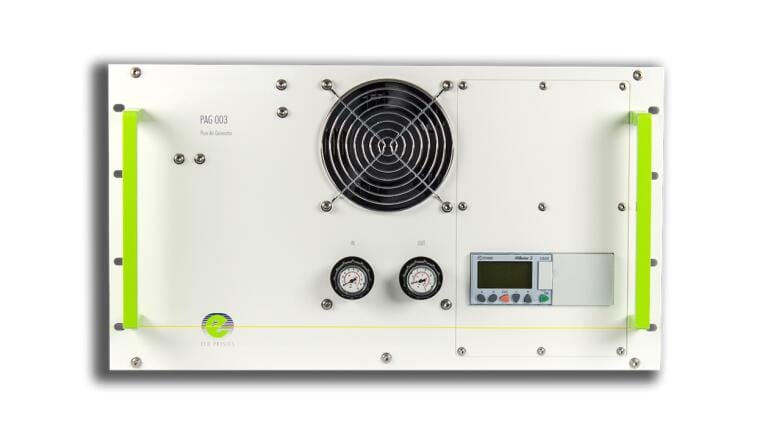
This is where zero-air generators have an increasingly important role to play. Rather than relying on cylinders of ultrahigh-purity air, systems such as Eco Physics' PAG 003 are designed to produce a continuous supply on site.
The principle is relatively straightforward. Ambient or compressed air is treated to remove substances that could interfere with sensitive gas measurements, including water vapour, particles, sulphur dioxide, nitrogen oxides, ozone, carbon monoxide and hydrocarbons. According to Eco Physics, the resulting air can reach purity levels into the ppt range.
The implications extend beyond routine analyser checks. Zero air is used for establishing an instrument's zero-point, calibrating gas analysers, diluting calibration gases and carrying out gas-phase titration (GPT). It can also be required by process analysers such as flame ionisation detectors and gas chromatographs.
For laboratories and monitoring installations, replacing cylinders with an on-demand source can also change the practical side of the operation. There is no stock of zero-air cylinders to manage and no dependence on replacing them as they are consumed. The PAG 003 is intended for continuous operation, with particle filters and water traps incorporated into the system and adjustable output pressure allowing it to be matched to the application.
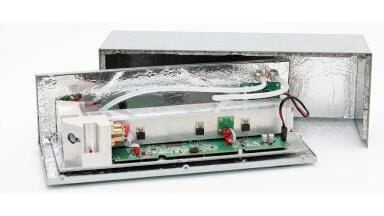
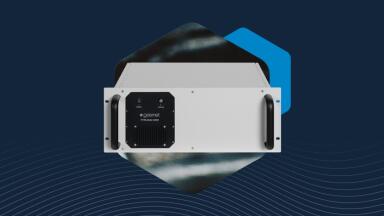
Its compact, modular construction also means that the generator can be incorporated into an analyser system or mounted in a rack rather than treated as a separate piece of laboratory infrastructure.
None of this changes the fundamental measurement principle. What it does change is the level of control over one of the less glamorous parts of the analytical chain.
As environmental regulations drive detection limits down and monitoring systems become more sensitive, attention is increasingly turning to the details surrounding the analyser itself. Sampling, calibration, conditioning and reference gases can all influence the final result.
In that context, “zero” is no longer simply the point at which an analyser starts measuring. It is a specification in its own right — and one that is becoming increasingly difficult to achieve with anything less than a very clean source of air.
IET 36.5 Sept/Oct 2026



 Product directory