Water/wastewater
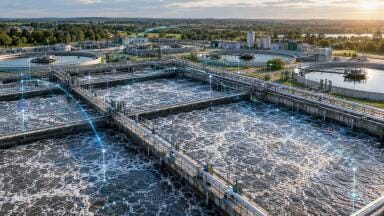
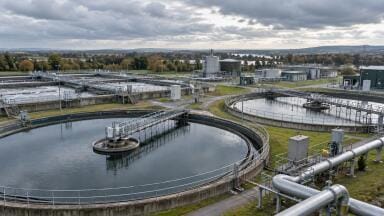
Wastewater treatment has long sat behind transport and power generation in the emissions-reduction conversation, treated as a modest, well-understood source of greenhouse gases.
Research published in Nature Climate Change suggests that assumption does not hold.
Researchers at Princeton University, led by Z. Jason Ren, reviewed National Inventory Reports from 38 countries across five continents, 26 economically developed and 12 emerging economies.
They found that methane and nitrous oxide emissions from wastewater are underestimated by 19% to 27%.
Across the countries studied, that gap represents 52 to 73 million tonnes of CO2-equivalent per year; extrapolated globally, the researchers estimate the true figure could reach 94 to 150 million tonnes annually.

The study describes underreporting as systemic rather than isolated to a handful of poorly managed facilities.
Much of it, the researchers say, stems from continued reliance on 2006 Intergovernmental Panel on Climate Change (IPCC) guidance for estimating wastewater emissions, rather than the updated 2019 refinement that better reflects measured emission factors.
Several specific blind spots recur across the inventories reviewed. Many national accounts omit decentralised systems such as septic tanks and latrines.
Emissions from effluent discharge and untreated releases are inconsistently captured.
Sewer networks and sludge management pathways are frequently excluded altogether, largely because they generate limited monitoring data compared with the treatment plant itself.
And emission factors for biological treatment processes, particularly aerobic systems assumed to generate minimal methane, have not kept pace with more recent field measurements showing higher and more variable output.
This pattern is consistent with earlier US-focused research from the same institution, which found that methane emissions from municipal wastewater treatment plants were closer to double previous estimates, based on direct field measurements at 63 facilities.
For continuous monitoring vendors and environmental laboratories serving the wastewater sector, the finding points to an underserved segment.
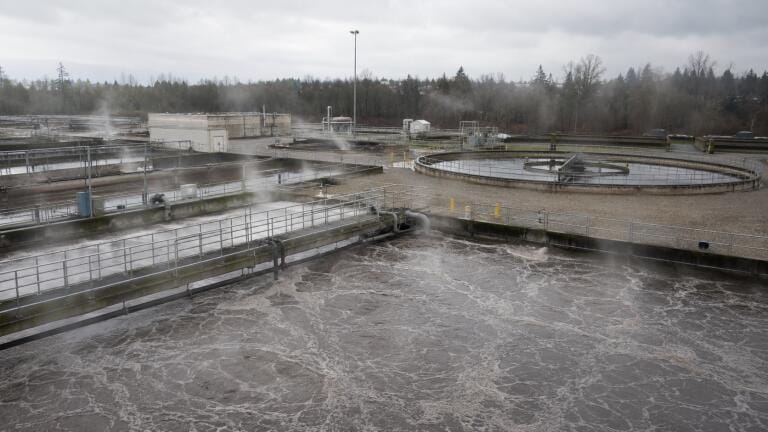
Much of the missing data sits precisely where continuous monitoring, telemetry and sensor networks are least established: sewer networks, sludge handling and anaerobic digestion and effluent discharge, rather than the aeration basins and clarifiers that dominate existing continuous monitoring installations.
Ren has argued that wastewater's long infrastructure lifespan makes the case for better measurement more urgent, not less.
A treatment plant built this decade may still be operating at the end of the century, meaning today's monitoring and technology choices shape emissions data, and potentially emissions performance, for generations.
The stakes of gaps in wastewater and gas monitoring were underlined locally in early July 2026, when San Diego issued a hydrogen sulphide air quality advisory affecting communities near the Tijuana River, linked to cross-border wastewater flows.
While the advisory concerned air quality rather than greenhouse gas accounting specifically, it illustrates the same underlying issue: wastewater infrastructure generates gas emissions that existing monitoring networks do not always capture in real time, whether the gas in question is hydrogen sulphide affecting local air quality or methane and nitrous oxide affecting climate inventories.

For monitoring professionals and technology suppliers, the Princeton findings suggest that expanding continuous monitoring coverage beyond the treatment plant gate, into collection networks and biosolids handling, is where the next material improvement in wastewater emissions accounting is likely to come from.
Utilities that get ahead of this gap, rather than waiting for updated national guidance to catch up with 2019 IPCC refinements, may find themselves better placed as emissions reporting requirements tighten.
IET 36.5 Sept/Oct 2026


 Product directory






















.jpg)