Water/wastewater
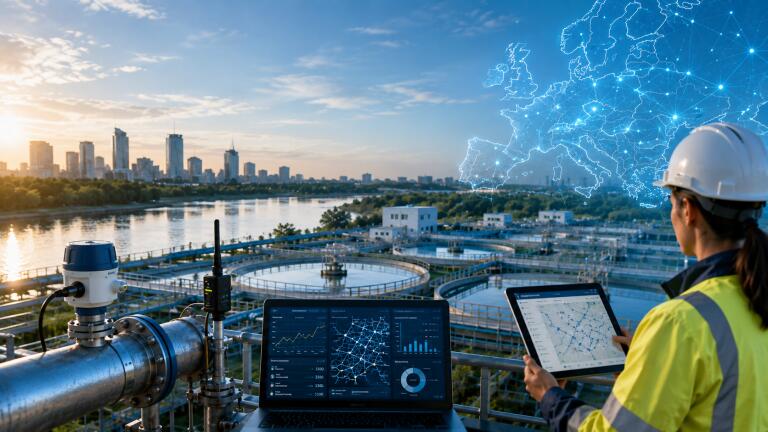
Digitalisation in European water networks is moving from pilot projects and innovation language into a more operational phase.
The pressure is coming from several directions at once: worsening water scarcity, ageing infrastructure, leakage, tighter quality expectations and the need to make better use of data already being collected across water systems.
The European Commission's Water Resilience Strategy, adopted in June 2025, makes this direction explicit.
It calls for the EU to improve water efficiency by at least 10% by 2030, reduce leaks in pipes, modernise water infrastructure and increase the use of digital solutions.
It lists "accelerating digitalisation and AI" as one of its main areas of action for improving water resilience.

For monitoring professionals, the key point is that digitalisation is no longer just about installing more sensors.
It is about whether water utilities, regulators and technology suppliers can turn fragmented operational data into usable intelligence.
A modern water network may include flow meters, pressure sensors, smart meters, acoustic leak detection, water quality probes, SCADA systems, GIS asset maps, laboratory data, weather data and customer-use records.
The challenge is making those systems interoperable enough to support real decisions, and this is where EU-level discussion is now focused.
The European Commission's Interoperable Europe work on water management digitalisation says the sector is moving toward smart water technologies, edge computing, big data and semantic interoperability, but that these remain far from commonplace.
It also highlights a shift away from private, isolated standards toward more open standards for representing water data across systems.
That matters because many European water utilities are still working with long-lived legacy infrastructure and fragmented digital systems.
WATERVERSE, an EU-backed water data initiative, describes the sector as historically slower than energy and health in adopting digital tools, partly because water resources and services are organised across many different regions, asset types and institutional structures.
It also points to scattered datasets, uneven electronic reporting and insufficient digitalisation of water data in some member states.
The most immediate use case is leakage. The Water Resilience Strategy explicitly links water efficiency to reducing leaks and modernising infrastructure.
Under the recast Drinking Water Directive, the European Commission is due to establish an EU-wide leakage threshold by 12 January 2028, above which member states will need to prepare action plans.
This creates a clear role for digital monitoring.
District metered areas, pressure management, continuous flow monitoring, acoustic sensors and smart meters can help utilities move from reactive repair to active leakage management, identifying abnormal night flows, pressure anomalies and localised losses instead of waiting for visible bursts or customer complaints.
For instrumentation suppliers, this shifts the value proposition from individual devices toward network-level performance evidence.
Smart metering is likely to become more important still.
The Commission's Water Resilience Strategy Actions Tracker states that it intends to develop an EU-wide action plan on digitalisation in the water sector in 2026, including an initiative on "smart metering for all", focused on deployment of digital solutions, digital skills, technology transfer and water data sharing through national data portals designed to be findable, accessible, interoperable and reusable.
That does not mean smart metering will solve the problem alone.
A smart meter records consumption patterns, but the value comes from how those readings are integrated with network hydraulics, customer communication, leakage analytics and demand management.
Without good data governance, utilities risk producing more data without better decisions, which is why interoperability, cybersecurity, metadata quality and platform integration are becoming as important as the field instruments themselves.
Water quality monitoring is another area where digitalisation is becoming more consequential. Europe's waters remain under significant pressure.
The European Environment Agency reported in October 2024 that only 37% of Europe's surface water bodies achieved good or high ecological status in 2021, while only 29% achieved good chemical status.
The agency identified three major challenges for future water management: protecting and restoring aquatic ecosystems, achieving zero pollution, and adapting to water scarcity, drought and flood risk.
Digital water networks can support that agenda by improving the speed, granularity and usability of monitoring data.
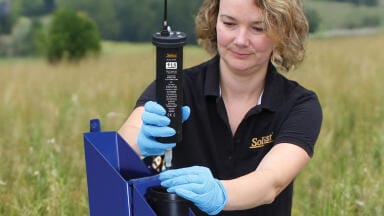
Online sensors cannot replace laboratory analysis, especially for complex contaminants, but they can help utilities and regulators understand changing conditions in near-real time.
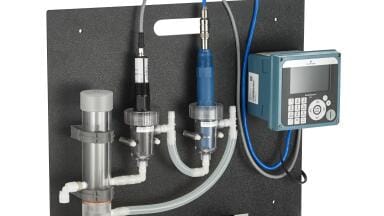
Conductivity, turbidity, temperature, dissolved oxygen, chlorine residual, pressure and flow data can all help identify operational problems, contamination events, intrusion risks or changes in treatment performance.
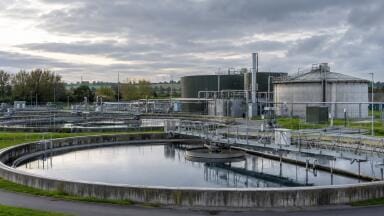
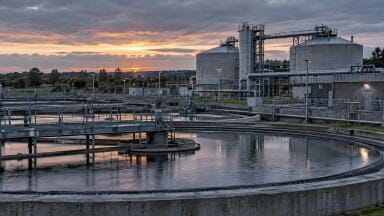
Wastewater networks form part of the same story.
Combined sewer overflows, infiltration, inflow, storm-event loading and treatment performance all depend on dynamic conditions that periodic sampling alone struggles to manage.
Digital systems can connect rainfall data, sewer levels, pump performance, treatment capacity and receiving-water conditions, helping operators understand when and why systems fail.
As the revised Urban Wastewater Treatment Directive raises expectations around micropollutants, energy use and treatment performance, demand for better data integration is likely to grow.
The state of digitalisation across the sector remains uneven. Some utilities already work with advanced analytics, digital twins and near-real-time network monitoring.
Others are still managing incomplete asset records, limited sensor coverage, manual reporting and disconnected platforms.
The result is a market with strong potential but uneven readiness, where the best opportunities may not always be the most advanced AI tools but practical upgrades that improve data quality, standardisation and visibility across existing systems.
Funding will shape the pace of change.
The European Investment Bank has committed to mobilising €15 billion in water-related investment between 2025 and 2027, covering infrastructure such as reservoirs, pipelines and treatment plants, as well as projects that reduce water losses, control pollution and support innovation.
For suppliers, the direction is clear. Utilities need devices and platforms that fit into mixed, ageing and regionally varied infrastructure, meaning open interfaces, robust calibration, defensible data quality, secure communications and compatibility with asset management and reporting systems.
Monitoring companies able to show how their technology reduces leakage, improves resilience, supports compliance or lowers operating costs will be better placed than those selling digitalisation as a vague modernisation exercise.
For water utilities, the immediate task is to avoid treating digitalisation as a separate IT project.
It needs to be tied directly to leakage reduction, drinking water safety, wastewater performance, drought resilience, asset planning and regulatory reporting.
The most valuable systems will be those that help operators decide where to intervene, which assets are failing, which risks are increasing and which investments will produce measurable benefit.
The state of digitalisation in EU water networks is best described as transitional.
The policy direction is strong, the need is obvious and the technology is available. The limiting factors are data quality, interoperability, funding, skills and the difficulty of upgrading essential infrastructure while keeping services running.
For monitoring professionals, that represents a significant opportunity: the future of European water resilience will depend not only on new pipes and treatment capacity, but on better evidence from the networks already in the ground.
IET 36.5 Sept/Oct 2026




 Product directory
















.jpg)