Air monitoring
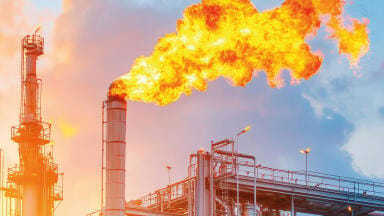
Flaring systems in the hydrocarbon processing industry represent a significant source of greenhouse gas emissions and air pollutants.
Increasing global regulatory pressure has led to the implementation of stringent monitoring requirements for flare gas composition, combustion efficiency and pollutant emissions.
This paper provides a comprehensive overview of flare gas monitoring using process gas chromatography (GC) and other robust analytical techniques, with an emphasis on modern solutions, including advanced sample conditioning equipment.
It examines international regulatory frameworks, key measurement parameters, system design considerations and validation strategies.
In addition, the paper underscores the critical role of proper sample conditioning – particularly in extractive sampling configurations – to ensure the accuracy, reliability and operational efficiency of the analytical system.
Climate change and environmental sustainability have become central themes in both global industrial policy and public discourse.
A significant source of greenhouse gas emissions is the flaring of excess hydrocarbons at refineries, petrochemical plants, gas processing units and LNG facilities.
Satellite observations indicate that global gas flaring volumes remain considerable, underscoring the urgent need for more effective monitoring and control strategies.
Flare systems are essential safety components, designed to burn off excess gases safely during routine operations and emergency situations.
Yet, incomplete combustion and suboptimal flare efficiency can result in the release of harmful pollutants, including sulphur oxides (SOx), volatile organic compounds (VOCs) and unburned hydrocarbons.
In response, regulatory authorities worldwide are increasingly mandating continuous monitoring of flare gas composition and performance.
Currently, most installed flare gas monitoring systems rely on online analysers with extractive sampling, with process gas chromatography (GC) emerging as a key technology for precise, real-time analysis.
Simultaneously, there is a growing shift toward modern spectroscopy-based alternatives. This paper examines how integrated flare gas monitoring systems can address regulatory, environmental and operational challenges.
Flare gas monitoring is shaped by a complex global regulatory landscape, reflecting a shared commitment to reducing emissions, ensuring combustion efficiency and enhancing operational transparency.
Although specific requirements vary across regions, regulators converge on the need for continuous or near-continuous measurement, typically requiring a minimum of four analytical readings per hour.
Key U.S. air quality regulations for petroleum refineries include the Refinery Sector Rule (40 CFR Part 63 Subpart CC), NSPS Subpart Ja, VOC tank standards under Subparts Kb/Kc and state rules such as Texas HRVOC.
Methane is regulated mainly for the oil and gas sector under 40 CFR Part 60 Subparts OOOO/b-c.
In Europe, flare monitoring is addressed under the EU Emissions Trading Scheme (EU ETS) and its national implementations, including Germany’s TEHG and the UK’s EEMS, as well as through the EU Methane Regulation.
Beyond these regions, several countries across Asia and the Middle East have introduced regulatory frameworks ranging from technical requirements to dedicated flare gas regulations.
Despite differences in scope and enforcement, all of these frameworks share a common focus on real-time monitoring to ensure compliance and minimise environmental impact, reflecting a global ambition to achieve zero routine flaring by 2030.
Effective flare gas monitoring focuses on three primary analytical objectives.
First, the heating value (or calorific value) of the flare gas must be measured to maintain sufficient energy content for efficient combustion.
This typically involves analysing nitrogen and hydrocarbons ranging from methane (C1) to butanes (C4+) and heavier compounds.
Second, sulphur compounds, particularly hydrogen sulphide (H₂S) and total sulphur content, are monitored to minimise sulphur oxide emissions.
Third, reactive hydrocarbons such as olefins and volatile organic compounds (VOCs) are measured to limit ozone formation and other air quality impacts.
Even fluorinated hydrocarbons are partially measured online due to their extremely high
global warming potential. Table 1 shows typical measurement points and relevant parameters for an efficient flare gas monitoring system.
In addition to composition, accurate quantification of emissions requires continuous monitoring of key process parameters, including temperature, pressure and flow.
As illustrated below, the integration of these measurements enables flare monitoring systems to deliver a comprehensive assessment of both operational efficiency and environmental performance, thereby supporting operators in meeting stringent regulatory requirements while minimising their environmental impact.
Flare gas streams present significant analytical challenges due to their wide compositional variability, ranging from hydrogen-rich mixtures to heavier hydrocarbon fractions.
Component concentrations span a broad spectrum, from trace-level sulphur species at parts-per-million levels to major hydrocarbons approaching 100%. Depending on the measurement objective and applicable regulations, the number of components to be measured typically ranges from six to fourteen or more, as shown in Table 2.
Analytical systems must also withstand harsh operational environments, including high temperatures, corrosive constituents and condensation risks, while capturing rapid fluctuations in composition during process upsets.
To address these complexities, advanced analytical techniques such as process gas chromatography (GC) and spectroscopy-based options are increasingly employed.
Gas chromatography enables precise, component-specific quantification across a wide concentration range, making it particularly suitable for detailed compositional analysis.
Spectroscopic methods, including mass spectrometry, inferential infrared or laser-based systems, offer rapid, non-contact measurement capabilities, providing near-real-time monitoring under extreme conditions.
Together, these technologies form the backbone of modern flare gas monitoring systems, delivering robust, flexible and high-performance solutions capable of generating reliable data under all process conditions.
3.1 Process Analytics System Architecture for Flaring Facilities
A comprehensive flare gas monitoring system integrates several critical components, including a sampling probe, sample conditioning units (such as temperature control and filtration), the analyser, and the data acquisition and reporting system.
Depending on environmental and operational conditions, this equipment is typically housed in analyser shelters, cabinets or protective enclosures.
Since flare gas monitoring often takes place in classified hazardous areas, all analysers and associated instrumentation must be designed and certified to meet explosion-proof (Ex) requirements, ensuring safe and reliable operation under demanding conditions.
Equally important is proper sample handling, which is essential to prevent condensation, component loss or contamination.
Robust sample preparation plays a key role in maintaining measurement accuracy, reliability and timely data delivery, regardless of the analytical technology employed.
In gas chromatography (GC), careful sample conditioning preserves the integrity of complex hydrocarbon and trace component profiles, while spectroscopy-based systems rely on stable, conditioned samples to enable rapid, near-real-time detection.
By combining meticulously engineered sample handling with analyser units and data acquisition systems, modern flare gas monitoring solutions provide high-fidelity, representative data, even under the highly dynamic and challenging conditions typical of flare operations.
3.2 Probe Sampling and Conditioning –
The Gateway to Reliable Analytics
To ensure that the online analysis delivers representative and reliable measurement results, it is essential that the entire analysis system – from probe sampling to the analyser – is well coordinated.
Measurement distortions often arise from insufficient compatibility between the sampling, transport, and preparation components, the sample itself, and the surrounding environmental conditions.
The complexity increases further when measurements are conducted in hazardous and explosive environments, which demand a careful selection of components.
Table 3 lists key parameters and sample preparation components that are important for the functional and reliable design of a flare gas monitoring system.
Below some key elements of the probe sampling and conditioning and the specific requirements for equipment in hazardous areas are described:
Incoming waste streams routed to flares – whether from relief events, start-up/shut-down operations or routine venting – are typically inhomogeneous, humid and often contaminated.
As a result, Flare Gas Monitoring Systems (FGMS) must be specifically engineered to handle these challenging conditions.
The gas sampling probe, as the primary interface between the process and the analytical system, plays a critical role.
Effective sample filtration is essential to ensure reliable and representative measurements.
While a wide range of probes is available for use in safe areas, ATEX or IEC Ex-certified solutions capable of maintaining sufficiently high temperatures to prevent condensation are comparatively limited.
In practice, most probes operate within a range of 120 °C to 180 °C, with ATEX regulations requiring integrated temperature limiters to ensure compliance with defined temperature classes.
Products like the PSG Process Probe integrate built-in limiters, simplifying installation and compliance.
Minimising human presence in hazardous areas is crucial. Reliable sampling and filtration technology are key to maintaining measurement accuracy and system uptime.
Therefore, maintenance can be reduced by maximising filter surface area— PSG utilises a filter design offering one of the largest active surface areas on the market. — and by employing back-purging options for self-cleaning under high dust conditions.
For toxic gas measurements, the sample stream must be fully shut off when necessary.
This requires a shut-off valve at the probe’s entry, integrated into the probe’s heating system to avoid cold spots and condensation.
Implementing this safely is technically complex but essential for accurate and safe operation.
Figure 2: PSG Process Probe ATEX 150.
Whether under cold or hot flare conditions, there is a significant risk of condensation, either due to phase changes of condensable hydrocarbons and water present in cold flare gas streams or as a result of cooling effects occurring after extraction of the hot gas sample.
For reliable sample transport to the analyser, maintaining elevated temperatures – typically in the range of 150–180 °C – is essential to prevent acid dew point condensation.
In addition, all interfaces must be designed to be free of cold spots, as even localised temperature drops can lead to phase separation and consequently alter the gas composition.
Modern standards, such as DIN EN IEC 60079-0, require assessment of the entire line, including electrostatic discharge risks.
For applications in hazardous areas, ATEX- and IECEx-certified heated sample lines are also available, ensuring compliance with international explosion protection requirements.
Safe operation is ensured using conductive jackets with proper grounding.
Cut-to-length technology is also important: lines are often ordered longer than needed, which can increase energy demand.
Effective insulation is essential to maintain temperature and reduce energy loss. Innovations like PSG Basic Extruded heated cables offer up to 25% energy savings while providing a durable outer jacket for industrial use.
Figure 3: PSG Basic Extruded
Gas conditioning is the final step before analysis, following sample extraction via the Gas Sampling Probe and transport through the Heated Sample Line.
While probe and line placement are often dictated by plant layout and ATEX/IECEx requirements, conditioning and analyser systems are typically housed in a controlled analyser shelter or container.
If this is not possible, all components – including the Sample Gas Cooler, Dryer, Pump, and analyser – must comply with hazardous area classifications.
Certified solutions like the PSG Process Cooler BCR ATEX provide flexible configurations with one to four gas paths for reliable operation.
For sample gas drying, alternatives to traditional condensate coolers, adsorption or permeation dryers include Nafion® membrane dryers, which preserve gas composition via selective water transport.
Nafion technology operates using only instrument air, with no electrical components, making it inherently safe for hazardous environments.
Proper evaluation of process parameters is necessary to determine feasibility for a given application.
Flare gas emissions remain a significant challenge on a global scale, making effective monitoring systems an essential element of modern environmental compliance strategies within the hydrocarbon processing industry.
To address diverse measurement objectives while balancing maintainability, capital investment and operational costs, a range of process analyser technologies is employed.
These include established gold standard solutions such as gas chromatographs and calorimeters, as well as advanced and emerging techniques like mass spectrometry and FTIR, all of which have demonstrated their capability to deliver accurate and reliable measurements in flare gas applications.
However, achieving consistent performance requires more than selecting the appropriate analyser technology.
The effectiveness of a flare gas monitoring system depends on the seamless integration of the entire analytical chain – from sample extraction and transport to conditioning and final analysis.
In this context, well-designed sample handling systems are critical, ensuring measurement integrity, system reliability, and long-term operational stability.
By adopting a holistic, integrated approach to flare gas monitoring, operators can not only meet stringent local and international regulatory requirements but also enhance operational excellence, minimise environmental impact and ensure sustained compliance throughout the lifecycle of the monitoring system.
[1] The World Bank 2025 Global Flaring and Methane Reduction Partnership – Annual Progress Report ( GFMR-Annual-Progress-Report-Fiscal-Year-2025.pdf )
[2] Park C 2020 Flare System Design for Oil and Gas Installations, IChemE
[3] Zeng Y, King T 2016 Comparison of Three Methods to Monitor Flare Combustion Efficiency, AFRC 2016 - Industrial Combustion Symposium
[4] Gokeler U, 2019 On-line GC Solution to comply with Flare Measurement Requirements, HSE Conference 2019
[5] Erens J, Reisinger T 2025 Probe Sampling in Hazardous Areas under Extreme Conditions, CEM Middle East 2025 – Emissions & Air Quality Monitoring
[6] Mahler H, Reisinger T 2022 Superior plant efficiency through seamless system integration of process gas chromatographs, petro online ( https://www.petro-online.com/article/measurement-and-testing/14/siemens/superior-plant-efficiency-through-seamless-system-integration-of-process-gas-chromatographs/3138 )
[7] Mahler H 2025 Energy-efficient and sustainable over the entire life cycle, Environtech-online.com ( Energy-efficient
and sustainable over the entire life cycle - Sep 10 2025 - Harald Mahler - Environmental Science News Articles - Envirotech Online )
IET 36.5 Sept/Oct 2026



 Product directory