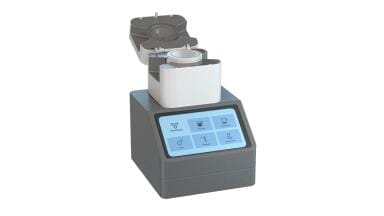
CEMS
In a typical stack monitoring installation a gas sample is extracted, conditioned and analysed, and the results are sent to a data acquisition and handling system (DAHS).
The DAHS performs real‑time calculations, error checks and automatic calibration, and it can send alarms when faults occur.
Modern CEMS also use standard communications protocols (e.g., MODBUS, RS485 or 4G/5G) to transmit data to regulatory authorities.
As emission limits tighten and operators search for efficiency gains, the industry is exploring ways to make monitoring systems more intelligent.
Instead of simply reporting pollutant concentrations, software‑driven CEMS use machine‑learning models to detect equipment problems and guide operators.
These systems promise to transform compliance into an operational asset by turning continuous data into actionable insights.
Much of the excitement around intelligent CEMS comes from the predictive emissions monitoring system (PEMS).
PEMS eliminates much of the traditional sampling hardware by learning a mathematical relationship between process variables (such as fuel flow, load, operating pressure and ambient temperature) and stack emissions.
Because it relies on thermodynamic equations, statistical regression and machine‑learning algorithms, PEMS can estimate emissions in real time.
A recent literature review notes that PEMS can reduce capital costs by 50% and operational costs by 90% compared with hardware‑based CEMS while ensuring continuous data availability.
Machine‑learning methods such as long short‑term memory networks, temporal convolution networks and stacked models have been identified as promising techniques for improving PEMS accuracy.
PEMS is also valued as a backup for conventional CEMS. ABB’s inferential modelling system uses neural networks, genetic algorithms and linear regression to build models that estimate emissions from real‑time process data.
The software can identify the key variables that cause emissions, automatically validate sensors, reconstruct emission levels when a hardware device fails, and complement process‑optimisation strategies.
Because PEMS predicts emissions in advance, plant engineers can adjust operations to avoid violations. Some European regulators now encourage software‑based redundancy systems and several U.S. states allow AI‑based PEMS as an alternative monitoring technique.
Software CEM platforms extend the PEMS concept by integrating customizable analytics built by process‑modelling experts.
A 2025 Manufacturing Dive article explains that the software compares real‑time data to forecasted models; when a deviation occurs, it automatically alerts plant personnel and enables them to correct the problem before it escalates.
The article emphasises that software CEMs can monitor plant conditions like model drift or equipment failure, catch problems early and maximise the return on emissions monitoring investments.
Because many manufacturers lack data‑science talent, software CEM providers supply ready‑to‑use analytics and remote diagnostics so users can analyse and troubleshoot facilities hundreds of miles away without hiring specialists.
Examples include models that track ammonia distribution in selective catalytic reduction units and oxygen levels in combustion systems; the software flags deviations, alerting operators when sensors drift or combustion becomes imbalanced.
Machine‑learning is also appearing in more traditional CEMS hardware.
NTT Data’s 2024 blog argues that advanced emission monitoring systems “harness the power of artificial intelligence, machine learning and predictive analytics” to continuously collect data and identify trends.
By spotting patterns and anomalies, AI‑based systems provide insights for real‑time decision making and guide manufacturers toward sustainability goals.
NTT Data identifies several benefits of AI/ML‑based monitoring, including accuracy: real‑time data, proactive maintenance, regulatory compliance, improved process safety, user‑friendly interfaces and remote accessibility.
These features point toward a future in which intelligent CEMS act almost like process advisors, monitoring emissions and recommending corrective actions.
CEMS vendors are also exploring digital twin technologies that maintain data availability when sensors fail.
SICK’s MARpems system for maritime vessels exemplifies this approach.
It uses a predictive model to calculate emissions values from available exhaust‑gas parameters when the continuous emission monitoring system is interrupted, ensuring compliance.
An algorithm calculates key parameters based on remaining exhaust‑gas data, guaranteeing seamless emissions reporting.
This redundancy keeps ship operators compliant and demonstrates how digital twins can extend the reliability of monitoring systems.
The MARpems project began as a start‑up initiative in 2018; SICK developed it into a commercial product after recognising a business case for maritime applications.
Advanced algorithms can solve many problems automatically, but plant personnel still need to understand how to operate and maintain CEMS.
To address the skills gap, some vendors package self‑paced training modules with their systems.
For example, ESC Spectrum Academy’s CEMS training includes three 20‑minute videos covering probes, umbrellas and sample conditioners and 11 mini‑videos on topics such as calibration gas requirements, how to check CEMS filters and best practices for O₂, SO₂, CO and NOx analysers.
The program offers quizzes to ensure understanding, provides certificates and lets users track their progress.
Online training is included for customers with maintenance contracts, making it easy to upskill new technicians without lengthy onsite sessions.
Looking forward, suppliers could integrate training content directly into the CEMS human–machine interface.
Imagine an operator receiving an alarm for a drifted sensor; instead of reaching for a manual, the system could display a short video on how to check filters or calibrate the analyser.
Coupled with remote diagnostics and AI‑based guidance, this approach would help facilities overcome staff turnover and ensure that troubleshooting follows best practices.
Despite rapid progress, intelligent CEMS still face challenges. Building accurate predictive models requires large datasets covering all operating conditions; model drift can occur as processes change, requiring continuous updating.
Many plants still rely on legacy hardware with limited connectivity, making it difficult to feed data into AI platforms.
Regulatory frameworks also need to catch up: although some regulators now accept AI‑based PEMS as an alternative monitoring technique, most emission rules still centre on hardware‑based measurements.
Finally, there is the question of trust. Operators and regulators must be confident that AI‑driven estimates are as reliable as direct measurements.
Nevertheless, the prospect of intelligent CEMS is compelling. Combining PEMS, software CEM analytics, digital twins and embedded training, future systems could diagnose problems, show operators what to do and even take automatic corrective actions.
As machine‑learning models become more sophisticated and regulatory acceptance grows, emissions monitoring will evolve from compliance reporting to a predictive, self‑optimising discipline, helping industries meet environmental targets while improving efficiency.
IET 36.5 Sept/Oct 2026


 Product directory




.jpg)



















.jpg)






.jpg)