CEMS
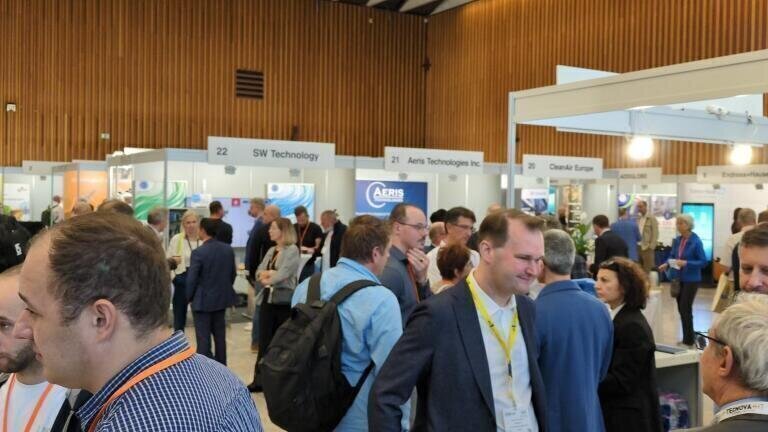
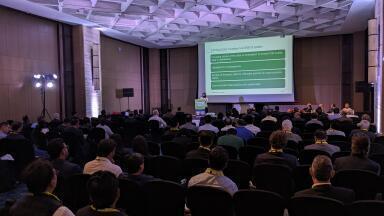
Over three days, 620 participants from 48 countries contributed to rich discussions over the future of our industry.
This year’s event closed with a sense that emissions monitoring is no longer a niche compliance exercise but a fast-evolving field at the heart of public health and industrial policy.
Presentations and panel sessions gave delegates a clear sense of how regulators, instrument developers, and operators are navigating new demands for quality assurance and certification.
The conference also highlighted where measurement is moving fastest. Discussions ranged from PFAS detection in stack emissions to AI-driven data validation and the rise of advanced fence-line monitoring for industrial compliance.
With dedicated tracks on particulates, greenhouse gases, hazardous air pollutants, odour, and VOCs, CEM 2025 demonstrated both the breadth of monitoring challenges and the sophistication of the solutions emerging.

CEM 2025 left no doubt that emissions monitoring is entering a new phase of maturity, where regulatory tightening and technological experimentation are converging.
What emerged most strongly across the sessions was a shift in tone: emissions data is no longer simply a matter of ticking compliance boxes, but increasingly a currency of trust between regulators and industry.
The revised EU Industrial Emissions Directive, the US EPA’s evolving frameworks, and voluntary frameworks like OGMP 2.0 all loomed large, each pushing monitoring systems towards higher precision and stronger verification regimes.
But the conference also highlighted how tools and methods are evolving to meet these pressures. AI validation was one theme that generated real debate: while algorithms can accelerate emissions reporting, their outputs still require robust cross-checking to guard against error.
At the same time, new approaches to data visualisation are helping operators and regulators alike to make sense of the rising flood of monitoring information, translating raw numbers into actionable insight.
Conference organiser, Marcus Pattison commented that:
“Our CEM series of events continues to go from strength and strength and this year's show proves that there's a very exciting future ahead. Informative presentations from very knowledgeable speakers led to great interactions with delegates both in the conference and on the exhibition floor. We would like to thank all of our attendees and contributors for helping to make CEM Europe 2025 one to remember!”
.jpg)
Technical sessions drilled down into long-standing but unresolved issues such as sample gas conditioning, reminding delegates that even the most advanced instruments rely on fundamentals of good practice.
Emerging frameworks like PATHS standardisation and certification were seen as critical in ensuring that monitoring data can be compared and trusted across borders, while intelligent CEMS offered a glimpse of the near future: analysers capable of not only troubleshooting themselves with algorithmic support, but also training or reminding users through built-in displays.
This mix of policy and experimentation gave CEM 2025 a dual character. On one hand, a snapshot of how far the field has come; on the other, a candid recognition of the challenges that remain.
IET 36.5 Sept/Oct 2026


 Product directory




.jpg)











.jpg)



.jpg)





.jpg)