.jpg)
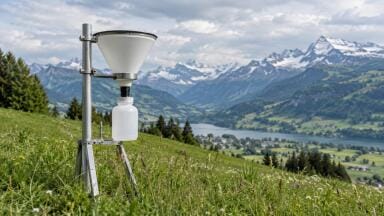
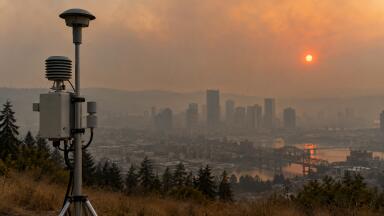
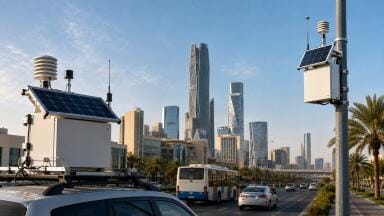
Air quality monitoring
But this list does more than define obligations.
It reveals several structural trends about the country’s environmental trajectory and how regulators are trying to adapt to a fast-changing emissions landscape.
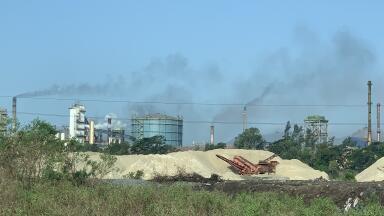
First, the framework shows how central heavy industry remains to India’s air-quality burden.
Power generation, primary metals, petrochemicals, cement and bulk chemicals dominate emissions not because regulation is weak, but because India’s development pathway still relies on coal, large-scale manufacturing and energy-intensive production.
The categories reflect a legacy industrial base: coal-fired power is still pervasive; cement output continues to rise with urbanisation; and primary steelmaking remains essential to infrastructure expansion.
This composition means that even as vehicle pollution and biomass burning receive public attention, industrial point sources continue to shape regional air quality in a way that requires continuous technical surveillance.
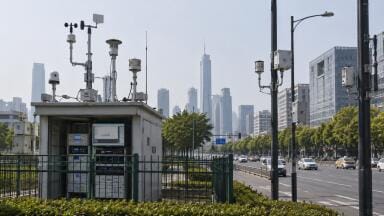
Second, the system points to a regulatory shift from episodic oversight to continuous measurement.
The requirement for CEMS and boundary monitors signals that Indian regulators no longer consider manual sampling adequate for high-risk sectors.
Continuous measurement allows regulators to detect short-term exceedances, operational irregularities and deliberate bypassing that daily or weekly sampling would miss.
This shift implies a long-term trend: the move towards real-time, data-driven environmental governance.
It mirrors changes in water regulation, where CEQMS has become a core enforcement tool.
Together, these developments show that India is trying to build a regulatory system capable of monitoring a scale of industrial activity far larger than its on-the-ground inspectorate could manage.
Third, the seventeen categories reveal the spatial structure of India’s pollution problem.
Clusters of these industries often coincide with non-attainment cities and polluted river stretches.
Thermal corridors in the north and east, petrochemical hubs in Gujarat and Maharashtra, cement belts in central India and metallurgical zones in Odisha and Jharkhand all create local air-shed pressures that ripple outwards.
Regulators respond by densifying ambient air quality monitoring in these industrial regions.
In effect, the monitoring network itself maps the geography of industrial impact.
This pattern highlights a broader trend: India’s pollution challenge is concentrated around specific clusters rather than uniformly distributed across all industrial activity.
Fourth, the system hints at a quiet but significant transition inside industry.
The need to comply with high-frequency monitoring pushes facilities toward cleaner fuels, process optimisation, end-of-pipe upgrades, and in some cases technology substitution.
Refineries with CEMS-equipped stacks have introduced low-sulphur fuel requirements internally; several steel plants have modified coke-oven charging practices; cement plants have adopted improved kiln controls and baghouse upgrades to reduce particulate spikes.
These changes are incremental rather than transformative, but they show that continuous monitoring nudges industry towards operational discipline.
Fifth, the framework underscores India’s dependence on coal.
The fact that thermal power plants dominate the emissions ledger illustrates both the scale of the challenge and the limits of what monitoring alone can accomplish.
Continuous monitoring can capture excessive SO₂ or NOₓ, but it cannot fundamentally alter the chemistry of coal combustion.
India’s environment remains heavily shaped by energy policy, and the persistence of coal in the power mix explains why industrial emissions remain a cornerstone of air quality management.
Finally, the reliance on continuous, digital monitoring reflects a broader institutional trend: regulators are using automation to compensate for capacity constraints.
India has a vast industrial estate and a limited inspection workforce.
Automated monitoring, remote auditing and centralised data dashboards allow regulators to oversee thousands of facilities with relatively few inspectors.
This is an adaptation to scale rather than a sign of regulatory strength, but it marks a structural evolution in how environmental governance operates.
Taken together, these trends show a system that is modernising in terms of monitoring technology but still tied to an emissions landscape defined by heavy industry and coal.
They also show environmental progress constrained by structural economic factors: industrial growth, infrastructure demand and energy choices.
The 17 sectors offer a concise map of where India’s air quality pressures originate and how regulators are trying, with varying success, to track, understand and control them in real time.
IET 36.5 Sept/Oct 2026


 Product directory




.jpg)

















.jpg)