Water/wastewater
The next few years will not be defined by a single procurement rule, funding pot or infrastructure programme.
Instead, water companies, municipal authorities and public utilities will be buying under pressure from several directions at once: tougher wastewater rules, drinking water requirements, PFAS monitoring, leakage reduction, climate resilience, cyber security and the digitalisation of networks.
For suppliers of monitoring instruments, laboratory services, sampling systems, telemetry, process control, sensors and data platforms, this creates a larger market.
But it also creates a more demanding one.
Water utilities are no longer simply procuring equipment to meet a narrow operational need. Increasingly, they are buying systems that help them prove compliance, justify investment, reduce risk and demonstrate measurable improvement.
That is the central shift for the monitoring sector.

The strongest force behind European water procurement is regulation.
The recast Urban Wastewater Treatment Directive, the Drinking Water Directive, the Water Reuse Regulation and wider EU water resilience policy all point in the same direction: more monitoring, more treatment, more data and more accountability.
For wastewater operators, the most important procurement implications are likely to be treatment upgrades, nutrient removal, quaternary treatment, micropollutant control, energy-efficiency measures and stronger evidence around discharges.
For drinking water suppliers, the pressure will come from risk-based monitoring, tighter expectations on contaminants, and the need to show that water remains safe from source to tap.
For monitoring professionals, this means compliance will not only require more measurements. It will require better evidence chains.
Sampling, calibration, data handling, QA/QC, laboratory methods, telemetry and reporting systems will all become more important because the data will need to stand up to regulatory and public scrutiny.
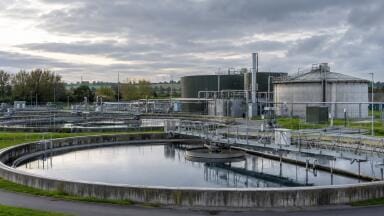
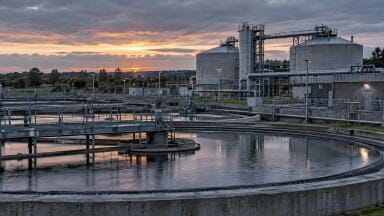
Wastewater procurement in Europe is likely to become more technically complex.
The revised Urban Wastewater Treatment Directive increases the long-term pressure on treatment works to address nutrients, micropollutants and energy performance. That will support demand for advanced treatment technologies, but also for the monitoring systems needed to design, operate and verify those upgrades.
This is important because treatment procurement is rarely just a construction issue.
A quaternary treatment project, for example, may require upstream characterisation of influent loads, laboratory analysis of trace contaminants, online process monitoring, sludge and by-product assessment, energy monitoring and long-term performance reporting.
For suppliers, the opportunity is not only to sell analysers or sampling equipment. It is to help utilities understand whether treatment investments are working.
That may favour suppliers who can connect field data, laboratory analysis and digital reporting into a coherent compliance package.
PFAS is becoming one of the clearest procurement drivers in European drinking water and environmental monitoring.
The Drinking Water Directive includes PFAS-related requirements, and EU technical guidance has already moved the market towards more defined analytical expectations.
For laboratories and instrument suppliers, this means rising demand for method development, sample preparation, trace analysis, contamination control, quality assurance and defensible reporting.
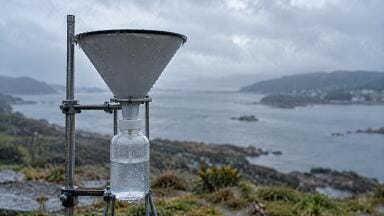
PFAS monitoring is not a simple add-on to conventional water analysis. It requires careful sampling protocols, low-level detection, avoidance of cross-contamination and confidence in the analytical chain.
That creates opportunities for specialist laboratories, LC-MS/MS suppliers, sample preparation providers, consumables manufacturers and quality-control services.
It also creates a procurement challenge for utilities.
A cheap PFAS monitoring contract may not be useful if the data cannot support regulatory decisions, source investigation or public communication. Buyers are therefore likely to place more weight on accreditation, method transparency, detection limits, turnaround time, contamination controls and interpretive support.
Digitalisation is no longer a side project in European water.
Spain’s water-cycle digitalisation programme, Italy’s investments in leakage reduction and network monitoring, and wider EU water resilience policy all show the direction of travel. Utilities are being pushed towards smarter networks, better asset intelligence, lower losses and more efficient operations.
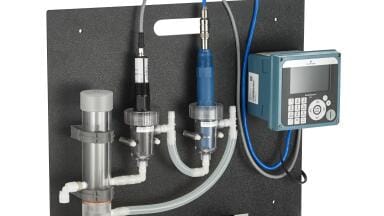
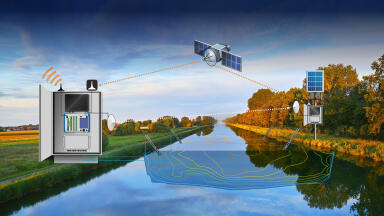
For the monitoring sector, this creates demand for smart meters, pressure monitoring, acoustic leakage detection, sewer level sensors, water quality probes, telemetry, SCADA upgrades, digital twins, AI-supported analytics and integrated data platforms.
The key change is that buyers will increasingly want systems, not isolated devices.
A leakage sensor has more value if it feeds into a network model. A water quality probe has more value if its data can be trusted, integrated and acted on. A digital platform has more value if it can support operational decisions, regulatory reporting and long-term asset planning.
Interoperability will therefore become a stronger procurement issue.
Suppliers should expect more questions about data formats, APIs, cyber security, integration with existing operational technology, cloud architecture, ownership of data and long-term support.
Europe’s water sector is being forced to deal with drought, floods, ageing assets and changing demand patterns at the same time.
That will shape procurement for reservoirs, transfer schemes, flood protection, wastewater capacity, water reuse, desalination, storage, catchment management and network reinforcement.
The Netherlands is a clear example of long-term water safety procurement, with large programmes focused on flood protection and water infrastructure.
Southern Europe is likely to remain a strong market for reuse, leakage reduction and drought resilience. Central and eastern Europe will continue to draw on EU-backed funding for wastewater and water infrastructure upgrades.
For suppliers, the important point is that resilience procurement is not only civil engineering.
A resilience programme needs monitoring before, during and after construction. It needs hydrological data, asset condition information, water quality monitoring, control systems, early warning capability and performance evidence.
This makes monitoring part of the infrastructure case.
Suppliers should position their technologies as tools for risk reduction and investment assurance, not only compliance.
European water procurement is not one market.
Large public works, municipal contracts, utility procurement, concessions, public-private partnerships, EU-funded grant projects and framework agreements all remain part of the picture.
In Germany, municipal utilities and public-sector procurement structures remain important. In France, concessions and delegated service models are still a major feature of the water market. In Spain and Italy, EU recovery funding has supported major digital and leakage-focused water programmes. In Poland and other cohesion-funded markets, EU programme rules can shape the procurement process as much as the technical specification.
For suppliers, this means a single European sales strategy is unlikely to work.
A company selling monitoring systems into France may need to understand operator-led concessions. A company targeting Spain may need to follow grant-backed digital water programmes. A company targeting Italy may need to track PNRR-funded leakage and network monitoring projects. A company targeting Poland may need to understand EU-funded wastewater procurement and public tender platforms.
The route to market may also change depending on the scale of the project.
For smaller equipment and service packages, suppliers may bid directly to utilities or municipalities. For larger programmes, the buyer may be a consortium, prime contractor, concessionaire or systems integrator.
Public procurement in Europe is becoming more digital and more searchable.
The EU’s eForms system has made procurement notices more structured, while national platforms such as TenderNed, BOAMP, Spain’s public procurement platform, Italy’s ANAC systems, Poland’s e-Zamówienia and the UK’s Find a Tender all shape how suppliers find and respond to opportunities.
For suppliers, this increases the importance of tender intelligence.
Monitoring procurement will not always be labelled in obvious terms. Opportunities may sit under wastewater treatment, leakage reduction, digital transformation, smart cities, resilience, PFAS, laboratory services, SCADA, asset management or environmental compliance.
Suppliers should track the problem areas, not just the product names.
A company selling water quality analysers should watch wastewater, drinking water, nutrient removal, PFAS, reuse and catchment projects. A company selling telemetry should watch leakage, sewer overflow, asset monitoring, flood risk and smart network tenders.
The opportunity may be hidden inside a broader infrastructure package.
Digital water procurement will increasingly overlap with cyber security.
NIS2, the Critical Entities Resilience Directive and the Cyber Resilience Act all increase the pressure on water suppliers and their technology providers to take cyber risk seriously.
This matters for monitoring equipment because many modern instruments are connected devices.
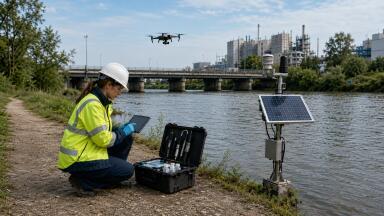
Sensors, analysers, gateways, telemetry systems, cloud dashboards, SCADA interfaces and remote-access maintenance tools all create potential cyber exposure.
Water utilities will therefore ask more detailed questions about secure design, software updates, authentication, access control, data hosting, incident response and supply-chain security.
For suppliers, cyber documentation will become part of the sales process.
A technically strong instrument may lose ground if it cannot be supported by credible cyber assurance.
European water buyers are under pressure to deliver more without wasting money.
That means procurement decisions are likely to focus less on purchase price alone and more on whole-life value.
For monitoring suppliers, this should be helpful if the value is explained properly.
A more expensive instrument may be easier to justify if it reduces maintenance visits, improves data reliability, lowers reagent use, reduces downtime or supports regulatory reporting. A digital platform may be easier to justify if it helps prioritise interventions and avoid unnecessary capital work.
The commercial argument needs to move from accuracy towards the reduction of regulatory, operational and financial risk.
That is especially important in areas such as PFAS, storm overflow monitoring, leakage detection, asset health, process optimisation and treatment performance.
Suppliers should map their offer against the main European water procurement drivers: wastewater treatment, PFAS, drinking water safety, leakage reduction, digitalisation, cyber security, water reuse, climate resilience and asset health.
They should also prepare better evidence packs.
That means clear documentation on accuracy, calibration, maintenance, QA/QC, interoperability, cyber security, lifecycle costs, environmental impact and case-study outcomes.
For technology suppliers, integration will be critical. Buyers will want to know how instruments connect to existing systems, how data can be exported, how alerts are managed and how information supports compliance reporting.
For laboratory and analytical service providers, defensibility will be key. Buyers will want reliable methods, clear detection limits, contamination controls, audit trails and support in interpreting results.
For smaller suppliers, partnerships may become more important. Many water-sector opportunities will sit inside larger frameworks, civil engineering packages, digital transformation contracts or concession structures.
The winning suppliers will often be those that can work comfortably inside wider delivery teams.

The European water sector is not simply buying more equipment.
It is buying proof.
Proof that wastewater treatment is improving. Proof that drinking water risks are controlled. Proof that PFAS and emerging contaminants are being monitored correctly. Proof that leakage is falling. Proof that digital systems are secure. Proof that infrastructure investment is delivering resilience.
For monitoring professionals, this is a major opportunity.
The sector’s role is moving closer to the centre of water investment decisions. Instruments, sampling systems, laboratories and data platforms are becoming part of how utilities make the case for spending, comply with regulation and demonstrate progress.
The suppliers that benefit most will be those that understand this shift.
In Europe’s next water procurement cycle, the strongest offer will not simply be a product. It will be a defensible evidence system.
IET 36.5 Sept/Oct 2026



 Product directory