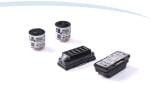
Gas analyser
The initial outputs include a global ozone map, nitrogen dioxide distributions over the Middle East and South Africa, formaldehyde concentrations across parts of Africa, and sulphur dioxide emitted from an active volcano in Russia.
These results demonstrate the mission’s capability to observe key atmospheric gases at global scale.
Sentinel-5A carries an advanced imaging spectrometer on board the first MetOp Second Generation weather satellite, MetOp-SG-A1, launched into polar orbit in August 2025.
Two further Sentinel-5 instruments will follow on MetOp-SG-A2 and MetOp-SG-A3, extending the mission’s operational lifetime to more than 20 years.
According to ESA Mission Scientist Ben Veihelmann, Sentinel-5 provides long-term monitoring of air pollution trends.
Operating in a 832 km sun-synchronous orbit, the instrument delivers global daily coverage and complements the Sentinel-4 mission, which provides hourly data over Europe and North Africa from geostationary orbit.
The spectrometer spans seven spectral bands from the ultraviolet to the shortwave infrared, enabling measurements of ozone, nitrogen dioxide, sulphur dioxide, formaldehyde, glyoxal, carbon monoxide, methane, aerosols and UV index.
Although still in its commissioning phase, the first images demonstrate expected performance.
Heinrich Bovensmann of the University of Bremen noted that the instrument’s successful activation brings more than a decade of development work into practical use.
The global ozone map acquired on 13 October shows the familiar Antarctic ozone hole, where values fall below 220 Dobson Units.
While ozone-depleting halogenated compounds were banned in 1989 under the Montreal Protocol, their persistence means recovery has been slow.
Sentinel-5 will add to long-term datasets used to track that recovery.
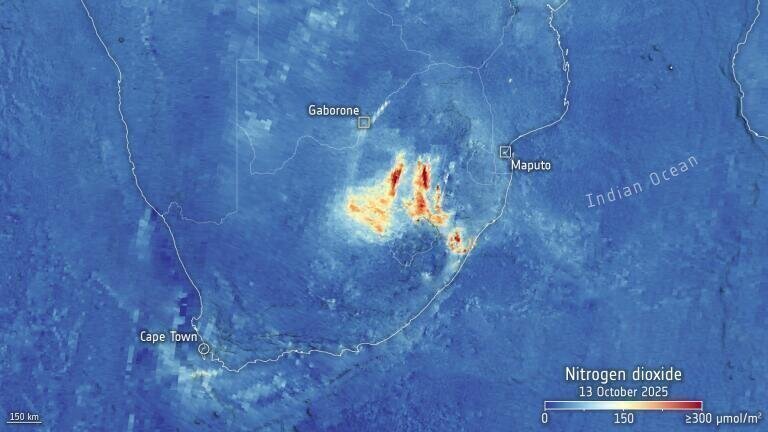
Nitrogen dioxide maps from 13 October highlight elevated concentrations across the Middle East, associated with major cities, oil and gas facilities, power plants and smelters.
High levels also appear along the Nile Valley.
A separate map over South Africa shows strong signals from the Highveld region, consistent with emissions from coal-fired power stations.
Clouds obscure some areas because they block the view of near-surface nitrogen oxide.
A formaldehyde map for the same day shows high levels along Angola’s north-west coast due to wildfire activity, and enhanced concentrations in the Central African Republic linked to fires and biogenic sources.
Because formaldehyde is concentrated near the surface, cloud cover reduces data availability.
The dataset is preliminary and known biases in partly cloudy scenes will be corrected during calibration.
Another image captures a sulphur dioxide plume from Russia’s Klyuchevskaya Volcano, one of the world’s most active volcanoes.
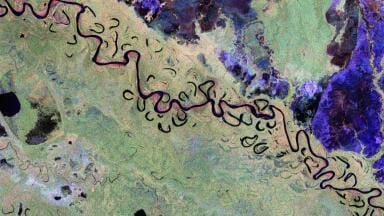
A separate false-colour map, generated from Earth radiance data collected on 5–6 October, confirms the instrument’s health and provides global coverage of land, ocean and clouds.
ESA Project Manager Didier Martin reports that instrument performance and data processing are proceeding as planned.
The mission is on track to support air quality research and monitoring of essential climate variables.
ESA Director of Earth Observation Programmes Simonetta Cheli emphasises that Sentinel-5 builds on Sentinel-5P and represents the next generation of European atmospheric-composition monitoring.
The first results indicate that the mission is progressing well towards full operational status in the coming months.
IET 36.5 Sept/Oct 2026

 Product directory


.jpg)












.jpg)