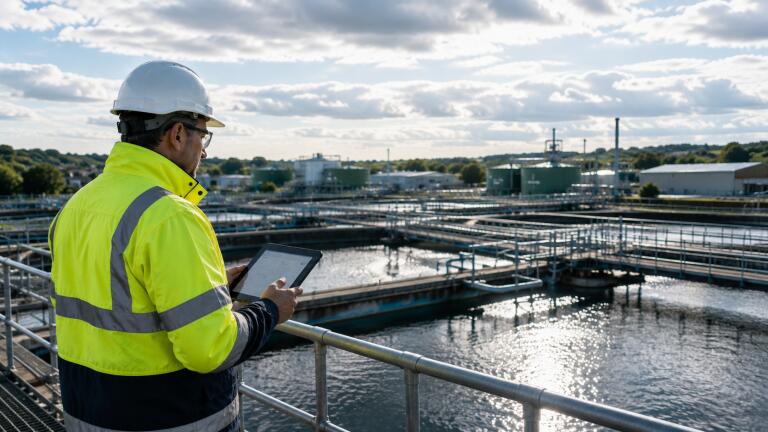
Water/wastewater
Ofwat’s PR24 final determinations set the price, investment and service package for the 2025–2030 period, known as AMP8.
The headline figure is large: up to £104 billion of expenditure across the sector.
That creates a major opportunity for suppliers of water monitoring equipment, analytical services, digital systems, treatment technologies, civil engineering, asset inspection and specialist maintenance.
But this should not be read simply as a looser spending environment.
Ofwat has allowed a much larger programme while also applying cost-efficiency challenges, performance incentives, asset-health expectations and new routes for scrutiny.
For suppliers, that means water companies will be asking whether your technology can help them prove delivery, justify cost, reduce risk and meet regulatory commitments?

In previous asset management periods, procurement could often be seen as a downstream commercial function: once the investment need was approved, companies bought the equipment, works or services needed to deliver it.
AMP8 is different because the delivery challenge is more integrated.
Water companies must invest in environmental performance, resilience, drinking water quality, growth, storm overflow reduction, asset health, carbon reduction and major water-resource schemes at the same time.
That makes procurement part of regulatory delivery. A poorly specified monitoring package, weak data system, delayed installation programme or underperforming maintenance contract can now have direct consequences for performance commitments, enforcement exposure and future cost recovery.
This is particularly important for environmental and process monitoring suppliers. The value of an instrument or monitoring system will increasingly be judged not only by accuracy, but by how well it supports defensible evidence.
Water companies will need data that can withstand internal assurance, regulator scrutiny, investment justification and, in some cases, public challenge.
The clearest procurement shift is in major infrastructure.
Ofwat has accepted a portfolio of 30 major projects in PR24. Of these, 27 are expected to be delivered through Direct Procurement for Customers or the Specified Infrastructure Projects Regulations route.
DPC is Ofwat’s model for competitively tendering large, discrete projects to a third party that can design, build, finance, operate and maintain the asset.
In practical terms, this moves some water-sector procurement closer to long-term infrastructure contracting than conventional equipment or works purchasing.
For suppliers, this matters because the route to market may not always be the water company itself. It may be a competitively appointed provider, a major project consortium, an infrastructure investor, or a tier-one contractor with long-term operating responsibility.
That could affect how monitoring and control systems are specified. Equipment may need to fit into long-term performance, availability, lifecycle cost and maintainability models rather than short-term capital delivery packages.
Ofwat has also made asset health a more explicit regulatory concern.
This is highly relevant to monitoring professionals because asset health depends on evidence. Companies need to understand the condition, performance and failure risk of networks, treatment works, storage assets, filters, boreholes, sewers and wastewater civil structures.
That creates demand for inspection technologies, condition monitoring, telemetry, leakage detection, sewer assessment, digital asset registers, predictive maintenance platforms and analytical services.
It also changes the commercial conversation.
A supplier that can provide equipment is useful. A supplier that can help a water company build a defensible asset-health case is more valuable.
This may favour technologies that produce consistent, auditable, comparable and regulator-ready data. It may also increase interest in systems that link field measurements with asset management platforms, maintenance planning and long-term investment cases.
Ofwat has introduced a cost change process for AMP8 covering specific critical areas, including cyber security, PFAS, asset health, growth, large schemes, Havant Thicket and development costs for major projects.
This matters because it creates a route for companies to seek additional revenue in-period where justified.
For procurement teams, however, this does not mean “spend now and recover later”. It means costs, changes, risks and delivery evidence need to be recorded carefully from the start.
For suppliers, this points to a practical commercial opportunity.
Bids that include clear cost breakdowns, change-control processes, data outputs, audit trails and performance evidence are likely to be stronger than bids that focus only on technical capability.
Monitoring suppliers should pay particular attention to this. Where a company is trying to justify additional investment in PFAS response, asset health, continuous monitoring or growth-related infrastructure, the quality of the evidence chain will matter.
The wider procurement regime has changed as well.
From 24 February 2025, procurements in scope of the Procurement Act 2023 moved into the new regime. Utilities procurement is now governed through that Act, replacing the former Utilities Contracts Regulations 2016 framework.
For many suppliers, the practical effect will be a different notices landscape, new terminology and more use of flexible procurement tools such as dynamic markets.
From 1 January 2026, the main utilities thresholds are £415,440 for utilities contracts other than works or light-touch contracts, and £5,193,000 for utilities works contracts.
The legal position will vary depending on the buyer, the nature of the contract and whether the procurement is for regulated utility activities. Suppliers should therefore not assume that every water-company purchase will follow exactly the same route.
But the direction is clear: suppliers need to be comfortable with more formal procurement documentation, early market engagement, qualification processes, transparency notices and competitive flexible procedures.
The sector is trying to deliver a very large programme at the same time as energy, transport, housing, data centres and other infrastructure sectors compete for many of the same skills and materials.
That means water companies are likely to move earlier on frameworks, alliances, early contractor involvement and long-term capacity planning.
For suppliers, this creates both opportunity and risk.
Those with proven capacity, installation teams, service support, integration skills and scalable manufacturing will be well placed. Smaller or specialist suppliers may still have strong opportunities, but they may need to partner earlier with tier-one contractors, framework suppliers or digital integrators.
This is especially relevant in monitoring-heavy areas such as smart metering, storm overflow monitoring, continuous water quality monitoring, leakage management, process optimisation and catchment-scale data platforms.
Water companies will be looking for suppliers that can deliver at pace without creating avoidable commissioning, maintenance or data-quality problems.
Ofwat’s decisions sit alongside wider pressure from government, regulators and the public over river quality, wastewater treatment, drinking water safety, drought resilience and infrastructure failure.
This raises the strategic importance of monitoring.
Monitoring is no longer only a compliance activity or a way of checking whether an individual asset is working. It is becoming part of how water companies justify investment, prioritise interventions, demonstrate delivery and defend performance.
This should affect how suppliers position themselves.
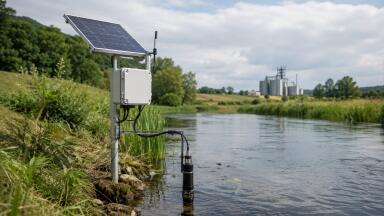
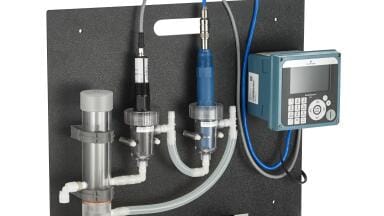
A turbidity sensor, autosampler, flow meter, phosphate analyser, PFAS test method or telemetry system should not only be presented as a product. It should be presented as part of a regulatory evidence system.
That means suppliers should explain how their technologies support data integrity, traceability, maintenance, calibration, reporting, integration and decision-making.
Ofwat’s updated enforcement guidance also changes the context for procurement.
Failures in maintenance, planning, performance and compliance can now translate into enforcement orders, undertakings, penalties and remedial investment commitments.
That should make water companies more cautious about under-specifying critical systems.
The cheapest option at award may become expensive if it increases operational risk, creates data gaps, fails under wet-weather conditions, or cannot provide evidence when regulators ask for it.
For monitoring suppliers, this is a strong argument for whole-life value. Reliability, serviceability, calibration support, data quality and field robustness should be treated as risk-reduction features, not optional extras.
Suppliers should map their products and services against the main AMP8 pressure points: asset health, PFAS, storm overflows, drinking water quality, leakage, resilience, smart metering, growth, cyber security, carbon reduction and major projects.
They should also prepare for more evidence-led tenders.
That means being able to show not only product specifications, but how the technology supports regulatory reporting, performance commitments, operational resilience and long-term cost control.
Suppliers should expect more questions about installation capacity, maintenance support, data ownership, interoperability, cyber security, carbon impact and lifecycle cost.
They should also watch the major project pipeline closely. Some opportunities may sit within water-company frameworks, but others may emerge through DPC, SIPR, major contractors or infrastructure consortia.

Water companies will need suppliers that can help them deliver quickly without weakening assurance.
They will need monitoring systems that generate usable evidence, not just raw data. They will need maintenance models that protect asset performance, not just repair failures after they occur.
They will need procurement packages that reduce delivery risk, support cost recovery and help demonstrate value to customers, regulators and investors.
For the monitoring sector, this is a significant shift.
AMP8 is not just a larger investment cycle. It is a test of whether the water sector can turn spending into measurable environmental and operational improvement.
Procurement will be central to that test.
IET 36.5 Sept/Oct 2026


 Product directory