Portable & field testing
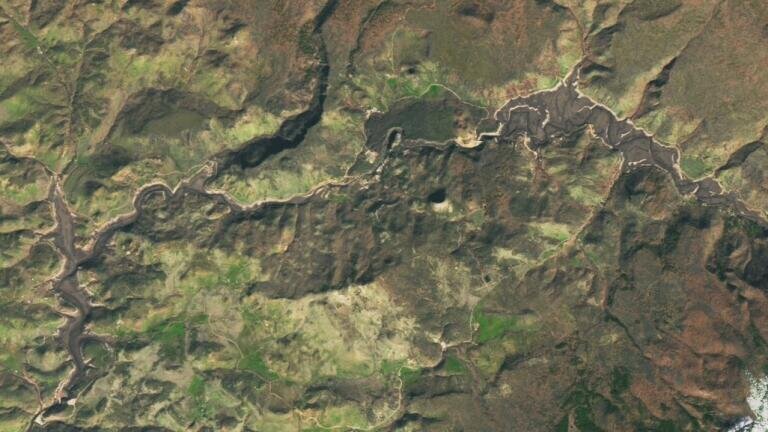
This milestone has opened 420 miles of river habitat previously blocked to salmon, restoring a vital ecological corridor.
But for the tribes of the Klamath Basin, this is not merely an engineering feat; it is the revival of a sacred lifeline.
The Yurok and Karuk Tribes have led this work for decades.
Barry McCovey, Fisheries Director for the Yurok Tribe, says his people are “extremely happy to be witnessing the beginning of the Klamath River’s rebirth,” expressing hope that Chinook, steelhead and lamprey will return in strength once the dams are fully removed.
Long before the dams came down, tribal nations in the Klamath Basin had already developed sophisticated scientific programmes.
Environmental assessments describe the Yurok, Karuk and Hoopa tribes as maintaining robust fisheries departments that have worked diligently to restore and monitor salmon creeks and tributaries throughout their territories.
The Yurok Tribal Fisheries Department tracks water quality and habitat projects, while the Karuk Department of Natural Resources blends traditional ecological knowledge with advanced scientific tools, even modelling cultural fire regimes in partnership with universities.
By 2006, both tribes were already deeply involved in project planning and managing long-term water quality data for the Klamath.
Today, the Klamath Basin Monitoring Program continues this model of collaboration, with water quality data gathered by both USGS scientists and tribal teams.
The more recent Klamath River Monitoring Program, launched in July 2024, formalises this approach further: tribal representatives from the Karuk, Yurok and Klamath Tribes appear alongside federal agencies and NGOs on its leadership roster.
Here, Indigenous communities are not consulted peripherally but treated as co-governors of scientific knowledge and environmental stewardship.
Any effective monitoring partnership must start by treating tribal science programmes as equals, not as sources of auxiliary knowledge.
Indigenous communities already invest significant time, funding and expertise into monitoring efforts.
Policy documents consistently stress that community-driven monitoring must align with the legal and political context of tribal sovereignty, recognising tribes as equal in rights and capability to any other government entity.
The U.S. EPA noted as early as 2006 that the Yurok and Karuk were not just collaborators but leaders in Klamath basin monitoring.
A respectful partnership means listening to tribal scientists and acknowledging their institutions as foundational.
Support for tribal monitoring must be focused on building out their independent infrastructure.
It is not enough to include Indigenous groups in meetings or short-term surveys.
Meaningful support means funding tribal labs and programme development directly under tribal control.
Best-practice guidance encourages funders to support community-based science with the same seriousness given to university-led research.
This includes enabling tribes to lead initiatives such as GIS mapping and telemetry.
Capacity-building, in this context, means building lasting institutions that reflect tribal priorities and approaches.
Indigenous and Western science offer complementary insights, and integrating them enriches monitoring outcomes.
Indigenous indicators, including salmon migration timing, the clarity and smell of water or snow texture, are grounded in generations of place-based observation.
These indicators are often highly accurate at the local scale and provide context that sensors alone cannot capture.
Studies now show that ecosystems governed by Indigenous peoples often outperform others on carbon storage and biodiversity.
In the Klamath, Karuk elders’ fire knowledge was recently incorporated into a collaborative landscape-fire model with Oregon State University, revealing a historical average of nearly 7,000 intentional ignitions annually.
Such traditional ecological knowledge, when paired with tools like sonar fish counts and eDNA, produces a deeper and more holistic view of river health.
Data sovereignty is central to any just monitoring system.
Indigenous communities must co-create monitoring protocols, define which variables are measured and decide how data are stored and used.
Policy documents insist that when communities independently collect data, they should also control how and when it is shared.
In practice, this means agreeing on data-sharing protocols and honouring tribal review processes for research outputs.
Rather than unilaterally publishing findings, agencies should help support efforts like the Indigenous Sentinel Network, where data are hosted and interpreted by the communities themselves.
Monitoring should not be an afterthought once restoration is underway, it must be integral to the design and planning from the outset.
This means involving Indigenous representatives before objectives are defined or budgets allocated.
In the Klamath, tribal scientists helped shape the direction of post-dam-removal research from the beginning.
The new CalTrout Klamath monitoring programme, for instance, was launched alongside the physical process of dam removal in July 2024.
Tribal partners contributed to planning the use of sonar and tagging methods in alignment with the restoration timeline.
This ensured that concerns central to tribal communities (like habitat stability and water quality) were built into the science from the start.
The Klamath case has implications far beyond the Pacific Northwest.
In regions as diverse as the Amazon and the Arctic, climate adaptation and biodiversity recovery now overlap with Indigenous territories.
Around the world, a growing body of evidence confirms that restoration projects led by or meaningfully co-designed with Indigenous peoples are more likely to succeed.
In the Peruvian Amazon, for example, Indigenous communities have begun accessing climate finance directly to lead reforestation and sustainable agriculture using native crops and practices.
Large-scale forest recovery is now widely recognised as dependent on local and Indigenous stewardship.
The global consensus is clear: ecological restoration is not a one-size-fits-all process.
The most durable and effective projects honour tribal sovereignty and invest in co-designed science.
The Klamath River’s rebirth is a story about more than fish passages and dam removals, it’s about relationships.
The return of salmon and steelhead reflects decades of work by tribal partners who were never just stakeholders, but co-authors of the river’s future.
As one biologist put it, none of this would be possible without “the tireless effort and hard work” of the Klamath River Tribal peoples.
Effective monitoring programmes, particularly on Indigenous land, must begin by listening to that legacy.
Only then can environmental monitoring data enhance rather than displace the knowledge systems that have sustained these ecosystems for generations.
IET 36.5 Sept/Oct 2026




 Product directory

















.jpg)