Air monitoring
For environmental monitoring professionals, instrument manufacturers and technical service providers, this is more than another regulatory update.
It is a sign that monitoring data is becoming one of the foundations of environmental governance in China – and that every part of the monitoring chain, from the sampling point to the final data record, is now being brought under closer legal control.
The regulation, promulgated by the State Council in October 2025, establishes a dedicated framework for how ecological and environmental monitoring should be organised, conducted, reported, checked and enforced.
Its 49 articles span public monitoring networks, enterprise self-monitoring, technical service organisations, supervision and legal liability.
At its core is a simple but far-reaching idea: monitoring data must be reliable enough to support regulation, enforcement, early warning and public accountability.

It is no longer enough for an operator to have a monitoring device installed somewhere on site. The device must be appropriate to the standard, properly maintained, regularly inspected, calibrated, networked where required and supported by a quality management system.
The data it produces must be traceable. The records behind it must be preserved. The monitoring process itself may need to be visible to regulators through connected video surveillance.
In other words, the regulation treats monitoring as a complete system rather than a single measurement.
That matters because China’s environmental monitoring infrastructure has expanded rapidly over the past decade.
The country now operates one of the largest ecological and environmental monitoring networks in the world, covering air, water, soil, marine environments, pollution sources and ecological risks.
Satellites, automatic stations, mobile monitoring platforms, drones, remote sensing and AI-supported data systems are increasingly being drawn into the same governance architecture.
This gives regulators a far more detailed view of environmental conditions but it also raises a more demanding question: can the data be trusted?
The new regulation is designed to answer that question through standardisation, digitalisation and tougher accountability.
The self-monitoring provisions are particularly important for industrial operators. Enterprises with statutory monitoring obligations must develop monitoring plans in line with relevant standards and specifications.
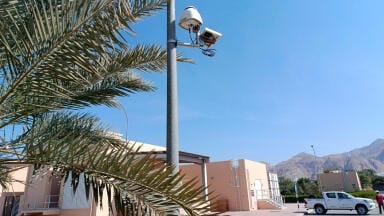
These plans must clarify monitoring locations, indicators, frequency and methods. Major monitoring points must, where required, be equipped with video surveillance capable of capturing the monitoring process and the operation of monitoring equipment.
That video equipment must be connected to the ecological environment authorities or other relevant departments.
Automatic monitoring equipment is also brought more firmly into the regulatory system. Where enterprises are legally required to install and use automatic monitoring equipment, those systems must be networked with the environmental authorities.
If abnormal transmission data is detected, the enterprise must report it promptly and inspect or repair the equipment. This is a significant point for instrumentation teams because it places communications reliability, diagnostics, maintenance response and fault documentation inside the compliance perimeter.
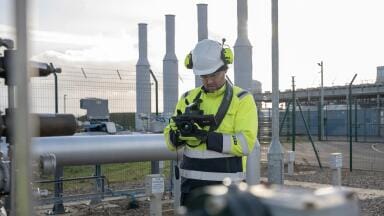
For plant managers and environmental teams, this shifts the pressure from periodic reporting to continuous evidence. A facility needs to show not only what its emissions or discharges were but that the instrument was working correctly, that the monitoring conditions were representative, and that any abnormal data stream was handled properly.
For suppliers, it increases the value of robust connectivity, tamper-resistant architecture, audit trails, remote diagnostics and clear maintenance records.
The regulation also makes equipment quality a legal concern. Enterprises must use monitoring equipment that complies with national standards and technical specifications.
They must carry out routine maintenance, servicing, inspection and calibration to ensure normal operation. Where monitoring equipment is found not to meet standards, regulators may publish information about the equipment and its manufacturer or seller, and notify market supervision authorities.
That creates a reputational and commercial risk for suppliers whose instruments cannot meet the required performance or data integrity expectations.
This is likely to favour manufacturers that can demonstrate stability, accuracy, standard compliance, secure data handling and strong after-sales technical support.
Low-cost equipment that cannot maintain performance in demanding industrial conditions may become harder to justify, especially where unreliable data could expose the operator to regulatory penalties.
The regulation is equally significant for third-party monitoring and maintenance providers. Technical service organisations are no longer treated as neutral contractors operating in the background.
They must have suitable facilities, equipment, technical capability, professional personnel and management capacity. They must register with environmental authorities and provide written commitments about their capabilities and business scope.
They must operate independently, objectively and fairly, and must not accept work beyond their permitted scope or subcontract work in breach of agreements.
For environmental laboratories, field teams and service companies, this raises the professional bar. Monitoring services, manual sampling, automatic equipment operation and maintenance, data handling and report generation all need to be defensible.
Service providers must keep records, preserve relevant data, retain reports and contracts, and ensure the whole business process can be traced. The message is clear: a monitoring contractor cannot simply deliver a number. It must be able to show how that number was produced.
The regulation’s strongest language is reserved for data falsification.
It explicitly prohibits enterprises and service providers from fabricating monitoring reports, altering or forging original records, deliberately omitting monitoring items, changing monitoring conditions, swapping samples, changing sampling locations or times without authorisation, interfering with sampling conditions, damaging or abnormally operating monitoring equipment, altering equipment parameters, falsely marking equipment or pollution-control facilities, or using cheating tools to distort data.
This is not a theoretical concern. Monitoring data has become central to pollution control, permitting, enforcement and performance evaluation.
If data can be manipulated, the whole regulatory system weakens. By spelling out the methods of falsification in such practical detail, the regulation shows that regulators are aware of how manipulation can happen in the field: not only through crude fabrication, but through small changes to sampling, calibration, equipment status, operating conditions or maintenance behaviour.
The penalties are also designed to be more than symbolic. Enterprises that fail to comply with self-monitoring requirements may face fines, and in some cases production suspension if they refuse to correct the issue.
More serious falsification can lead to larger fines for both the organisation and responsible personnel. Technical service organisations that falsify data face fines, confiscation of illegal gains, possible loss of qualification, bans from monitoring services and, in severe cases, criminal liability.
For monitoring professionals, this should make data integrity a board-level and procurement-level issue. It is not only the environmental manager who is exposed. Site leadership, technical contractors, maintenance providers and instrument suppliers all become part of a chain of responsibility.
The regulation also points towards a more remote and automated model of supervision.
Authorities are encouraged to use off-site inspection and non-contact technical methods, while also retaining the power to carry out on-site checks, inspect information systems, copy records, seal suspected equipment or premises, and conduct site monitoring. A credit evaluation system will also record relevant violations and feed into wider national information-sharing platforms.
This creates a hybrid enforcement model. Regulators can use data platforms, video feeds, anomaly detection and remote monitoring to identify problems, then follow up with physical inspections where necessary.
For compliant operators, this could reduce unnecessary disruption. For operators relying on weak documentation or poorly maintained equipment, it may make problems visible much earlier.
Looking ahead, the regulation fits into China’s wider push towards smart ecological monitoring.
Policy documents and official statements have already highlighted the role of satellite remote sensing, unmanned maintenance, smart sampling, AI analysis, automated laboratories, environmental protection robots and integrated air-land-sea monitoring networks.
By 2030, China aims to have a more systematically upgraded ecological monitoring network, supported by a “smart brain” for data integration and analysis.
For instrument manufacturers, this creates both pressure and opportunity. The pressure comes from higher expectations: certified performance, network compatibility, cybersecurity, traceability, calibration support, tamper resistance and interoperability with regulatory platforms.
The opportunity comes from the scale of the compliance challenge. Industrial operators, monitoring stations, technical service organisations and local authorities will all need equipment and systems that can meet the new legal framework.
The strongest demand is likely to be for instruments and platforms that do more than measure. Future-ready monitoring systems will need to document their own operation, preserve original records, flag abnormal conditions, support remote audit, integrate video or contextual data, and connect securely with environmental authorities.
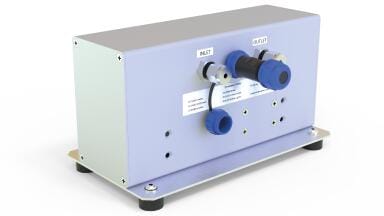
In air monitoring, this may favour advanced CEMS, VOC systems, particulate monitors and greenhouse gas measurement technologies with stronger QA/QC functions.
In water monitoring, it may drive demand for automatic analysers, multi-parameter stations, smart sampling systems and more reliable telemetry. In soil, ecology and biodiversity monitoring, it may support the growth of sensor networks, remote sensing, drones and AI-assisted interpretation.
The regulation may also reshape the service market. Providers that compete mainly on low price may find it harder to survive if they cannot demonstrate capability, independence and traceability.
More professionalised organisations, with stronger quality systems and better technical staff, may gain ground. For international suppliers and partners, the key question will be whether their products and services can align with Chinese standards, local data requirements and platform integration expectations.

China is moving from monitoring as reporting towards monitoring as regulated evidence. A measurement is no longer just a value on a screen or a line in a report.
It is part of a legally accountable chain involving the instrument, the operator, the service provider, the data platform and the regulator.
The regulation also gives suppliers a clearer view of where the market is likely to move next.
In its official interpretation of the new rules, China’s Ministry of Ecology and Environment said the requirements for video monitoring, automatic monitoring equipment, networking and non-contact supervision will drive deeper integration between traditional monitoring instruments and technologies such as IoT modules, data encryption and anti-tampering systems.
It also pointed to growing demand for a new generation of smart monitoring terminals, as well as drones, unmanned vessels, satellite remote sensing, mobile monitoring, sensor networks and AI data analysis platforms.
For instrumentation professionals, that means the opportunity is not limited to selling more analysers or sensors. The stronger growth area may be in complete monitoring ecosystems: instruments that can connect, verify, protect, transmit and contextualise environmental data in a way regulators can trust.
For those supplying or operating monitoring equipment in China, the next phase will be defined by trust. The winners will be the systems that can prove not only that they measured the environment, but that they did so accurately, continuously, transparently and without interference.
IET Guide 2026

 Product directory
























.jpg)