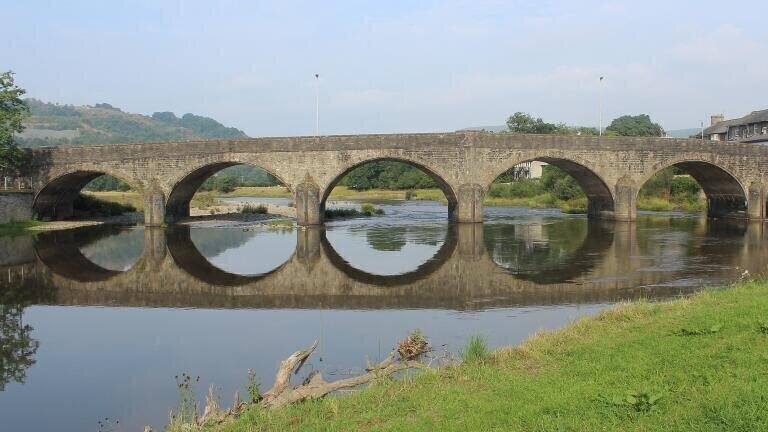
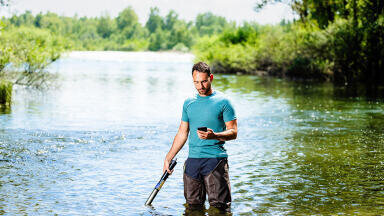
River water monitoring
Seeking both compensation and remediation, they argue that the Wye, Lugg and Usk have been degraded arguing by agricultural run-off and sewage discharges.
The claim has already been called the largest environmental lawsuit in British history but its implications reach far beyond the courtroom.
For environmental professionals and equipment suppliers alike, it marks a turning point: pollution monitoring may soon become a matter of legal defence, not just compliance.
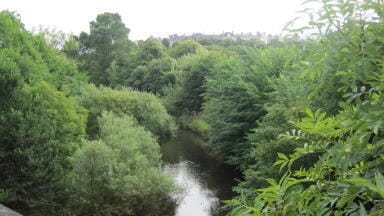
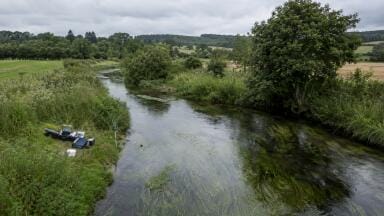
The case centres on the slow degradation of the River Wye and its tributaries, where intensive livestock production and wastewater releases are accused of overloading the catchment with phosphorus, nitrogen and bacteria.
Those inputs have triggered algal blooms, oxygen crashes and fish kills, changes that have transformed clear, fast-flowing rivers into thick, green channels.
What’s striking is that all this unfolded under existing monitoring frameworks.
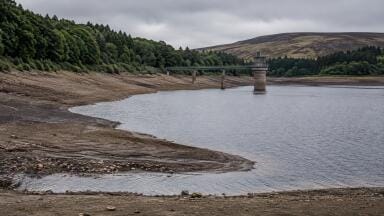
The rivers have been sampled for decades, but usually at monthly intervals and fixed stations.
Such programmes cannot capture the short-lived spikes that manure spreading or combined sewer overflows (CSOs).
That gap in temporal and spatial coverage has become the heart of the dispute.
If the claimants can show that official monitoring failed to reflect real conditions, the precedent could be profound: data gaps themselves become liabilities.
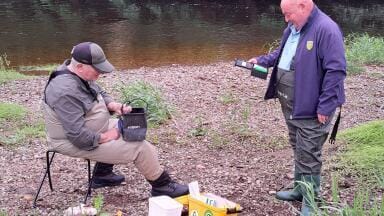
The legal claim is built on a foundation of citizen science monitoring—local groups using field kits, drones, and ad-hoc sampling to document changes that regulators missed.
For years, community volunteers have uploaded water quality readings, photographs and observational logs, creating a parallel dataset outside government channels.
Whether courts ultimately accept that evidence is still uncertain, but its existence is already shifting expectations.
Regulators and operators will need to produce data that is timestamped and independently auditable.
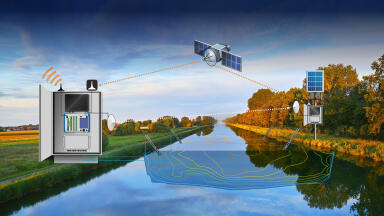
Manufacturers of in-situ nutrient sensors, autosamplers, telemetry units and integrated data platforms are now entering an era where instruments may be called to the witness stand, figuratively if not literally.
The next generation of monitoring technology will need to satisfy not just scientists and compliance officers but lawyers and judges.
The claim stretches traditional tort law—nuisance, negligence and trespass—into the environmental realm, where diffuse pollution has often eluded accountability.
To prove causation, the plaintiffs must link specific pollutant loads to ecological damage and loss of amenity.
That means fine-grained, temporal data will be central to the case.
If a judge accepts continuous-monitoring evidence as credible—say, linking phosphate surges to rainfall after manure spreading—the effect will be immediate.
Every operator discharging to a catchment, from farms to treatment works, will need higher-frequency instrumentation to demonstrate due diligence and avoid future claims.
Litigation risk is therefore emerging as a new market driver.
Where quarterly sampling once sufficed for compliance, real-time telemetry may soon be the minimum for legal self-protection.
The lawsuit highlights structural weaknesses across the UK’s monitoring architecture.
Firstly, temporal gaps. Sampling frequencies are too low to capture event-driven pollution.
Then, there's the spatial blind spots, a set of tributaries and farm-scale flows that are rarely instrumented.
Thirdly, source misattribution as few tools to distinguish between different inputs.
Lastly, data opacity means limited public access and inconsistent QA/QC standards.
These weaknesses translate into exposure.
Organisations operating within sensitive catchments may now face reputational and financial risks simply from not knowing their own contribution.
As a result, procurement teams across the water and agricultural sectors are expected to seek continuous, autonomous and forensically defensible monitoring systems.
The emerging term among consultants is litigation-grade data; information robust enough to withstand scrutiny in court.
Delivering that standard will depend on several innovations:
High-frequency sensors for nutrients, turbidity, dissolved oxygen and bacteria, deployed in dense networks.
Flow-coupled load models that can apportion contributions within a catchment in real time.
Encrypted data integrity tools, ensuring results cannot be altered after collection.
Hybrid citizen-professional networks, integrating volunteer observations into certified systems without compromising quality assurance.
Consultancies are already exploring evidence-readiness audits: assessments of whether a client’s monitoring estate could legally defend its performance.
Even insurers are watching; continuous monitoring could soon become a prerequisite for environmental liability cover.
Operators implicated in pollution disputes increasingly rely on monitoring data to demonstrate improvement or dilution by other sources.
The stronger and more transparent those datasets are, the more credible the defence.
In that sense, the lawsuit’s ripple effect is already visible: an arms race for better data between regulators, utilities and land management professionals.
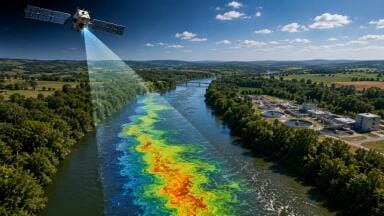
Investment is shifting from retrospective sampling to predictive and continuous systems—sensor arrays feeding directly into catchment models that calculate loads hour-by-hour rather than year-by-year.
Instrumentation suppliers that can guarantee calibration stability, cloud integration and secure provenance will find a growing market among risk-averse operators.
Regardless of outcome, this case will redefine what counts as adequate monitoring.
If the court rules in favour of the claimants, real-time nutrient and microbial sensing could become a standard condition of permits.
Even if it does not, the public and political reaction will accelerate adoption.
Either way, water quality data will need to move from reporting lag to real-time accountability.
For environmental professionals, that means the end of the monthly sample jar and the rise of the 24-hour sensor feed.
For years, river monitoring has been a regulatory chore: a dataset to file, a chart to tick.
This lawsuit could transform it into something else: a shield against liability, a currency of trust, and a market opportunity for those who can deliver credible, continuous evidence of environmental performance.
As climate extremes intensify and public patience wanes, one question will define the next decade of water monitoring: are we measuring enough to prove we’ve done no harm?
IET Guide 2026

 Product directory
















.jpg)
.jpg)

.jpg)