Water/wastewater
In today’s drive toward a circular economy, waste streams are not merely disposal problems but resources to be recovered, reintegrated, and valorised. Among these, sewage sludge and derived biosolids represent a significant reservoir of nutrients (nitrogen, phosphorus, potassium) and organic matter that—if properly stabilized and managed—can contribute to soil fertility, carbon sequestration, and energy recovery.
However, a truly circular approach hinges on realistic, enforceable regulations. Without clear legal frameworks, standardized quality criteria, and robust monitoring protocols, sludge management risks becoming a source of environmental pollution, public health hazards, and stakeholder mistrust.
Enforceable regulations must:
In the absence of such regulation, well-intended recycling efforts may falter under liability concerns or actual adverse impacts—undermining the circular-economy vision. Thus, the synergy between policy makers, standardization bodies, and technical experts is paramount to define realistic, technically robust, and legally enforceable rules that underpin sustainable sludge management.
Adopted in 1986, the European Sewage Sludge Directive (SSD) aimed to promote safe agricultural use of biosolids by:
As of today, this Directive still has the greatest impact on sludge management; however, the SSD lacked explicit quantitative criteria for the determination of biological stability of sludges, referencing only generically the need to reduce “fermentability” and health risks. In a similar manner, Directive 1999/31/EC (on the admission of waste to landfills) does not establish any specific criteria for the control of waste biodegradability.
This gap left Member States free to define stability metrics—leading to heterogeneous practices across Europe.
In Italy, for example, the SSD was transposed via Legislative Decree (DLgs) 99/1992, which further required regional authorities to impose additional limits based on local soil characteristics, climate, and cropping systems.
Over time, Italy’s regulatory landscape evolved:
These successive waves of regulation underscore the necessity of standardized, consistent test methods—to enforce limits, compare results, and ensure that sludge-derived products entering agriculture or landfills truly meet safety and sustainability goals.
Standardized characterization is, in fact, a cornerstone of enforceable regulation: it ensures robust, reproducible and, most importantly, comparable methods and procedures that laboratories can follow to generate reliable data on sludge properties.
Finding a clear definition of biological stability in scientific literature is quite demanding, as it is a time-dependant concept which is tightly related to several other chemical and physical characteristics of the substance under analysis. In this context, however, biological stability describes the extent to which organic wastes—such as sewage sludge—no longer support significant microbial activity or further decomposition. A biologically stable material:
For sludge management, stability is essential:
No single test covers all facets of biological stability; hence, a suite of methods has been developed over the years, varying by complexity and time (Table 1).
Among these methods, respirometric methods—especially the Dynamic Respirometric Index (DRI)—offer a balance of specificity, standardization potential, and direct link to aerobic biodegradation kinetics.
Initially standardized at European level by EN 15590 for the determination of the current rate of aerobic microbial activity in solid recovered fuels, the Italian UNI standard UNI 11184 expanded and better specified the DRI test, drawing on earlier research and draft EU guidelines.
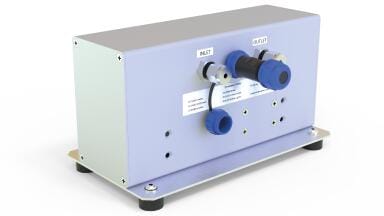
The DRI test uses a continuous‐flow respirometer to measure the oxygen uptake rate of a sludge sample under controlled aerobic conditions. A standard procedure follows these steps:
The test duration is approximately 4 days, extendable to 8 days if the DRI curve has not yet entered a clear declining phase by Day 4. The expected behaviour of an DRI test can be seen in Picture 1, and is usually divided into 4 main phases:
There is no need to reach phase D during an actual test, as the overall DRI is taken to be the 24 hours rolling average around the peak value reached in phase B.
At the end of the test, a high DRI indicates that the sample is not biologically stable (Table 2).
Materials with DRI ≤ 1 000 mg O₂/kg VS•h are generally considered adequately stabilized for landfill exemption and many agricultural uses; values below 500 mg O₂/kg VS•h denote particularly high stability.
Advantages and limitations of the method include:
• Advantages
• Limitations and possible interferences
UNI’s ongoing revision of the DRI standard aims to address these interferences—adding guidelines on pre-treatment (e.g., dilution, inertion of structural media, etc.), temperature controls, and data‐quality checks to minimize misinterpretation.
The Dynamic Respirometric Index (DRI) stands out as a robust, standardized method for quantifying the aerobic biodegradability of sewage sludges, biosolids, and related organic materials. Anchored in Italian national standards and embedded in European landfill and agricultural directives, this method bridges technical rigor with regulatory compliance—supporting the transition to a circular economy in which waste streams become valuable resource inputs.
By a better measurement and understanding of biological stability in sewage sludge through standardized characterization methods, stakeholders can ensure that waste management not only mitigates environmental and health risks but also actively contributes to resource recovery, soil health, and greenhouse gas reduction—hallmarks of a resilient circular economy.
IET Guide 2026

 Product directory