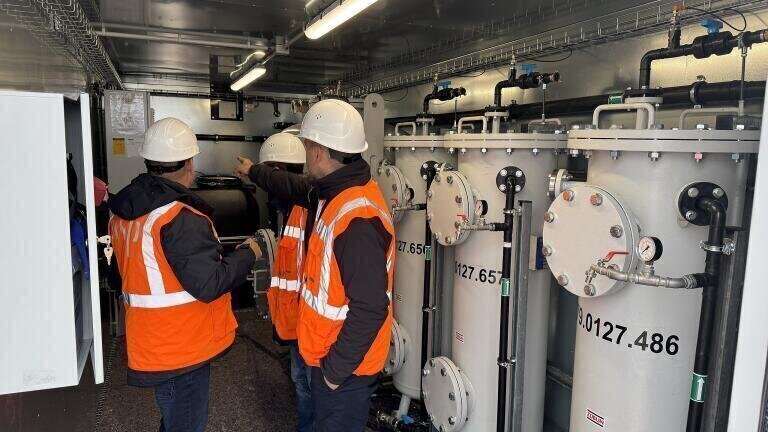
PFAS analysis
Eleven executives from Miteni SpA and its parent firms were convicted of environmental crimes and given prison terms up to 17 years.
The ruling, reportedly the first in Europe to imprison corporate bosses for PFAS pollution, sent shockwaves across Italy and the EU.
It underscores how seriously authorities now treat severe pollution: the plant’s waste had tainted over 100 km² of land and drinking water for some 300,000 people (the “second largest aquifer in Europe”).
Civil society groups hailed the verdict as 'historic', a hard line against PFAS pollution.
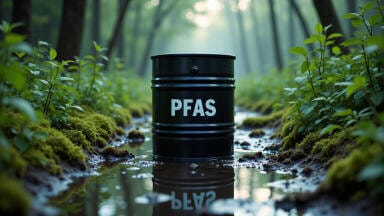
PFAS (per- and polyfluoroalkyl substances) are highly persistent industrial chemicals found in non-stick pans, coatings and many products.
They break down extremely slowly (“forever chemicals”) and are linked to cancer and other health harms.
Across Europe PFAS pollution is widespread: one study identified roughly 21,500 potentially contaminated sites from industrial or waste sources, on top of 23,000 already known hotspots.
The European Environment Agency (EEA) reports that PFAS like PFOS are found in most rivers and lakes, often above safety standards.
In fact, EU water monitoring shows up to 60% of rivers and 100% of coastal sites exceed PFOS limits, raising alarm about Europe’s “toxic-free” goals.
EU regulators are responding with tougher controls. The 2020 Drinking Water Directive (to be enforced by 2026) imposes strict PFAS limits in tap water.
The EU’s chemicals agency (ECHA) is working on an unprecedented ban on most PFAS, aiming to phase out all non-essential uses.
In January 2025 Germany updated its chemical laws to impose criminal penalties for PFAS permit breaches.
In February 2024 the European Parliament voted to criminalise severe environmental crimes “comparable to ecocide”, with CEOs facing up to 10-year jail terms for egregious pollution.
Under those new EU rules, even compliance with an outdated permit is no defence: if new science shows a substance like PFAS is lethal, companies must stop discharging it or face criminal liability.
Italy, reeling from PFAS in its Veneto waters (first revealed in 2013), is moving fast to tighten standards.
In March 2025 the government approved a decree to update drinking-water law: it cuts the cap on four key PFAS (PFOA, PFOS, PFNA, PFHxS) to 20 ng/L – the same as Germany’s limit – and expands monitoring to 30 PFAS compounds. (The EU had set a 100 ng/L cap for 24 PFAS by 2026.)
The decree also introduces a limit for trifluoroacetic acid (TFA), an ultra-persistent PFAS by-product, at 10,000 ng/L.
While NGOs say more tightening is needed, these moves mark a clear shift: Italy had no PFAS limits in water before 2025.
Meanwhile, Italy’s polluter-pays principle is being enforced. Last year an administrative court found Mitsubishi partly liable for the Veneto contamination.
And for the first time an Italian court directly linked PFAS to a worker’s death in 2014, recognizing a fatality from workplace PFAS exposure.
The criminal PFAS trial itself was massive: 130 hearings, 300 civil plaintiffs (from Greenpeace Italy to local residents), and detailed forensic evidence of toxic discharge.
Victims will get millions in damages – the convicted executives must pay over €60 million to the government and region.
This verdict signals that corporate and legal consequences for pollution are rising. In practice, companies across Europe will take notice: senior managers can no longer assume permits protect them.
EU law now penalizes CEOs with jail (8–10 years) for major environmental crimes, and Italy’s example shows courts are willing to use that power.
Lawyers say the case underscores that negligent pollution can be criminal: Germany’s new ordinance explicitly makes even accidental PFAS limit breaches prosecutable.
Industry observers expect this to accelerate regulatory action. Italy’s ruling comes as the EU is finalizing a sweeping PFAS restriction (to ban or sharply limit almost all uses).
It also reinforces calls for stricter pollution laws globally: campaigners note the ruling strengthens arguments for “ecocide” laws and universal PFAS bans.
Companies will likely invest more in compliance and risk management. For example, they may boost on-site monitoring and treatment, avoid PFAS in products, and re-evaluate historical liabilities – especially where local laws are tightening.
In short, the bar for legal compliance has been raised.
Executives can face prison for knowingly discharging banned chemicals. As one EU lawmaker noted, even if a discharge was permitted under an old standard, new science means “you will have to stop” or risk prosecution.
Multiple EU countries are moving past mitigation toward elimination: collective efforts aim to restrict virtually all PFAS under REACH. Italy’s new limits and Germany’s criminal PFAS law show regulators are demanding near-zero releases.
With thousands of contaminated sites and remediation costs estimated at ~$17 billion across the EU, companies may face massive cleanup bills.
Indeed, Italy’s court ordered 58 m euros just for environment ministry damages. The message: polluters will pay, one way or another.
As a result of this ruling, environmental monitoring experts – analysts, lab technicians, regulators and consultants – are likely to be in greater demand.
As regulators tighten PFAS controls, more testing is required to ensure compliance. The EEA emphasizes that water authorities must expand monitoring to cover many more PFAS compounds across Europe and adopt more sensitive methods.
Water utilities in Italy already warn that stricter PFAS limits will drive up treatment costs threefold.
In practice, this means a few things.
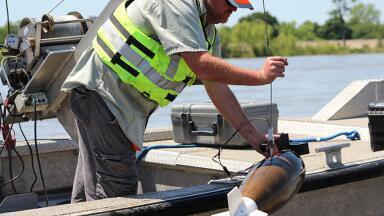
Regulators and companies will sample more sites (groundwater, wells, surface water) for PFAS. The new Italian law alone covers 30 PFAS and adds TFA.
Similar expansion is expected EU-wide under forthcoming rules.
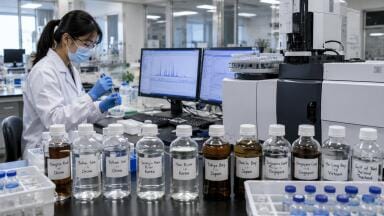
Detecting PFAS at ng/L levels requires specialized chromatography and mass spectrometry. Labs will likely upgrade equipment and validation protocols.
The EEA notes Europe needs “more sensitive analytical methods” to track PFAS at safe levels.
Vast monitoring data will require new databases and modelling. The EEA and Nordic Council warn of tens of thousands of PFAS sites.
Professionals will need to map contamination plumes, predict human exposure, and advise on clean-up – all potentially under legal scrutiny.
For monitoring professionals, the verdict highlights that accurate data now has legal weight. Blood tests in the Miteni trial showed PFAS in residents’ blood, illustrating how environmental measurements directly entered court evidence.
Going forward, high-quality monitoring could become a key line of defence for companies, or a powerful tool for prosecutors. As one EU official put it, firms can’t hide behind old permits: new science means “operators must be aware” that monitoring failures can trigger criminal liability.
IET 36.5 Sept/Oct 2026



 Product directory




.jpg)
























.jpg)