PFAS analysis
One of the more persistent problems in PFAS remediation is not detecting the chemicals but attributing them: once per- and polyfluoroalkyl substances are found in a river, an aquifer or a drinking water supply, working out which upstream source, or sources, put them there is often far harder than confirming they are present at all.
A research team led by Professor Hiroto Kawashima in the Department of Bioscience and Engineering at the Shibaura Institute of Technology (SIT) in Japan has published work suggesting a more practical way to make that link, using a technique that measures the stable carbon isotope ratios of individual PFAS molecules.
The principle behind isotope-ratio analysis is not new in environmental forensics: because different manufacturing routes and precursor feedstocks leave subtly different isotopic signatures on a compound, matching the isotope ratio of a contaminant found in the environment to a specific production process or site is, in theory, a more direct form of source attribution than comparing concentration patterns alone.

What has limited its practical use for PFAS specifically is that the standard method for measuring those ratios requires combusting the sample first, converting it to carbon dioxide before analysis; that step is demanding to run routinely and is not well suited to non-volatile, thermally resistant PFAS compounds such as PFOS and PFOA, both of which are among the most widely detected and heavily regulated PFAS in drinking water globally.
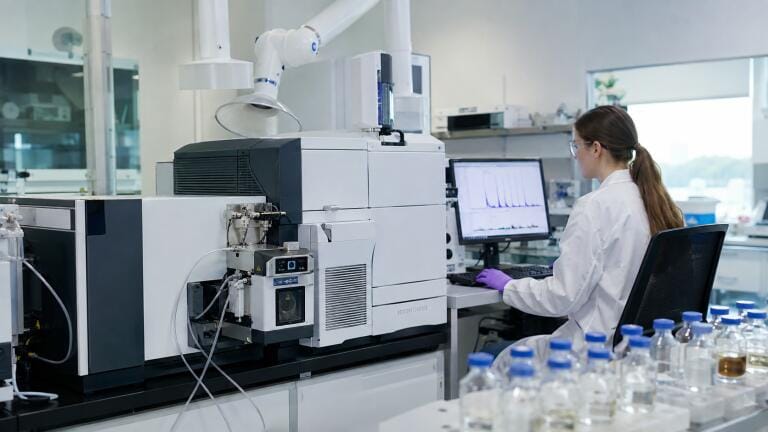
The SIT team's contribution is to show that an Orbitrap high-resolution mass spectrometer can measure the same stable carbon isotope ratios directly, without combustion, and that the results agree closely with those obtained using the established reference method.
Because Orbitrap instruments are already relatively widely deployed in environmental and forensic laboratories for other non-targeted PFAS work, the appeal of the approach is less about a wholly new capability than about removing a preparation bottleneck that has made isotope-based source tracing impractical for routine casework.
The practical application the researchers point to is straightforward: where PFAS contamination is found in a river, groundwater body or drinking water supply, isotope-ratio fingerprinting could help distinguish between different industrial sources upstream, informing both remediation priorities and, potentially, liability determinations in contested contamination cases.
That is a genuinely different kind of value to environmental laboratories than another sensitivity or detection-limit improvement; it speaks to a question labs are increasingly being asked by regulators and litigants alike, not just how much PFAS is here, but whose PFAS this is.

The work, published in Environmental Science & Technology Letters, was carried out on PFOS and PFOA specifically; extending the method to the wider universe of PFAS compounds, several thousand of which exist across different chain lengths and functional groups, remains to be demonstrated.
It is also, for now, a single research group's published method rather than a validated, routinely available laboratory service, so the more immediate audience is other analytical chemists and environmental forensics specialists rather than water utilities looking for an off-the-shelf test tomorrow.
The timing is notable given how much regulatory attention PFAS is currently drawing across the EU, UK and Asia; as restriction and remediation obligations tighten, the ability to say with more confidence where a given plume of contamination originated is likely to matter as much to the labs doing the testing as to the regulators setting the limits.
IET 36.5 Sept/Oct 2026




 Product directory