Drinking water
In June 2025, a quiet community in eastern France faced an unprecedented order: stop drinking the tap water.
Authorities in Saint-Louis (Haut-Rhin) banned vulnerable groups (infants, pregnant and breastfeeding women, and the immunocompromised) from consuming local water.
This decision was taken after tests revealed per- and polyfluoroalkyl substances (PFAS) at four times the recommended limit.
The ban, affecting 60,000 residents across 11 communes, is the largest of its kind in France.
The crisis underscores a wider European problem: PFAS pollution is neither new nor rare and it is about to test Europe’s water governance like never before.
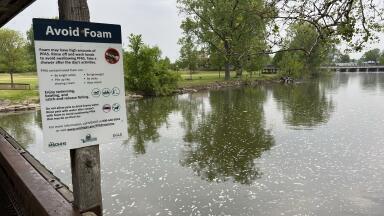
PFAS are synthetic compounds used since the mid-20th century in firefighting foams, non-stick pans, food packaging and countless industrial processes.
Their chemical stability makes them valuable and dangerous. PFAS resist degradation, travel easily through water and soil, and accumulate in living organisms.
Nearly everyone on Earth now carries traces in their blood.
Health risks include cancers, immune disruption, fertility issues and hormonal disorders, even at low exposures.
One of the most common routes into our bodies is drinking water.
In Saint-Louis, the contamination source was decades of firefighting foam drills at the Basel-Mulhouse airport.
Foam residues filtered into groundwater supplying nearby towns.
Though phased out in 2017, the damage had already been done.
By 2023, water samples revealed PFAS at quadruple safe limits, prompting the 2025 ban.
Residents scrambled for bottled water after the ban, with supermarkets doubling supplies.
Official restrictions targeted only sensitive groups, but many others stopped drinking from the tap out of fear.
Beyond immediate disruption, locals are haunted by possible long-term effects.
Independent blood testing by campaigners revealed average PFAS levels of 14.9 µg/L among residents – more than double the threshold associated with health risks by the European Food Safety Authority.
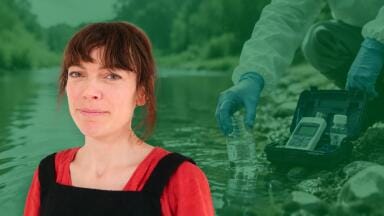
Wiedemann herself links her history of miscarriages and endometriosis to the years she unknowingly consumed contaminated water.
Saint-Louis is not alone. Across Europe, PFAS pollution is surfacing in rivers, aquifers, soils and food chains.
France’s CNRS recently mapped more than 23,000 contaminated sites, including 2,300 already above upcoming safety limits.
In Veneto, Italy, 350,000 people exposed from a chemical plant, sparking one of Europe’s biggest environmental trials.
In Antwerp, Belgium, widespread contamination near a chemical plant, with half of nearby residents carrying elevated PFAS.
In England, 85% of tested rivers and lakes exceed EU’s proposed PFAS thresholds, with fish carrying hundreds of times safe PFOS levels.
From Lyon to the Arctic, PFAS are found in wildlife, too, impairing reproduction and disrupting hormones.
PFAS are not just a public health threat; they are an ecological one.
On 12 January 2026, the EU will enforce a new drinking water standard: 0.1 µg/L for total PFAS.
This is far stricter than existing guidance, reflecting scientific consensus on toxicity at lower exposures.
Many water systems already exceed this benchmark.
The implications are huge.
Non-compliant supplies will need advanced treatment – activated carbon, for example, or ion exchange– costing millions.
Smaller towns may be forced into temporary bottled water provision.
Saint-Louis has already issued €80 stipends for at-risk residents, but such measures are neither sustainable nor equitable.
The Saint-Louis episode revealed troubling delays. PFAS contamination was first detected in 2017, but action was only taken six years later.
Residents accuse authorities of negligence and secrecy.
The Basel-Mulhouse airport caused the pollution, but complied with safety regulations at the time.
It claims no legal liability, though it may contribute financially. Locals insist polluters must pay for €20 million worth of new treatment plants.
Without clear accountability, costs could fall to taxpayers through higher water bills.
Until 2026, no binding EU limits existed, leaving authorities without legal compulsion to act.
The new directive and the EU’s 2025 Water Resilience Strategy aim to close this gap, requiring regular PFAS monitoring and digitalised reporting.
Europe is beginning to pivot from managing PFAS pollution to phasing it out.
In 2023, five countries – Germany, the Netherlands, Denmark, Sweden, and Norway – proposed a ban on around 10,000 PFAS chemicals under REACH, potentially the world’s largest-ever chemical prohibition.
A decision is expected in 2025–26.
At the same time, research funding is flowing into PFAS destruction technologies, from advanced filters to experimental methods that break molecular bonds.
Policymakers stress that treatment alone is not enough; the tap of production must be turned off.
Public pressure is mounting, too.
Citizen groups across Europe demand transparency, testing and justice.
In Lyon, activists halted a factory expansion until PFAS risks were addressed.
Thousands of communities may soon confront similar crises as new EU standards expose hidden contamination.
The case reveals how invisible chemicals can silently undermine water security, and how delay and opacity can devastate public trust.
Yet it also shows a path forward. Stronger monitoring, enforceable standards, polluter accountability, and citizen advocacy can begin to turn the tide.
PFAS have earned the name ‘forever chemicals’, but their grip on Europe’s water need not be eternal.
The warning from eastern France is clear: Europe must act decisively now – or risk drinking in a legacy of chemical pollution for generations to come.
IET 36.5 Sept/Oct 2026




 Product directory