Drinking water
A project, led by Brighton & Hove City Council and backed by research from the University of Brighton, is helping to protect 90% of the city’s drinking water from dangerous road pollution.
Every rainfall event washes millions of litres of water off our roads, carrying with it a cocktail of oil, tyre fragments, heavy metals, and microplastics. This polluted stormwater is one of the most widespread yet least visible threats to water quality across the UK and around the world.
The dangers are well-documented. In Australia, around 95% of microplastics in stormwater originate from tyres—tiny particles laced with carcinogens that can enter the food chain. In the Pacific Northwest of the United States, untreated road runoff has been shown to kill up to 87% of coho salmon exposed to it. In England, road pollution contributes to nearly one-fifth of all rivers and lakes failing to meet environmental standards.
Here in Brighton & Hove, the stakes are particularly high. More than 90% of the city’s drinking water comes from the chalk aquifer beneath our feet—a delicate underground reservoir that also supports wetlands and wildlife. Once contaminated, it is extremely difficult to restore.
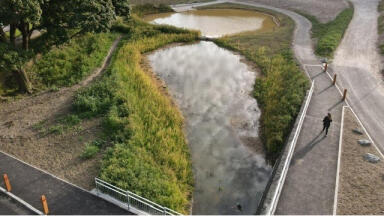
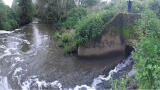
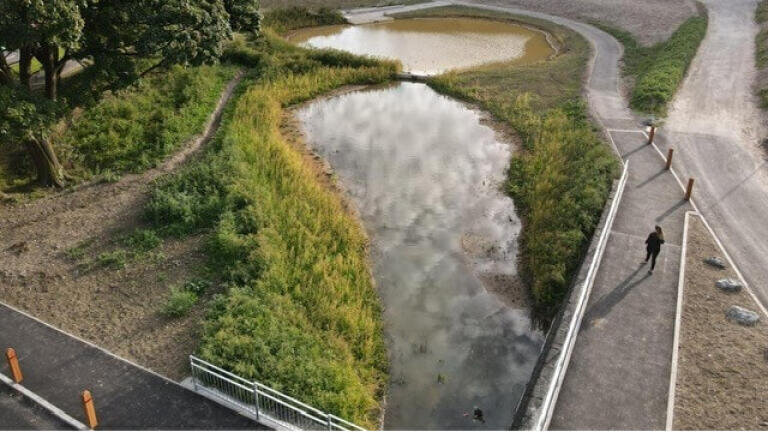
To tackle this, a new rainscape has been created beside the A27 at Wild Park, one of Sussex’s busiest roads. The site captures and filters polluted runoff before it can seep into the aquifer.
Delivered by The Aquifer Project—part of The Living Coast UNESCO Biosphere, which promotes sustainable development across the region—the initiative combines science, engineering, and ecology. Brighton & Hove City Council oversaw construction, with scientific guidance from Professor Martin Smith, Professor of Geochemistry at the University of Brighton’s School of Applied Sciences, supported by MRes Geoscience graduate Polly Walters.
“When polluted water from our roads seeps into the aquifer, it’s not just a scientific problem – it’s our drinking water, our children’s health, and our local environment at stake,” said Professor Smith. “Projects like the Wild Park rainscape ensure the water we rely on every day remains safe.”
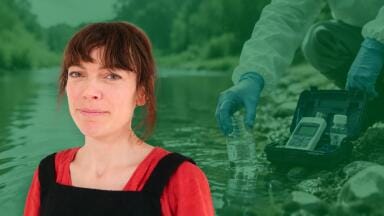
Before work began, the research team monitored runoff from the A27 to establish a baseline for pollutants. They found elevated levels of contaminants such as lead (a legacy of older fuels), chromium from road markings, and polycyclic aromatic hydrocarbons from tyres and asphalt.
Professor Smith’s lab tests showed that removing solid particles alone can eliminate around 80% of pollutants, with plants, microbes, and sunlight handling much of the rest.
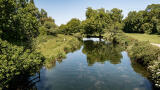
After six years of planning, the completed rainscape now treats stormwater along a 1.2-mile route. Two vortex separators first remove larger solids before the water flows through a series of planted basins filled with reeds and grasses. Natural processes then break down remaining contaminants, ensuring the water is clean before it reaches the soil.
The University of Brighton will continue long-term monitoring to track water quality, pollutant removal, and biodiversity at the site. This data will guide future designs and help other cities develop similar systems to combat stormwater pollution.
Unlike traditional drainage systems, which often allow polluted water to seep directly into the ground, the Wild Park rainscape filters and slows runoff—reducing flood risk, improving water quality, and creating new habitats for wildlife. As climate change brings heavier rainfall, this approach provides a model for cities worldwide seeking to manage stormwater sustainably.
“The Wild Park rainscape is a great example of a sustainable drainage system,” said Professor Smith. “Working with BHCC, The Aquifer Project, and The Living Coast Biosphere has allowed us to demonstrate the need for these projects and to involve students in hands-on research that informs the design of future systems.”
Ed Santry, Biosphere Programme Manager for The Living Coast, added: “Biospheres promote innovative local solutions to protect biodiversity and tackle climate change. The Wild Park rainscape is a perfect example of how collaboration can deliver benefits for both people and nature.”
Councillor Trevor Muten, Cabinet Member for Transport and City Infrastructure, said: “This is a fantastic demonstration of what can be achieved when partners come together to find practical ways of adapting to climate change. The rainscape harnesses the power of nature to filter pollution, protect our aquifer, prevent flooding, and create a beautiful new landscape for people and wildlife.”
Wild Park lies in Moulsecoomb, one of Brighton’s most disadvantaged neighbourhoods. Alongside its environmental role, the rainscape provides new green spaces and ponds, helping to enhance the local area and encourage residents and visitors to spend more time in nature.
As cities face increasing rainfall and mounting pressure on drainage systems, the Wild Park rainscape offers a hopeful vision for the future—a model that combines science, community, and sustainability.
This landmark project highlights Brighton’s ambition to be a city where people and nature thrive together and reflects the University of Brighton’s commitment to turning research into real-world solutions that protect water, support wildlife, and enrich lives.
IET 36.5 Sept/Oct 2026

 Product directory



.jpg)