River water monitoring
Thousands of scheduled water quality tests in England were quietly cancelled or delayed by the Environment Agency this spring.
Documents obtained by the BBC confirmed that the EA paused or cancelled more than 10,000 planned tests between May and July at the Starcross lab in Devon.
This facility handles a substantial proportion of England’s inorganic water chemistry monitoring but has been suffering from staff shortages.
The cuts have directly affected national surveillance programmes targeting key inorganic pollutants such as nitrates, phosphates, ammonia and heavy metals like copper or zinc.
These metrics form the backbone of understanding overall river chemistry and therefore, any effective water quality regime.
According to FOI-released internal emails, the agency had already anticipated the disruption by late March as a significant number of analysts left the inorganics team.
Managers proposed pausing 10 national programmes entirely and partially suspending five more.
These programmes cover river and estuary monitoring, as well as assessments linked to drought resilience and the enforcement of discharge permits, all areas where inorganic chemistry is non-negotiable.
One programme affected includes end of pipe testing to assess permit compliance by water companies and industrial dischargers.
The agency says it has mitigated impacts by optimising test scheduling.
For example, the Agency has reused sample results across multiple programmes and deferred some testing until late 2025 or 2026.
Still, professionals warn that such deferrals create blind spots in already overstretched data systems.
Several affected monitoring programmes were in areas impacted by drought, an omission described as deeply concerning by conservationists.
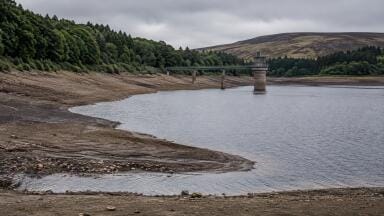
Five English regions have declared official drought status this year following the driest spring in over a century.
During droughts, rivers shrink and pollutants can become more concentrated, increasing the risk to the public.
The Agency said it plans to restore full capacity by the end of September by expanding the Starcross inorganics team from 26 to 30 FTEs.
It also pointed to an £8m investment aimed at strengthening water quality monitoring.
But whether the agency will be able to sustain this level of staffing remains uncertain.
While national programmes bore the brunt of the headlines, locally commissioned EA monitoring was also curtailed.
Planning emails indicate that most English regions had to halve their submission of inorganics samples to the lab during the affected period.
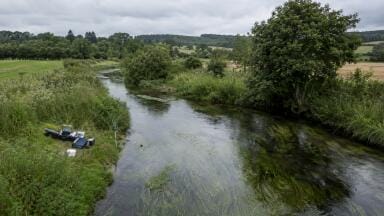
This included high-profile cases, like the River Wye, a Special Area of Conservation facing ecological decline due to phosphate pollution from intensive poultry farming, and the chalk-rich River Linnet in East Anglia, where ammonia and nutrient levels were due to be investigated.
Other affected zones included the Thames catchment, the South Downs’ coastal habitats and urban rivers such as the Crane and Brent.
The revelations come just as the UK government announces plans to re-write the Environment Agency’s mandate.
At time of writing, the plan is to merge the Agency's water responsibilities with those of Ofwat, Natural England and the Drinking Water Inspectorate into a single, streamlined regulator.
But for those working in river water monitoring, the current crisis reveals a more urgent concern: the operational fragility of the UK’s existing monitoring regime.
With a third-party test failure rate that could allow discharges to go undetected, and river basins like the Wye and the Teme left without baseline data, the ability to model and forecast pollution events is seriously impaired.
Such a situation cannot be rectified without increasing funding to this new regulator.
Can labs and local teams be supported through surge funding or public-private lab partnerships?
Should more monitoring responsibilities be devolved to trusted third parties or citizen science programmes?
And is the system futureproofed for the compounding pressures of agricultural intensification and water scarcity?
All that's clear is that we are in a transitional period for river water monitoring in the UK.
IET Guide 2026

 Product directory



















.jpg)