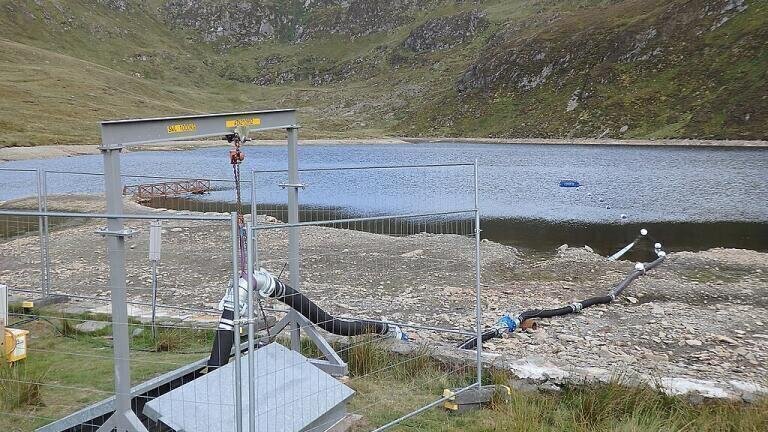
Drinking water
A major investigation by Watershed Investigations has revealed that licensed water abstraction from rivers and lakes in England has surged 76% over the past two decades.
Yet perhaps more alarming for environmental monitoring professionals is this: nobody really knows how much water is actually being used.
On paper, abstraction volumes jumped from an average of 6.6 million to 11.6 million cubic metres a year between the early 2000s and the period 2019–2023.
But due to outdated and patchy monitoring, the real numbers could be higher still.
The gaps in water-use accountability are so significant that even the Environment Agency admits that many abstraction licences, particularly for agriculture, go effectively unchecked.
It’s not just a story of rising demand.
It’s a story of regulatory fragmentation and instrumentation failure.
While overall abstraction has risen dramatically, especially for public supply and industrial cooling, data centre operations and intensive farming are increasingly switching from direct abstraction to mains water.
These shifts can render high-demand users invisible to current monitoring systems, since abstractions via public infrastructure aren’t captured in the same way as direct draws from rivers or aquifers.
The licensing system itself is ill-suited to today’s pressures.
Many licences were issued decades ago, with volumes far above what would now be considered sustainable and without expiry dates.
Some sectors, such as defence or hydropower, only began reporting water use in recent years.
Meanwhile, abstraction from tidal waters has collapsed, while pressure on rivers has soared.
Up to 61% of total environmental water take in 2023, from just under 40% in 2000.
Ecological signs of collapse are emerging in England’s chalk streams and salmon rivers.
On the River Itchen, just 133 salmon returned to spawn in 2022, and only 187 in 2024, the two lowest figures ever recorded.
The decline is tied to both water quantity and quality.
Dry weather forces companies to abstract more, precisely when flows are most fragile, and pollution risks increase when water is returned warm or chemically altered.
Meanwhile, the Environment Agency itself acknowledges that by the 2050s, summer river flows could fall by up to 33%.
Around 15% of rivers and lakes, and 27% of groundwater bodies, already experience environmentally damaging abstraction rates.
Despite the scale of the crisis, the infrastructure to track abstraction in real time barely exists.
Licences aren’t consistently linked to flow conditions.
Many abstractions under 20 cubic metres per day, enough for 140 people, require no licence or reporting at all.
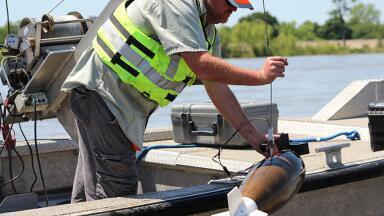
Technologically, the tools exist: real-time, remote flow meters with telemetry could capture near-continuous data.
But the cost, maintenance, and lack of incentives keep uptake low.
And the system is full of perverse incentives.
Businesses using high volumes of water often pay less per cubic metre than smaller users, discouraging conservation.
Many simply opt to drill private boreholes, which remain unregulated and unquantified.
Some regions are already in crisis.
The Midlands has seen a 132% increase in abstraction in a single decade, while Powys in Wales now holds 42% of the country’s licensed volume, largely for energy and water supply.
Reservoirs in parts of the north-west are half-empty, with others already below drought thresholds.
Yet efforts to build new infrastructure have come too late, no reservoirs were approved for three decades.
Ten new reservoirs and seven water recycling schemes are now planned, but won’t arrive soon enough to offset near-term shortfalls.
By 2055, the country is projected to need an additional 6 billion litres per day to meet public and industrial demand.
Most of which, at least initially, must come from reducing consumption and fixing leaks.
The government has now unveiled its national framework for water resources, backed by £104 billion in private investment.
Plans include modernising the abstraction system, reforming bulk use tariffs, and enabling the Environment Agency to revoke damaging licences from 2028 without compensation.
But whether this marks a genuine shift or another round of bureaucratic tinkering remains to be seen.
For monitoring professionals, the message is clear: abstraction reform won’t work without data reform.
We can’t manage what we don’t measure.
IET 36.5 Sept/Oct 2026



 Product directory
















.jpg)









.jpg)