Air quality monitoring
Researchers at KAIST have developed a metamaterial-based image sensor architecture that overcomes one of the major barriers to real-world deployment of nanophotonic colour routing: performance degradation under oblique light.
The work, published in Advanced Optical Materials, centres on a device known as a Nanophotonic Color Router (NCR).
Unlike conventional colour filters used in CMOS sensors, which rely on dye-based absorption filters arranged in a Bayer pattern, the NCR uses engineered nanostructures to physically route incoming light to different pixels according to wavelength.
Standard image sensors separate red, green, and blue light using pigment-based or interference filters layered on top of pixels. As pixels shrink, two issues emerge.
First, optical cross-talk increases, meaning photons intended for one pixel can scatter into neighbouring ones. Second, the efficiency of light collection declines, reducing signal strength in low-light conditions.
Nanophotonic colour routers were proposed as a solution. Instead of filtering light by absorbing unwanted wavelengths, they use subwavelength-scale structures — smaller than the wavelength of visible light — to manipulate how light propagates.
These structures can bend, guide, and split incoming light so that red, green, and blue components are directed toward designated photodiodes.
In theory, this increases efficiency because light is redirected rather than absorbed.
However, early nanophotonic routers were highly sensitive to the angle of incoming light. They were typically optimised for normal (vertical) incidence.
In real systems, especially compact lenses such as those in smartphones or embedded sensors, light arrives at pixels across a range of angles.
Even small angular deviations — around 10–12 degrees — could cause spectral mixing or sharp efficiency loss in earlier designs.
This “oblique incidence problem” prevented practical deployment in environments where angular variability is unavoidable.
The KAIST team approached the problem differently. Rather than manually tuning nanostructure geometry based on intuition and incremental optimisation, they adopted an inverse design methodology.
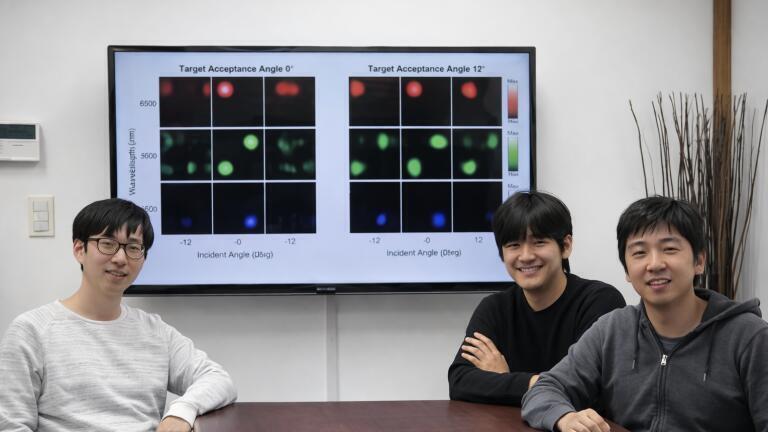
In inverse design, the desired optical performance is defined first — in this case, stable red/green/blue separation across a ±12° angular range.
Computational algorithms then iteratively adjust the nanostructure geometry to meet that performance target.
This process often uses gradient-based optimisation and electromagnetic simulation to model how light propagates through candidate structures.
The result was a multilayer metamaterial geometry that maintained approximately 78% optical efficiency within ±12° incidence. Crucially, colour separation remained stable rather than collapsing as angle increased.
The team also tested robustness against fabrication tolerances and structural variation, identifying performance limits under realistic manufacturing error margins. This step is particularly important for translation into mass-produced semiconductor processes.
Asia’s environmental monitoring market increasingly relies on compact, mobile, and distributed optical systems.
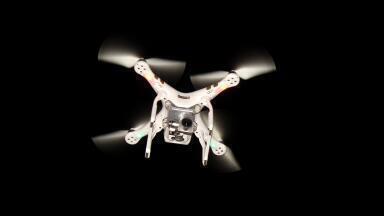
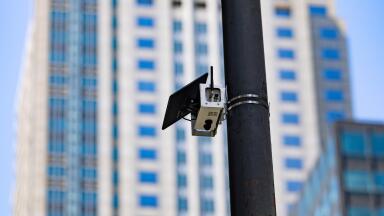
These include UAV-mounted particulate imagers, portable water-quality spectrometers, stack emission cameras, and smart-city embedded sensors.
In these contexts, illumination is rarely perpendicular or stable.
For example, in UAV-based haze mapping over Seoul or Delhi, scattered sunlight from aerosols enters detectors at variable angles as drones manoeuvre.
In coastal algal bloom detection across East and Southeast Asia, wave motion constantly shifts reflection geometry.
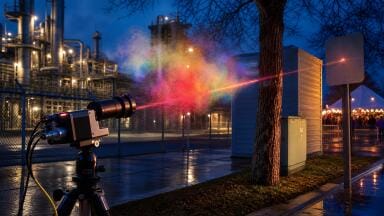
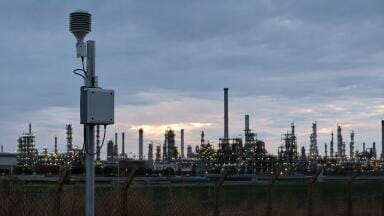
Industrial stack imaging across petrochemical zones in China or South Korea involves turbulent plumes that emit and scatter light unpredictably.
Angle-sensitive colour filters introduce measurement variability that is not related to pollutant concentration but to geometry. That creates calibration drift and reduces repeatability.
An angle-robust nanophotonic router reduces this geometry-induced bias. Because spectral routing remains stable across angular variation, downstream processing can focus on concentration signals rather than correcting optical artefacts.
Environmental monitoring in Asia is also moving toward smaller, lower-power devices deployed at scale.
Pixel size reduction increases susceptibility to angular distortion.
Metamaterial-based routing mitigates some of these constraints by using engineered light pathways rather than absorption filters.
Inverse-designed structures can be tailored to prioritise robustness, efficiency, or spectral purity depending on application.
For Asian manufacturers — who already dominate much of the global semiconductor supply chain — this presents a realistic integration pathway. The same nanofabrication techniques developed for consumer electronics can be adapted for scientific-grade sensors.
The core technological contribution of the KAIST study is not simply improved smartphone photography.
It is the demonstration that inverse-designed metamaterials can systematically solve angle-dependent optical degradation.
For Asia’s environmental monitoring sector, where compact, mobile optical sensors are proliferating, that capability directly supports more stable multispectral and colour-based measurement under real-world conditions.
As distributed monitoring networks expand across urban, coastal, and industrial environments, maintaining spectral fidelity across variable light incidence will become a foundational requirement rather than a secondary refinement.
Read the full paper here.
IET Guide 2026

 Product directory