Portable gas detection
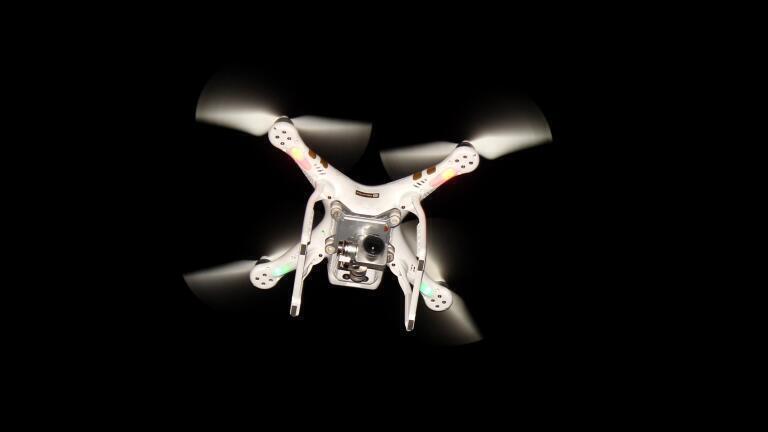
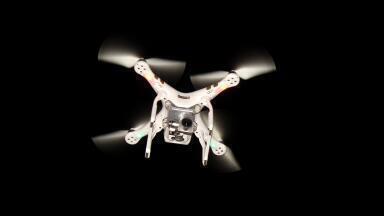
Recent peer-reviewed research led by the University of Sharjah highlights how improvements in endurance, autonomy, sensor integration and artificial intelligence are transforming drones from experimental tools into operational safety infrastructure.
While much attention has focused on applications such as disaster response, agriculture and logistics, the same technological trajectory strongly supports the use of drones for detecting hazardous gases in industrial, urban and emergency settings, where rapid access and human safety are critical constraints.
Traditional gas detection systems rely heavily on fixed sensors or manual inspections, both of which have limitations during leaks, fires, confined-space incidents or large-area releases. Intelligent drones equipped with gas sensors provide a mobile alternative, capable of sampling air above, around and inside environments that are unsafe or impractical for human entry.
The research, published in the International Journal of Cognitive Computing in Engineering, emphasises how next-generation drones are achieving longer flight times, wider operational ranges and greater resilience.
These capabilities are particularly relevant for safety monitoring tasks such as tracking toxic plumes, surveying industrial facilities after an incident, or assessing atmospheric conditions during chemical releases.
A central theme of the study is the rapid improvement of onboard perception. As drones integrate advanced sensors including LiDAR, inertial measurement units and environmental sensing payloads, they are increasingly able to perceive and interpret complex surroundings in real time.
For gas safety applications, this enables sensor fusion approaches in which gas concentration data is combined with spatial mapping and airflow modelling. Drones can autonomously adjust flight paths to follow concentration gradients, identify leak sources, or maintain safe standoff distances while still collecting actionable data.
Artificial intelligence further allows drones to distinguish between background fluctuations and abnormal emissions, reducing false alarms and improving response accuracy.
The research places strong emphasis on autonomous navigation models, particularly optimisation-based path planning that accounts for terrain, obstacles and environmental constraints. While originally framed around communications path loss and energy efficiency, these same models are directly applicable to safety-critical gas monitoring missions.
In emergency scenarios, drones must reach affected areas quickly, avoid obstacles such as damaged infrastructure, and operate efficiently to maximise flight time.
Optimisation algorithms such as reinforcement learning and swarm-based methods allow drones to dynamically re-route in response to changing conditions, including shifting gas plumes or restricted airspace, making them well suited to real-world safety deployments.
As drones become increasingly connected through 5G and emerging 6G networks, the study anticipates their integration into wider Internet of Things (IoT) ecosystems. For gas detection, this creates opportunities for drones to act as mobile nodes within safety monitoring networks, complementing fixed detectors and plant instrumentation.
Real-time data transmission enables drone-based gas measurements to feed directly into control rooms, emergency response platforms or digital twins of industrial sites. This supports faster decision-making during incidents, more informed evacuation planning, and improved post-incident analysis.
The authors also stress the need for evolving regulatory frameworks as drone use expands, a point that is particularly relevant for safety and gas monitoring applications. Operations near industrial facilities, urban areas or critical infrastructure require clear airspace rules, cybersecurity protections and data governance to ensure safe and accountable deployment.
From a safety perspective, drones offer a clear ethical advantage: they reduce the need for human exposure to toxic, explosive or oxygen-deficient environments. However, their deployment must be carefully managed to ensure reliability, sensor accuracy and secure operation in high-risk contexts.
Taken together, the research points toward a future in which autonomous drones play a routine role in gas detection and safety monitoring. Their ability to combine mobility, sensing, intelligence and connectivity makes them well suited to tasks such as leak detection, emergency response, perimeter monitoring and environmental risk assessment.
As sensor payloads continue to miniaturise and autonomous capabilities mature, drones are likely to become a standard component of safety strategies across industrial, environmental and urban domains, extending gas monitoring beyond fixed infrastructure and placing it where it is most urgently needed.
IET 36.5 Sept/Oct 2026



 Product directory




















.jpg)