Portable gas detection
INTERSCHUTZ Hannover, the world’s leading trade fair for fire and rescue services, civil protection and public safety, returns from 1–6 June 2026. It’s the place where emergency professionals from around the world come together to see what’s new, what’s working, and what’s changing in frontline safety.
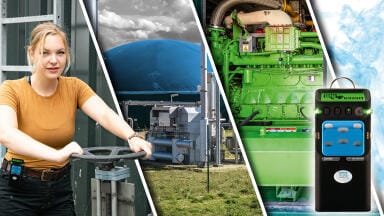
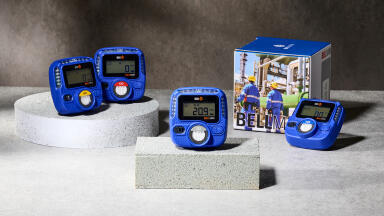
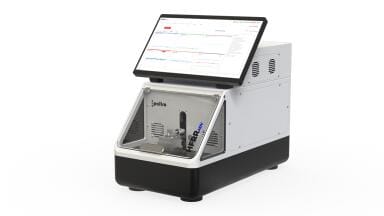
Among the companies exhibiting, GfG will be showcasing its latest portable gas detection solutions designed specifically for emergency responders. They will be in Hall 27, Booth H43, where their team will be on hand to talk through real-world applications and answer questions.
When firefighters or rescue teams enter environments with unknown hazards, the risks can escalate quickly flammable gases, toxic exposure, or oxygen-deficient spaces can all be present without warning. In these situations, reliable gas detection isn’t just useful; it’s essential.
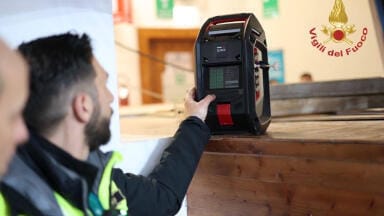
GfG’s portable detectors are designed with exactly this in mind. Built for tough conditions, they provide fast and accurate readings even in high-stress, unpredictable environments. Just as importantly, they’re designed to support the whole team, not just the individual wearing the device.
Through integrated radio connectivity and TeamLink technology, gas readings and alarms can be shared in real time with incident commanders. That means decision-makers on the ground can see what’s happening as it unfolds, helping them respond more quickly and with greater confidence.
The technology is used across a wide range of emergency situations, including fire and rescue operations, civil protection, industrial incidents, hazardous material spills, confined space entry, and leak detection work.
Alongside its portable instruments, GfG also offers a wider suite of gas detection solutions, including single- and multi-gas devices, systems that integrate portable and fixed detection, and sensors for toxic, combustible and oxygen-deficient atmospheres. The portfolio also includes ATEX-rated equipment for explosive environments and robust designs built for extreme conditions in the field.
As emergency response becomes increasingly complex, connected safety tools like these are playing a growing role in helping teams work more effectively—and stay safer—when every second counts.
IET 36.5 Sept/Oct 2026




 Product directory