Air quality monitoring
Published over 7 years ago. See the latest and most current information on Air quality monitoring.
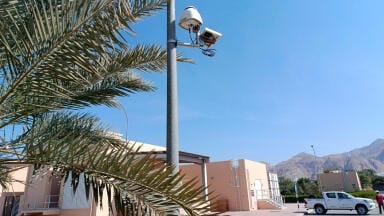
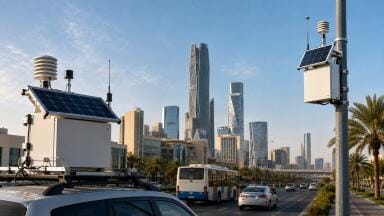
ENVEA has inaugurated in July the world’s premiere solar powered criteria pollution monitoring station in its headquarters in Poissy, France (Paris region).
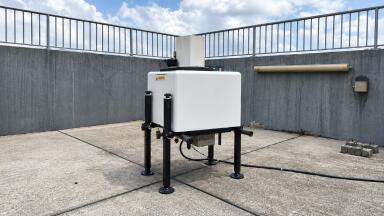
The Solar AQMS is an all-in-one and self-sufficient air quality monitoring station that can be installed anywhere, even in isolated locations. Able to withstand high temperatures without air conditioning and without connection to the electricity grid, it operates 24 hours a day, 7 days a week, powered solely by solar energy. This pilot monitoring station contains the well-known eco-designed e-Series analyzers. Certified QAL 1 and US-EPA approved, they offer the best metrological performance for continuous monitoring of CO, O3, NO2, SO2, and fine particles PM10 / PM2.5.
Eco-designed, this new series of gas and particle analysers with very low energy consumption, have been recently enhanced to withstand high ambient temperature variations and support 24 V power supply. Thanks to these unique features, the analysers can endure temperatures up to 50-55 °C without air conditioning.
In addition to these advanced technologies, the Solar AQMS station is equipped with e-SAM and XR©, ENVEA’s data acquisition and handling systems. They feature centralised data management in the cloud for processing, analysis and reporting, threshold alerts, as well as remote energy management and station control (calibration, diagnostics, etc.).
This innovation represents an important breakthrough for governments and institutions worldwide struggling to set up supportive measures and regulations to curb air pollution. It will support the air quality measurement across the developing world struggling with the reliability of their energy supply, as well as the forward-thinking ‘smart cities’ looking to re-define their energy mix and supporting renewables on the grid. The very low energy consumption of such a station, its ease of integration into the urban or rural landscape and advanced connectivity and proactive interactivity with operators, are making it perfectly suited for remote areas as well as for smart-cities.
Today, more than 20,000 traditional pollution measurement stations connected to an electricity grid are located around the world. For example, the upgrading of the 670 measuring stations spread over France would save some 20,000 kWh/day, the equivalent of the annual consumption of nearly 1,500 households.
IET Guide 2026

 Product directory